
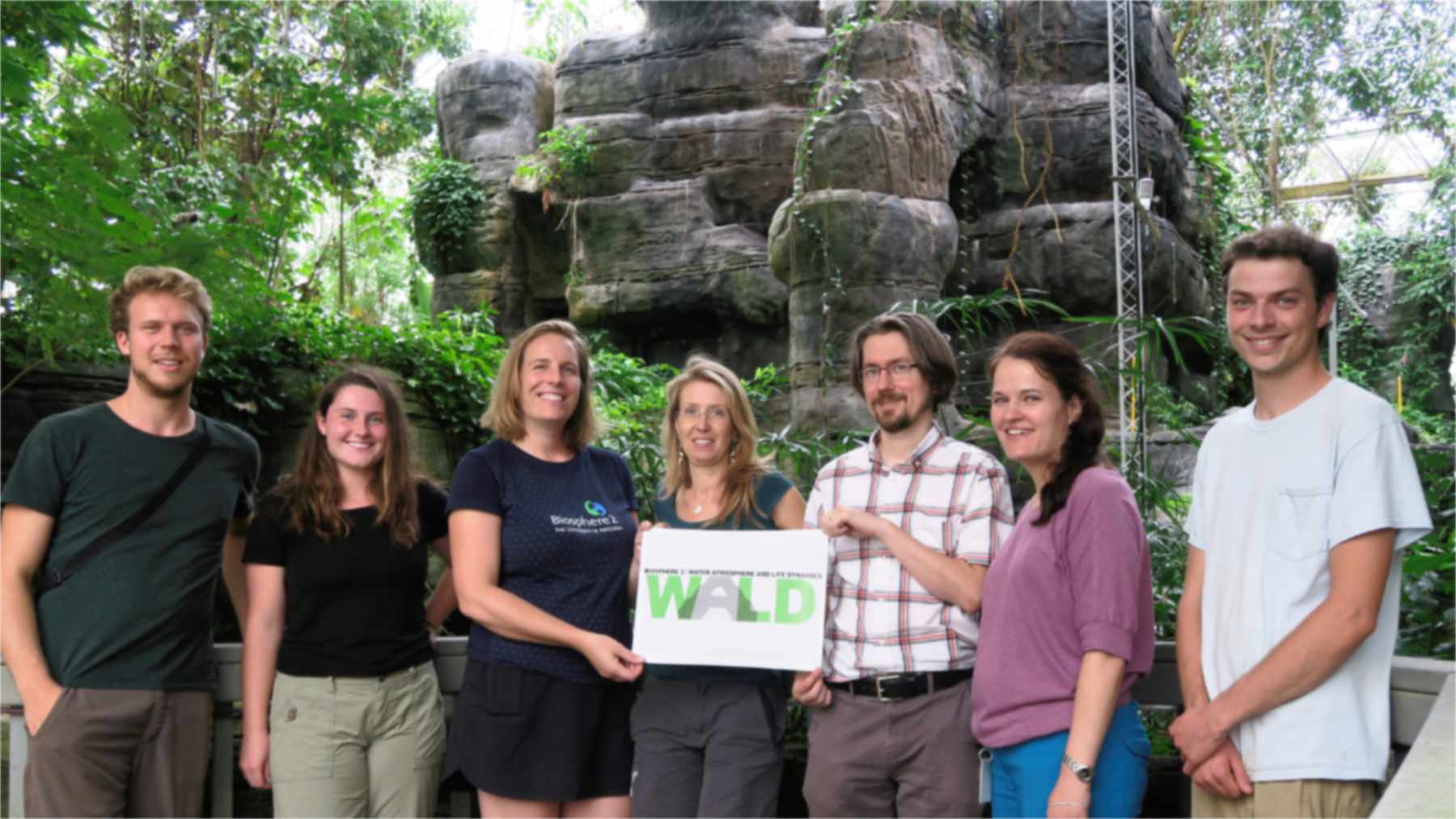
In 2019, an international team cut off the artificial rainfall to the Biosphere 2 rainforest, a facility run by the University of Arizona. For nine and a half weeks, researchers watched how the forest responded to the water shortage and confirmed a near 70 percent drop in its capacity to sequester carbon, according to the balance sheet released by the university.
The ecosystem held up, in part, thanks to the various responses of its plants and to access to deep-water reserves. But resilience came at a cost, and rewetting did not erase the drought’s consequences immediately.
The Biosphere 2 Experiment Figures
| Data | Value |
|---|---|
| Duration of the drought | 9.5 weeks (about 66 days) |
| Scientists involved | Around 80 |
| Plant species | Around 90 |
| Area of the rainforest | Around 12,000 m² (seven tennis courts) |
| Drop in carbon uptake | About 70% |
| Deep water used | Up to 3.3 m |
| Maximum contribution of deep water to transpiration | Between 21% and 90%, depending on the tree |
| First irrigation after the drought | Around 45,000 liters (less than 4 L/m²) |
Nine and a Half Weeks Without Rain in Biosphere 2
Biosphere 2 makes possible something difficult to achieve outdoors. Its researchers could decide when it stops raining and when the water returns, while tracking changes in trees, soil, and the atmosphere inside a glass enclosure.
The B2-WALD campaign brought together around 80 scientists, and its main results were published in Science in 2021. The facility housed about 90 plant species, with tall trees and understory plants growing beneath the canopy.
The team deployed hundreds of measurement points and used stable isotopes to trace water and carbon. These atom variants act as markers that allow reconstructing their journey, from the soil to the leaves or from the atmosphere to the roots.
A 70% Reduction in Carbon Uptake, Not in Trees
The figure needs context. It does not mean that 70% of the trees vanished, nor that such a share of all the carbon stored over years in trunks, roots, and soil was lost.
What declined was carbon uptake during the dry episode. It’s like depositing less money into a bank account, something different from suddenly losing the savings already within it.
The forest continued to function as a small carbon sink, meaning it still removed more carbon than it released. Both photosynthesis and ecosystem respiration slowed, so it is important to consider the full balance.
Water Stored at 3.3 Meters Depth
The trees most sensitive to drought tended to draw much of their water from shallow layers. When these dried out, they rapidly reduced their activity, although their roots could reach deeper reserves.
Researchers expected them to tap into those reserves immediately to keep pace. However, the deep water remained available for much of the dry period and took on a leading role when conditions became more extreme.
A follow-up study, published in 2023, confirmed access to water down to 3.3 meters. The maximum contributions of that source to transpiration varied from 21% to 90% among the trees studied, although the total volume used was low because sap movement had slowed.
The Tolerant Trees Shaded the Rest
Other trees, more drought-tolerant, kept their leaves longer. In doing so, they provided shade for the smaller plants and cushioned the drying under the canopy, a protection reminiscent of the difference between walking in the sun or under a tree in summer.
The forest combined different responses to the same problem. Some plants cut back their consumption early, while others maintained functions longer that helped the whole endure the drought.
Underground, too, there were changes. The Göttingen University team observed different root responses, ranging from an increase in fine roots to deeper growth and changes in the substances they released into the soil.
45,000 Liters of Rain That Didn’t Solve Everything
In December 2019, researchers returned artificial rain to the enclosure. That first irrigation delivered about 45,000 liters of water and opened a crucial phase of the work: to observe how the system recovered. Spread over the hectare-long area occupied by the rainforest, about 12,000 square meters, those 45,000 liters equate to less than 4 liters per square meter—a light rainfall.
The response was not uniform or immediate. Some soil processes reacted quickly, while certain trees shed leaves and altered their capacity to transport water.
The original study detected drought effects months after it ended. Therefore, seeing a watered forest again is not enough to conclude that all of its functions have returned to their starting point.
What Cannot be Transferred to Other Forests
The experiment shows that having deep roots helps, but does not guarantee that the forest’s activity remains intact. It also indicates that differences among plants influence how the whole resists and how it responds when moisture returns.
It is worth recalling where the result came from. A closed experimental rainforest allows separating processes difficult to observe in the field, but its percentages cannot automatically be transferred to all tropical forests.
For researchers, understanding these responses can improve models that calculate how water and carbon exchanges will shift during droughts. The follow-up study on deep roots was published in 2023 in Science of the Total Environment.
Image: Biosphere 2 / University of Arizona