
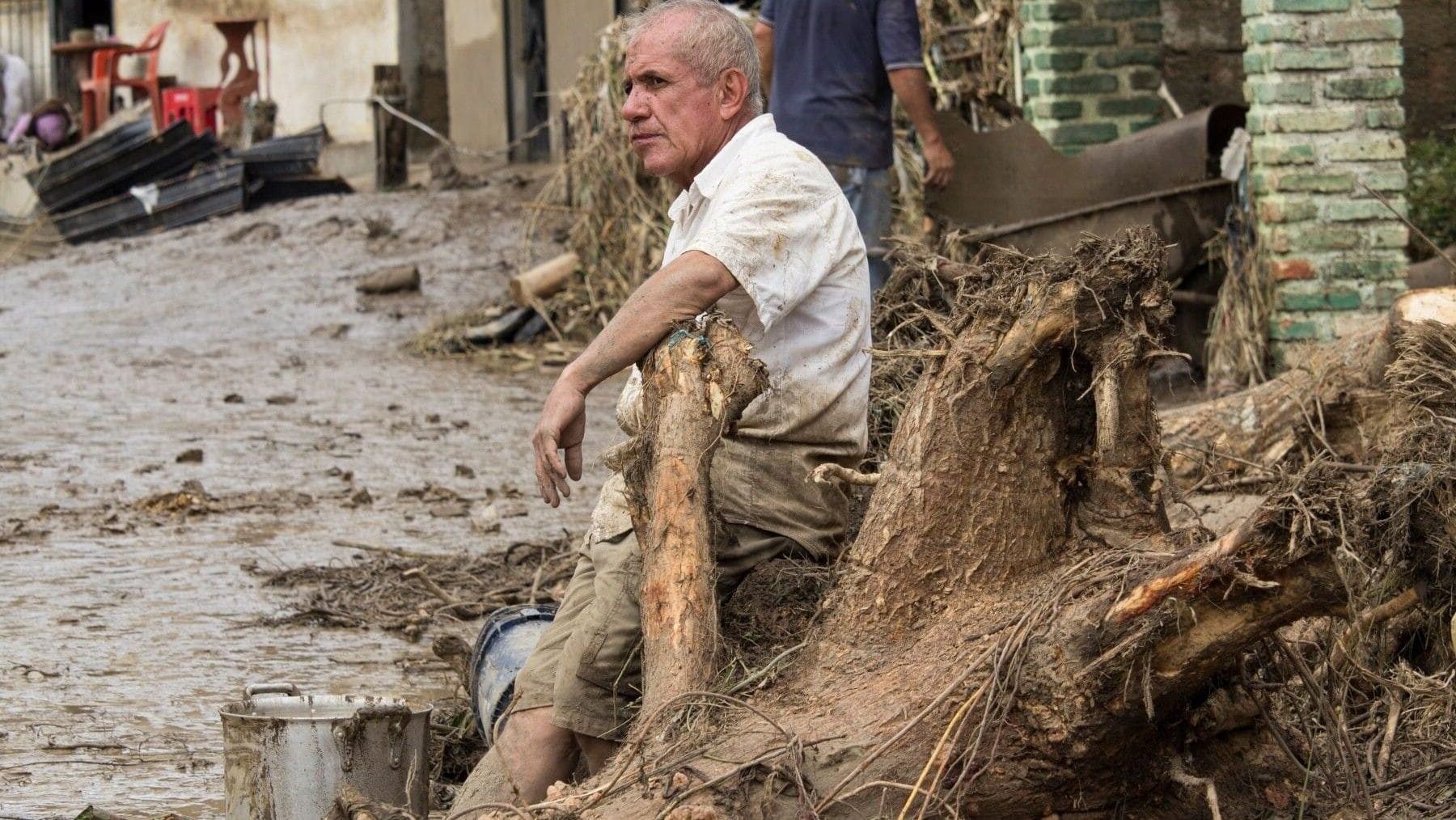
Extreme weather phenomena break ideological trenches in Spain: a survey reveals overwhelming support for prevention that leaves political inertia without an excuse.
Spaniards Bet on Prevention Against Extreme Weather Events
An overwhelming majority of the Spanish population shares concern about extreme weather events and/or climate change and backs measures to address them, such as developing early warning systems.
This is shown by the survey Attitudes towards extreme weather events in Spain, which demonstrates that climate action connects voters from different parties, regardless of their ideological profile.
The analysis of extreme weather phenomena is representative of the adult Spanish population in terms of age, gender, education level, autonomous community, and 2023 voting pattern. It was carried out by the Climate Opinion Research Exchange (CORE) with a sample of 5,027 respondents, commissioned by Esfera Climática, a journalism innovation project coordinated from CREAF’s communications department.
The study notes that 87% of respondents are concerned or very concerned about the possibility of being affected by an extreme weather event. This worry spans all ideological profiles: 89% among those on the far left and center-left, 87% in the center, 85% on the right, and 84% on the far right.
Anxiety also extends to its economic and environmental consequences, and does so across the political spectrum, such as fears that drought will push up food prices (86% of respondents) or that our natural landscapes, forests, and rural areas will be destroyed (87%).
Additionally, there is broad consensus among Spaniards that these extreme weather events could raise electricity and gas bills and home insurance premiums, though this concern varies with income level.
More than half of the Spanish population reports having experienced an extreme weather event, with heat waves being the most common, affecting 9 out of 10 respondents. Followed by droughts (57%), intense storms (51%), floods (43%), and wildfires (42%). According to the results, experience of these episodes shows few differences across ideological profiles and is broadly similar across Spain.
Inertia Costs Votes
Survey data indicate a broad consensus not only about the dangers but also about how to tackle extreme weather events. 86% of respondents consider these episodes a matter of national security and that Spain must be prepared to protect families, agriculture, and the economy.
The survey also shows that the vast majority of the population expects concrete actions from those who govern. 88% support sending early warnings to mobile phones to alert people to potential emergencies, and nine out of ten people, regardless of their ideological profile, believe that investment in response services is necessary.
There is also broad agreement on the need to financially assist those who suffer the consequences of these extreme weather events: 85% believe that policymakers should guarantee compensation for people affected by disasters. Support ranges from 86% among the far left to 84% among the far right.
The results show that most Spanish society wants a climate-aware person at the head of the government. In the overall sample, 69% say they would probably or definitely not vote for a politician who does not intend to prepare for extreme weather events and climate change. The figure rises to 81% among those identifying with the center-left and falls to 57% among those identifying with the far right.
The Energy Transition, Also from the Economics and Security Standpoints
Renewables deployment receives greater support when framed as a path to greater energy sovereignty. Thus, 70% see the transition from fossil fuels to renewable energy as an opportunity to reduce dependence on other countries.
Job creation and reindustrialization constitute another favorable argument for renewables: 66% of the population identify them as an opportunity in this area. The percentage rises to 75% among the center-left and 72% among the far left, while it sits at 64% on the right, 62% in the center, and 60% on the far right.
Ideological differences do not vanish in all aspects of climate change perception. The study notes that risk perceptions are related to political orientation, although the experience of extreme phenomena is relatively cross-cutting. Therefore, the results allow distinguishing between disagreements about particular interpretations of the problem and broad support for practical prevention and response measures.
A Common Ground for Climate Communication
For Andrea Arnal, coordinator of Esfera Climática, the results related to extreme weather phenomena show that there are points of agreement from which to address the public conversation on climate change. “Identifying these shared concerns allows communicating climate change through issues that affect daily life, such as safety, food prices, or the protection of homes and territories, and to open conversations beyond ideological differences,” she adds.
However, she explains, the survey also indicates “which topics require intensified communication efforts about the climate crisis. For example, only 55% think that fossil fuels contribute to worsening the impacts of extreme weather events, even though scientific evidence has established for decades a direct link between burning oil, gas and coal and climate change.” Therefore, she concludes, improving communication of this relationship is a task that clearly communicators and journalists should prioritize.
The survey regarding extreme weather phenomena was conducted by Norstat between July 21 and August 3, 2026, with 5,027 people aged 18 and over participating. The survey is broken down by autonomous communities, age, gender, education and income levels. It is also broken down by voted in 2023 and by self-identified ideological profile.
According to CORE, which carried out the processing and analysis of results, the survey has a theoretical national margin of error of ±1.39 percentage points, although “the breakdowns have higher margins of error than the general public data.”
The survey, conducted online through a panel, asked about extreme phenomena such as heat waves and wildfires, during one of the summers with the most hectares burned and the hottest temperatures since records began in 1869.
The IPCC’s Alarming Data
The IPCC provides a stark measure of what is at stake with regard to extreme weather events: between 2010 and 2020, mortality from floods, droughts, and storms was 15 times higher in highly vulnerable regions than in those with very low vulnerability.
In the face of extreme weather events, prevention cannot be relegated, as this is a politically indefensible stance: inequality also determines who remains most exposed to death.
