
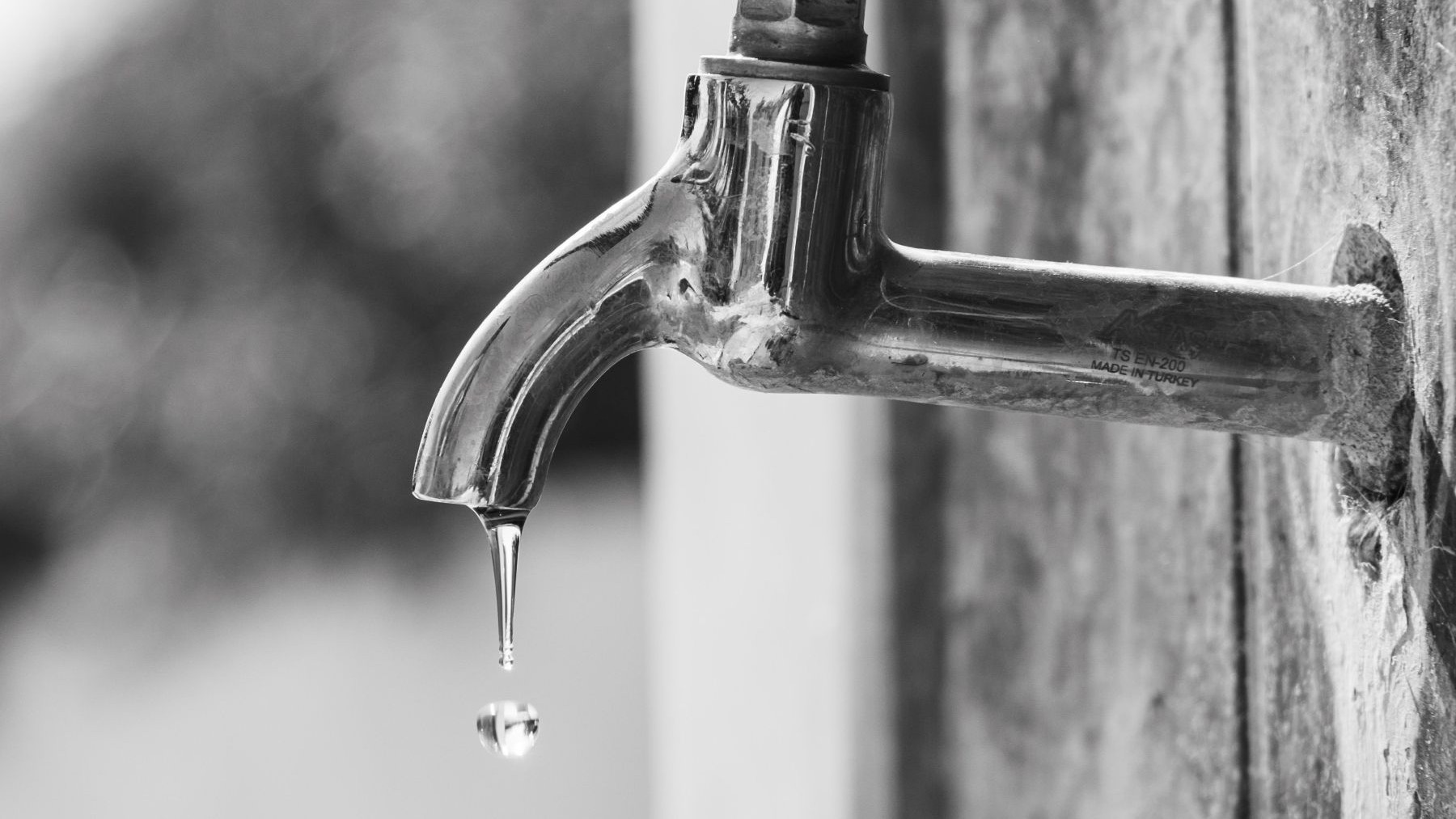
For roughly a decade now, global freshwater reserves have been dwindling, and in the last seven consecutive years the anomalous river discharges confirm that historical patterns are no longer reliable for water management.
The global freshwater reserves are undergoing a very significant deterioration, and the Secretary-General of the World Meteorological Organization warns that the cushions typically used to soften the impacts of droughts are running out, which is terrible news.
According to the latest report from the WMO, rivers around the world had, on average, the lowest flow in the last three and a half decades. The flows deemed normal were reached by only a minority of rivers, but as a trend, it merely demonstrates that the water problem is only worsening.
A severe danger looms over global freshwater reserves
Rivers around the world experienced in 2025 one of the driest years in the last 35 years: 36% of basins recorded flows below normal, according to a newly published report by the World Meteorological Organization (WMO) on global freshwater reserves.
For the seventh consecutive year, rivers with “normal” flows were a clear minority, a sign that the water cycle is increasingly erratic and unpredictable.
“This is not a single bad year, but a persistent signal that has stretched for a decade,” said Celeste Saulo, Secretary-General of the WMO. “Water-related extreme events continue to devastate communities and economies.”
Global freshwater reserves are gravely threatened
The problem of global freshwater reserves is not limited to rivers. Groundwater, lakes, snow, soil moisture, and glaciers function as a water reserve that helps maintain supply during droughts and dry seasons.
“These reserves have functioned as if they were the planet’s savings account, a cushion that absorbs bad years so that a single drought or one dry season does not directly become a water crisis,” Saulo explained.
But that cushion has been shrinking for nearly a decade: since the mid-previous decade, the planet stores less freshwater. “We are simply exhausting it,” he warned.
The global freshwater aquifers also show very troubling signals. In 2025, nearly two-thirds of monitored wells were outside their historical normal levels. But the worst is that the balance tilts more toward deficit than recovery.
Yet, there are positive signs. Some areas of South America recorded a partial recovery of their reserves after several years of deficit, while several large lakes in central and southern Africa remained well above normal levels.
Glaciers lose ice relentlessly
Glaciers around the world offer another signal of the growing pressure that climate change is placing on the planet’s freshwater reserves: for the fourth year in a row, all major glacier regions globally lost substantial ice.
Just in 2025, about 408 gigatons disappeared. Between 2023 and 2025, cumulative losses reached about 1,400 gigatons; this is an amount equivalent to nearly one third of the freshwater the world extracts in a year.
Experts warn that in some regions with smaller glaciers, the so-called “water peak” may already have been reached. “After that point, the meltwater contribution decreases each year simply because there is less to melt,” explained Wayne Jenkinson, Director of the Hydrology and Cryosphere Division of the WMO.
“That matters for all downstream communities that depend on these global freshwater reserves during hot and dry summers.”
However, the WMO reminds that, although part of the future glacier loss is already inevitable, its complete disappearance is not, and this outcome will depend largely on how much greenhouse gas emissions are reduced.
The changes affecting global freshwater reserves are already here
The report does not attribute all changes related to global freshwater reserves observed solely to climate change. Human pressure on water resources and natural variability also influence. But the WMO warns that governments can no longer plan assuming that past conditions will remain the norm.
“In 2025 and during the last seven years, the way water is distributed on the planet is not the same as it was during the three decades before,” said Jenkinson. “Water is often not where we need it or when we need it.”
The expert spoke of “changing benchmarks” and said that governments must prepare for changes “that have already arrived” and that are directly linked to global freshwater reserves.
The more affected the regions are, the fewer data there are
Over the past five years, Asia and Africa accounted for at least half of the water-related extreme events observed worldwide and more than 80% of deaths associated with them.
However, both regions remain among the areas with the fewest hydrological observations, making it harder to forecast droughts, floods, and other extreme events tied to global freshwater reserves.
The availability of data has improved considerably since the WMO began publishing this report. Currently, 52 countries provide information from more than 3,100 discharge measurement stations, compared with just seven countries and 14 stations that engaged in the first edition.
The agency maintains in its report that expanding observations, sharing data more effectively, and strengthening early warning systems will be essential to protect populations in a world where the availability and the reserves of freshwater are moving further away from past patterns.
The recent disaster between China and Nepal, which the WMO described as a “catastrophic compound crisis,” also demonstrated the difficulty of anticipating some of these risks.
According to the agency, the disaster was associated with rock and ice collapse, in a context where several factors could have intervened, including melt, ground instability, seismic activity, and hydrological conditions. The region also hosts tens of thousands of glaciers, making it particularly complex to monitor every potential threat.
Jenkinson stressed, however, that the coordination of early warnings between China and Nepal was “very good”, especially after the disaster. “Sharing data, information, and early warning signals is truly important and fundamental,” he said.