
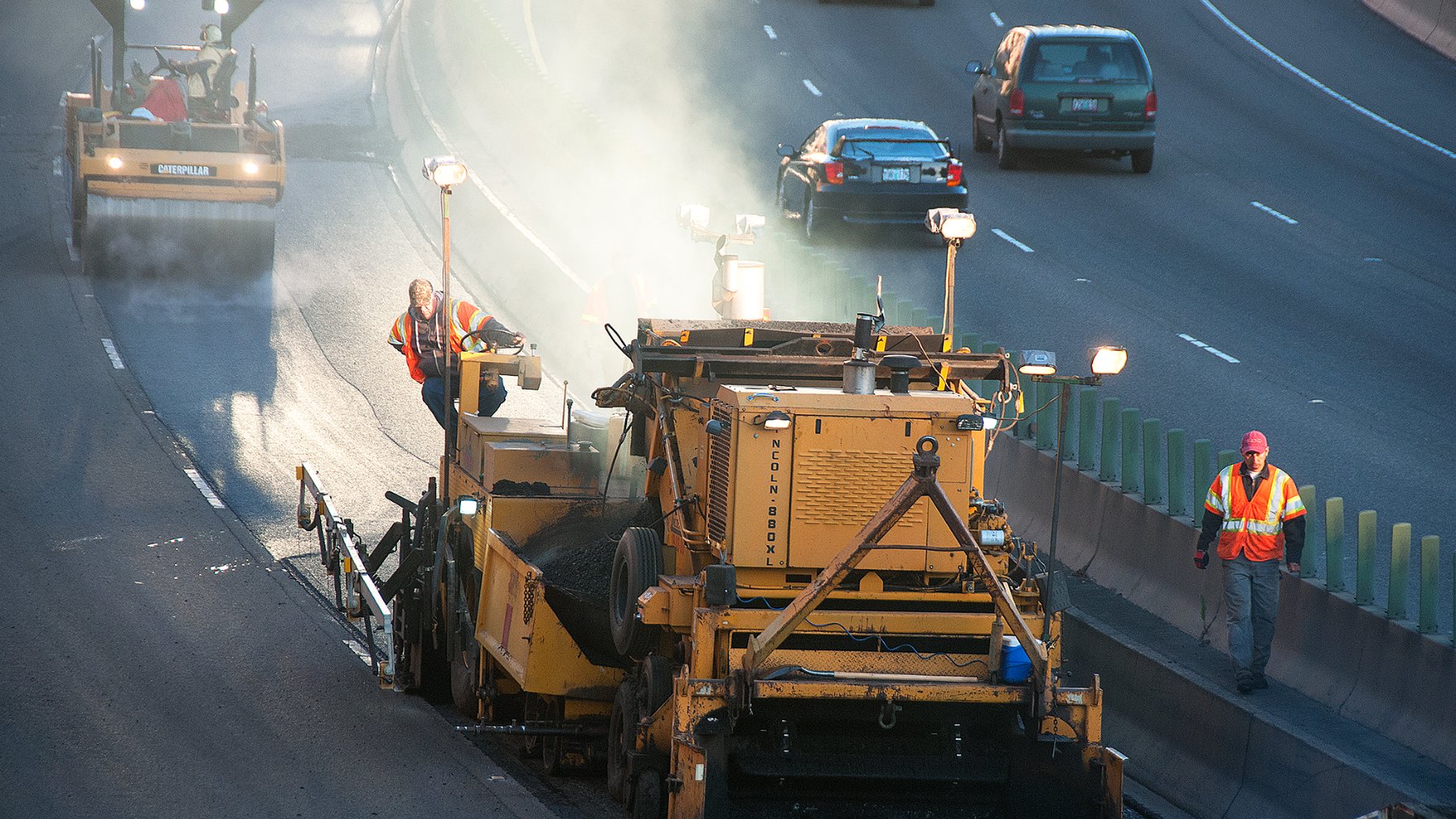
South Sioux City, a city in Nebraska (United States), used roughly two million recycled plastic bags to pave about 1,220 meters of Foundry Road in June 2025. The effort turned this stretch near Siouxland Freedom Park into a real test to give those waste materials another use.
Now there is more than just an eye-catching road. A 2026 technical report notes improvements in resistance to deformation in laboratory tests, though long-term performance and environmental effects still need to be verified. Will it stand up to the passing years?
What this road is made of
The shredded bags were incorporated into a mixture that also contained 25% recycled asphalt pavement (material sourced from earlier pavements). The project also included paving an extension of the Al Bengtson cycling route, according to the University of Nebraska-Lincoln.
Goodwill of the Great Plains, one of the participating organizations, contributed about a million bags, and First Star Recycling supplied roughly another million. Goodwill describes a base of about 15 centimeters of conventional asphalt topped with roughly 7.6 centimeters of plastic-containing mix.
The university placed the Nebraska Environmental Trust grant at $500,000 to support the initiative. That amount represents project aid and should not be confused with the total construction cost.
What the initial tests show
The feasibility study, dated January 2026, found improvements in resistance to deformation and to moisture-related damage in the tested blends. Low-density polyethylene, one of the plastics analyzed, stood out for its behavior under humidity.
What does that mean for drivers? The deformations studied include grooves that can form in the pavement from the passage of wheels, a damage mode distinct from cracks. Therefore, improving one aspect of the pavement does not solve all of its problems.
The researcher Jamilla Teixeira, a professor of civil and environmental engineering, already made clear the nature of the work when presenting it. “This is a pilot project,” she explained to the university, which highlighted the chance to test the blend under Nebraska’s extreme weather conditions.
The challenge of moving the bags
Before reaching the road, the material also posed practical difficulties. In November 2025, Teixeira explained that transporting the shredded plastic had proved challenging, and her team was studying compacting it into small granules to ease handling.
That change requires adjusting manufacturing. According to the Nebraska Department of Transportation’s technical summary, flake-shaped particles dispersed more evenly in early tests than large pellets, though reducing the size of the latter could improve distribution.
The experience reveals a less glamorous side of recycling. To replicate the initiative on other projects, it is also necessary to resolve how to prepare and transport the waste in a form viable for road builders.
Environmental questions
There is another issue that deserves attention. What happens to the plastic when the pavement ages and wears? The Nebraska report recommends studying microplastic release, manufacturing fumes, and the environmental balance over the material’s life cycle.
An independent study published in January 2026 in the Transportation Research Record detected microplastics in samples of other asphalt mixes subjected to artificial wear. Its authors caution that the method needs adjustments to analyze field-collected samples. That finding does not prove that Foundry Road is releasing such particles.
The Nebraska team itself also calls for evaluating whether the asphalt containing these wastes can be recycled again. It’s a crucial question for a proposal that aims to reuse discarded materials, because the next resurfacing of the road is also part of its environmental narrative.
The test continues
The Nebraska Department of Transportation funded a second phase slated to begin in July 2026. Its aim is to monitor this stretch over the long term, assess durability across seasons, potential environmental impacts, and the possibility of reusing the pavement.
In a June 2026 update, the university continued to describe Foundry Road as a real-world testing space. This helps set the scope of the project, which has already allowed waste materials to be incorporated into a construction project and produced insights for ongoing research.
For residents, the expectation is as ordinary as driving on a surface that may require fewer repairs, though that benefit still needs long-term confirmation.
The university update on the project was published on June 24, 2026, on the University of Nebraska–Lincoln website.