Climate change and Indigenous cultures: the Rwenzori Mountains, on the Uganda–Congo border, have lost more than 90% of their glaciers since the 20th century. This melting and the rapid disappearance of their lakes threaten the cultural survival of the Bakonjo people, an ancestral community whose faith, cosmology, and daily rituals depend on the fragile high-mountain ecosystem.
Global warming disrupts traditional ceremonies tied to the rains and renders sacred places invisible, a phenomenon that also affects Andean and Amazonian communities. In the Amazon, the climate crisis in the forest threatens to wipe out a third of native medicinal plants. Environmental destruction erodes a valuable biocultural heritage and deprives humanity of potential pharmacological remedies.
Climate change and Indigenous cultures
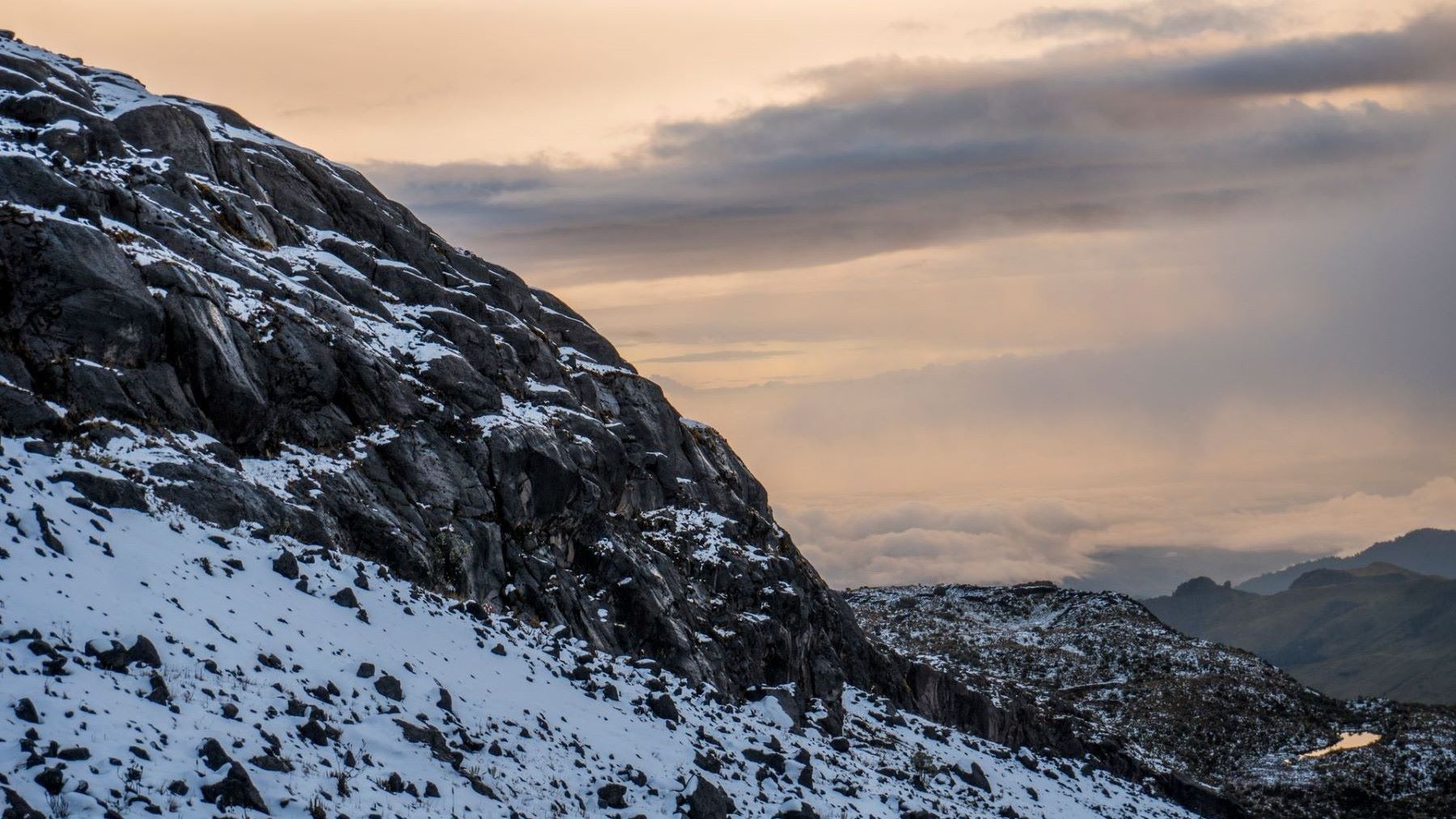
On the border between Uganda and the Democratic Republic of the Congo lie the Rwenzori Mountains. Although they sit on the equator, they are among the few African mountain ranges that retain snow and glaciers, in addition to a rich diversity of flora and fauna.
On their slopes lives the Bakonjo ethnic group, whose cultural identity, cosmology, beliefs, and practices are closely tied to the mountains and their glaciers. For example, in Bakonjo tradition these glaciers are considered the semi-solid semen of the mountain god Kithasamba, the world’s creator who resides near the summit. This god fertilizes the land and ensures its productivity, partly because these glaciers feed the rivers of the region.
In total, the Bakonjo recognize 21 gods and goddesses who, according to their beliefs, govern the use of resources from the Rwenzori Mountains. And, to honor them, they perform a total of 13 spiritual rituals before, during, and after harvesting natural resources from these areas.
However, this entire culture is in peril due to climate change. This is highlighted by an article published in Nature last February, which gathers several mountain ecosystems closely linked to the religious beliefs of various regions around the world and the danger of their disappearance due to global warming.
Ancestral rituals that take place on the glaciers
Moses Muhumuza is a researcher at the Mountains of the Moon University, in Uganda, who works in the Rwenzori Mountains studying these ecosystem changes, in addition to mediating between the Ugandan government and the Bakonjo over the use of the mountains.
“In the cosmology of the Bakonjo people, several rituals were held on the mountains, and these rituals were closely related to the snow,” Muhumuza says. But the changes in the mountains are making it impossible for them to perform them.
As noted in the article, since the early 20th century, 90% of the glaciers in this mountain range have disappeared. This physical transformation, together with climate changes affecting the region’s flora and fauna, has deep implications for the Bakonjo’s spiritual life.
“As the glaciers retreat, the community loses not only a key symbol of its cosmology but also the environmental context necessary for their rituals and their sense of well-being,” the authors state.
But it’s not just the glaciers that are affected. Iván Lizaga, a researcher at the Pyrenean Institute of Ecology (IPE-CSIC) and coauthor of the article, has worked with Muhumuza monitoring the lakes near the Rwenzori Mountains and warns of their progressive disappearance.
“In about thirty years, lakes in these mountains have vanished, along with all the rituals that were linked to them,” he states. He also warns about these losses in the long term.
“Some current generations still remember those vanished lakes, but in the coming ones they may not conceive that there ever was a lake there. It will no longer seem important enough to preserve or fight for,” he adds.
Traditions linked to the rains
Climate change has also affected the rain and, with it, another type of rituals. For example, the so-called crest sweeping, where once every five years the Bakonjo would ascend the mountain and then descend, gathering from their homes and surroundings objects that could be deemed malevolent to perform a cleansing.
This ceremony was synchronized with the seasonal rainfall patterns and has largely disappeared due to rising climate variability. Added to this is the decline of local plant and animal species, which has made it harder to carry out other traditional ceremonies.
“As these spiritual connections erode, the population increasingly drifts away from the cultural norms that once governed the sustainable use of resources,” the authors say in the article. “Ultimately, climate change threatens not only biodiversity but also biocultural diversity and the heritage of the Rwenzori Mountains.”
In fact, even the measures taken to promote conservation of the mountains have negatively affected the Bakonjo as well.
“These rituals have not only been diminished by global warming but also by the restriction of access to the National Park established in the Rwenzori,” Muhumuza notes. It was the researcher himself who mediated between the Ugandan government and the local community to reach an agreement.
“We negotiated the marking of certain sacred sites where the Bakonjo can access to perform their rituals. It is not only the conservation of the mountains that matters but also the cultural values connected to them,” Muhumuza says.
Some believe it is a divine punishment
Climate change also affects religious beliefs in other parts of the world, which have different explanations for the phenomenon. This is the case for several Andean communities. As Guillermo Salas Carreño, an anthropologist at the University of Peru, explains in the same Nature article, the retreat of glaciers in the Andean region likewise affects culture.
“Glaciers and mountains are perceived in these communities as beings that, among other capacities, have the power of will not only over weather but also over climate,” Salas writes.
The difference with other regions is that many people from these ethnic groups have migrated to large cities, and they see the climate crisis as a punishment for that.
“Many communities tend to take responsibility for this phenomenon, interpreting it as a kind of punishment imposed by the mountains themselves for neglecting their practices of relating to these beings,” Salas explains. Moreover, it is also seen as a consequence of their “moral failings” linked to transformations in the community spirit due to greater involvement with urban spaces and monetary economies.
Threat of extinction for medicinal plants
The disappearance of plant species due to the climate crisis also has cultural consequences, in what is called biocultural heritage. According to another study published in the journal Nature, released last July, climate change could reduce by a third the native plant species used by Indigenous cultures in the Amazon Basin.
“These plants play a fundamental role in Indigenous societies in many ways: as food, including legumes, palms, oils, and much more; in cultural practices such as communal customs or hunting; in construction and medicine,” explains Rodrigo Cámara-Leret, a researcher at the University of Zurich (Switzerland) and the study’s lead author.
The researchers compiled more than 90,000 records documenting the uses of Amazonian plants by populations from 1504 to 2023. They found that Amazonian societies use around 5,800 different plant species.
Modeling the impact of the climate crisis on these species showed that it could lead to the loss of a quarter of the documented knowledge related to the uses of Amazonian plant species by the end of the century.
“Indigenous cultures could lose an average of 28 to 34% of the plant species they use and 18 to 23% of the services associated with them due to global warming,” notes Cámara-Leret.
Access to vital Indigenous resources at risk
This, the researcher notes, also affects access to vital resources, since “many communities do not have access to supermarkets or pharmacies, and they rely on these plant species.”
The researcher emphasizes that this is a loss not only for the communities but for humanity. “Medicinal species are the ones that will suffer the greatest impacts from climate change; this means that the knowledge with the greatest potential to translate into new drugs or treatments—of direct interest to global health—is also the most exposed.”
The study authors point out that these are examples of how, once again, climate change affects greatly those communities that bear very little responsibility for the phenomenon, to the extent of threatening centuries-old traditions and worldviews.