
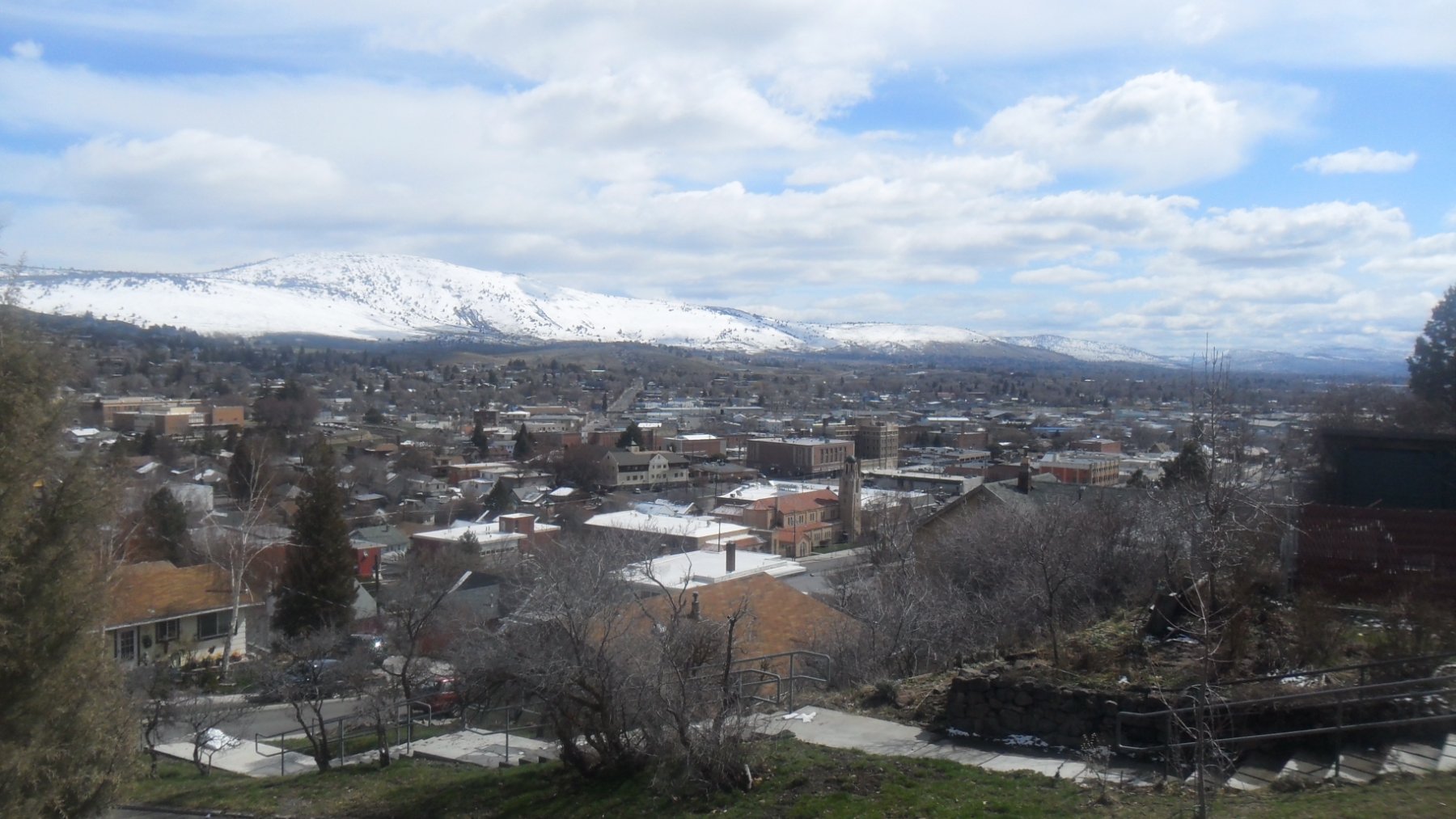
In 1948, a slope in Klamath Falls, Oregon (United States), began to receive heat from the subsurface to combat snow. Engineers buried pipes beneath the concrete and connected them to a geothermal well. That installation operated for almost half a century, until corrosion caused leaks.
The system was taken out of service in 1997, but the idea endured. The 1998 reconstruction replaced the pavement’s iron network with PEX plastic pipes and preserved the use of geothermal heat. The case demonstrates both the potential of this energy and the importance of maintaining the materials that carry it.
Heat Beneath a Slope
The project began when the US Route 97 was routed along Esplanade Street. There, an 8% grade beside a traffic light created a combination that complicated winter traction for vehicles. Getting a car to start uphill in snow was the problem to be solved.
According to the technical report by John W. Lund of the Geo-Heat Center, the original well was about 128 meters deep. A heat exchanger inside its interior gathered heat and transferred it to a 50/50 mixture of water and ethylene glycol.
This liquid circulated through a closed loop beneath the roadway, separated from the geothermal water. The iron pipes lay about 7.6 centimeters beneath the surface and were spaced roughly 46 centimeters apart. The principle resembles radiant floor heating in a home, applied here to the concrete of a road.
How Much Snow Could It Melt
The historical figures are striking. The documentation estimated that the available heat could keep the pavement relatively snow-free at exterior temperatures of around −23 °C and snowfalls of up to 7.6 centimeters per hour. These are the equivalents of −10 °F and three inches per hour in the report.
That figure should be interpreted with care. It expresses a calculated capacity for specific conditions, not a guarantee that any heated road would respond the same to any storm. It also does not equate to a continuous measurement over the nearly 50 years of service.
The Well Also Changed
Over the years, the water temperature near the top of the well dropped from about 62 to 37 °C. To increase heat input, a pump was added to draw geothermal water and release it into the storm drainage system. Later, that solution had to be reevaluated.
A municipal regulation approved in 1985 required eliminating surface discharges and connections to the sewer from geothermal wells. In 1992, the well was deepened to about 305 meters and the exchanger was extended to roughly 274 meters. This allowed access to hotter water.
That upgrade cost around $115,000, according to Lund. The figure refers to the well modifications in 1992, an action preceding the pavement’s pipe replacement.
Corrosion Set the Limit
In 1997, leaks caused by exterior iron corrosion ultimately left the system out of operation. The following year’s reconstruction incorporated cross-linked polyethylene (PEX) pipes in the pavement network. The heated surface of the bridge and roadway totaled about 2,044 square meters.
The technical document Pavement Snow Melting places the cost of the entire reconstruction at about $430,000. It also notes that the renovated system seemed to function effectively during the snowfalls of January and February 1999. It is a concrete reference to its performance after the works.
What It Contributes to the Environment
Heating the pavement can reduce the need to rely on salts to combat ice. The United States Geological Survey explains that the chlorides in those salts can reach rivers and aquifers carried by water. In high concentrations, they harm freshwater plants and animals.
But the outcome depends on design and site conditions. A study published in 2019 in Advances in Civil Engineering notes that insulation, pipe depth, and spacing influence the performance of these systems. Having heat available is only part of the job.
The City Continues to Benefit from It
Today, the Klamath Falls City Council describes a geothermal service that supplies heating to 23 facilities and powers snow-melting systems on sidewalks and bridges. Its network uses exchangers and returns the geothermal water to the aquifer through a reinjection well.
The 2025–2031 municipal investment plan also includes $1.25 million to renew pipes on North 8th Street. The project includes a connection to the sidewalk snow-melt system’s exchanger. It is a plan forecast, and by itself it does not confirm that the works have been completed.
The experience continues, along with maintenance needs. These actions are listed in the 2025–2031 Investment Plan published by the City of Klamath Falls.