
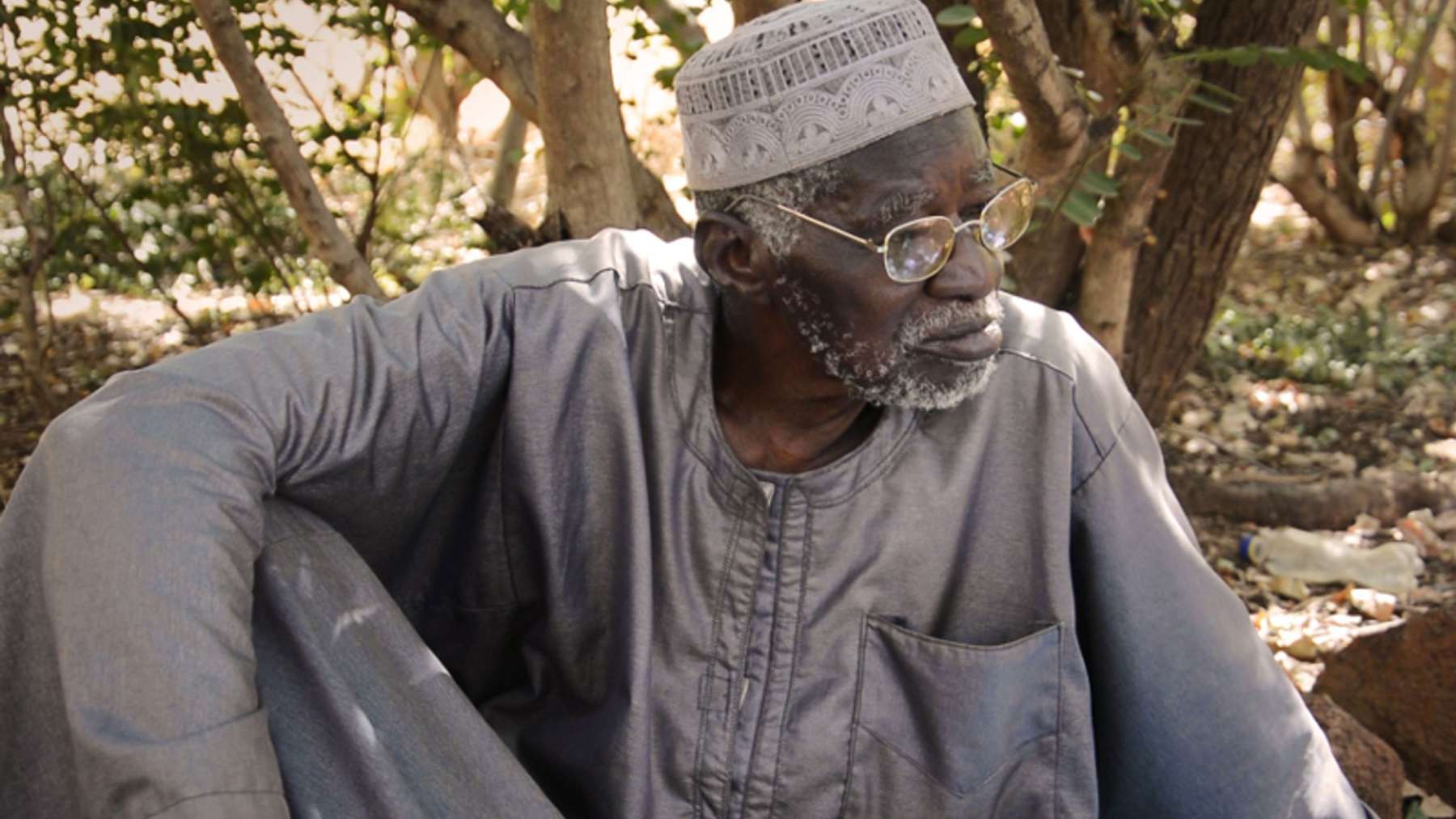
Yacouba Sawadogo managed to restore vegetation on degraded land in Burkina Faso, in the Sahel, by refining a traditional farming method. His work combined the digging of pits, the application of organic fertilizer, and water-conservation practices to create a forest covering about 40 hectares with more than 60 species of trees and shrubs, according to the United Nations Environment Programme (UNEP) in 2020.
A portion of the transformation occurred beneath his feet, where termites opened galleries that facilitated water entry. The experience shows how reviving soil life can help make the most of scarce rains, though the process requires time, labor, and favorable conditions.
Restoring an Ancient Know-How
In the early 1980s, droughts and hunger drove many families away from rural areas. Sawadogo took the opposite path, returning to his village in the Yatenga region, determined to cultivate lands others had abandoned.
His starting point was zaï, a local practice based on digging holes to concentrate water and organic matter. He widened and deepened the cavities and began to prepare the land before the rainy season, according to the UNEP.
Inside he placed organic fertilizer, and when the rains came, he sowed. He also erected stone barriers to slow the runoff across the surface and give water more time to penetrate the soil.
Termites Do Their Part
The organic matter attracted termites, which dug galleries in the soil. Those tiny conduits promoted infiltration and aeration, while the holes gathered moisture and nutrients near the roots.
A study published in 2017 in the journal Agriculture, Ecosystems & Environment examined plots in northern Burkina Faso at different stages of zaï-based recovery. The researchers observed that termite tunnels increased the rate of water infiltration by a factor of two to four.
What does this mean in practice? Water found more routes to enter the soil, a decisive factor for plants in a dry environment. The authors also cautioned that the benefits depended on termite species and that studies in other regions were needed to generalize the results.
Numbers Need Context
UNEP collects studies on zaï indicating increases in agricultural yields by between 100% and 500%. These results come from applying the method under certain conditions, not a universal measurement of Sawadogo’s fields nor a guarantee for any harvest.
That difference matters for people who depend on what their plot produces for food and to cover household expenses. Improving water conservation can reduce crop vulnerability during the dry spells of the rainy season, says FAO, but the response depends on the land and how it is managed.
From a Farm to Other Villages
Sawadogo also dedicated time to sharing what he learned. In 1984 he began organizing gatherings known as zaï markets, where farmers exchanged seeds and learned the technique in the field.
According to Right Livelihood, these gatherings brought together representatives from more than a hundred villages. In 1989, thirteen farmers from the Tahoua region in Niger visited his fields and subsequently applied the method on their own lands.
The diffusion allowed the experience to spread far beyond a single farm. The foundation noted that, by 2016, zaï had helped restore productive capacity on tens of thousands of hectares in Burkina Faso’s Yatenga and Gourcy provinces.
A Solution with Limits
Digging during the dry season is a substantial effort, especially when the soil has crusted. The FAO identifies the work required and the scarcity of manure as among the main obstacles to expanding the system.
Moreover, its functioning depends on capturing rainfall and runoff, so it still needs water to reach the land. Therefore, it should be understood as a tool to maximize water use and adapt to dry spells, with results that must be tested in each location.
A Documented Legacy
Sawadogo received the Right Livelihood Award in 2018 and died on December 3, 2023. His life showed how local knowledge, improved through experimentation, can restore productivity to lands that had been abandoned.
“I don’t want to eat today and leave future generations with nothing to eat,” he explained, according to Right Livelihood. This concern gives meaning to both the trees he planted and the effort to teach other farmers.
His experience combines soil restoration with the transmission of knowledge among farmers.
The official communiqué about his death and legacy was published on December 4, 2023 by Right Livelihood.
Image: UNEP