
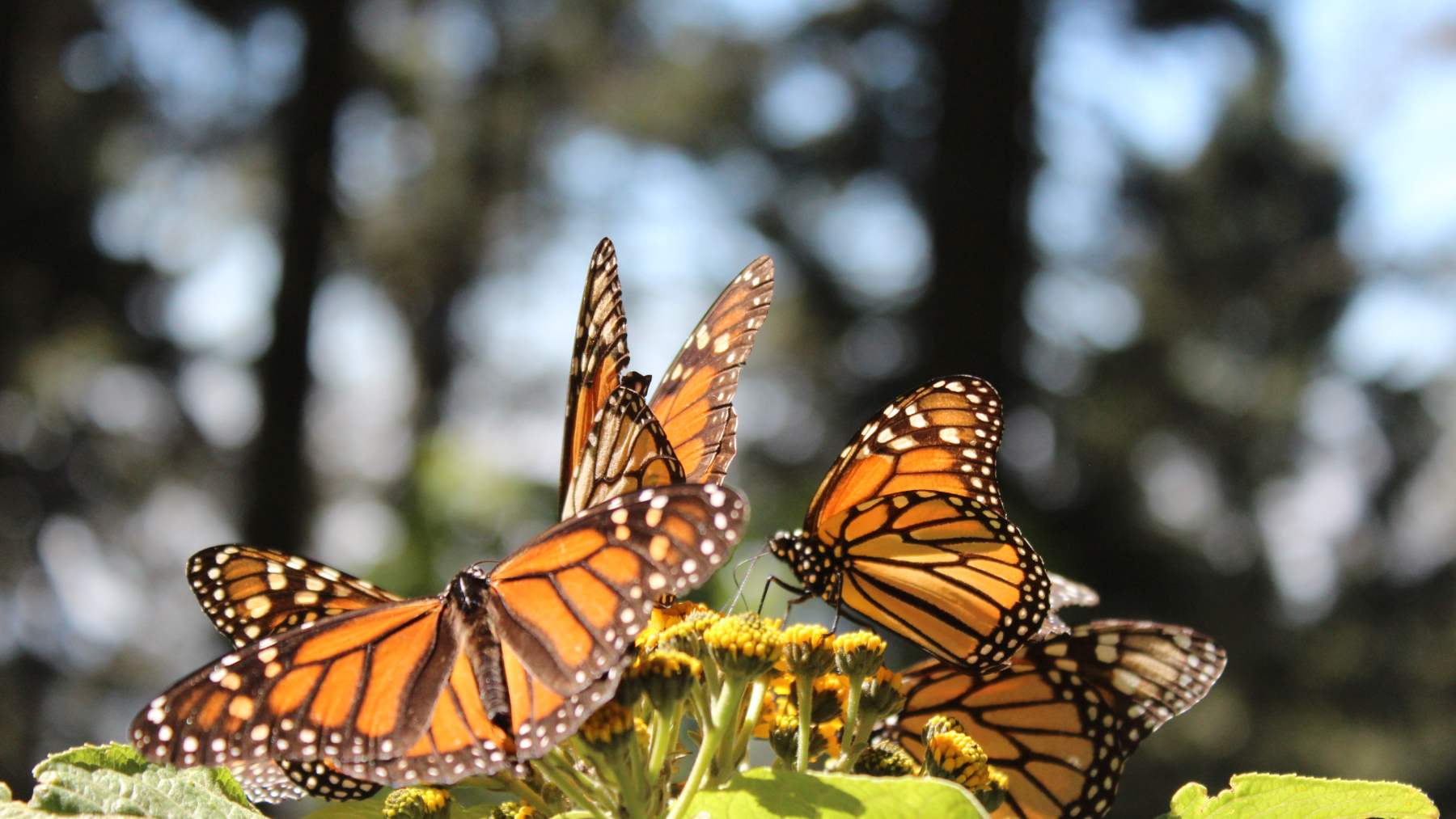
A butterfly that pauses on a flower in the northern United States may end up spending the winter in Mexico. Each autumn, millions of monarchs cross North America, with some journeys covering as much as about 4,800 kilometers, according to Monarch Joint Venture. They head toward forests they have never visited.
This journey comes on the heels of encouraging news. During the winter of 2025-2026, the forest area occupied by the colonies in Mexico rose by 64% compared with the previous season, according to WWF and its partners. But that rebound remains far from historical highs and does not permit declaring the population recovered.
What does that 64 % mean?
The report published on March 17, 2026 places the occupied area at 2.93 hectares, up from 1.79 hectares in the preceding winter. The monitoring recorded nine colonies, spread across Michoacán and the State of Mexico, inside and outside the biosphere reserve dedicated to these butterflies.
Does that mean every individual was counted? The researchers delineated the perimeter of the clusters and calculated the area they occupied. That measure serves as an indicator of abundance, so the percentage should be read as an increase in occupied area pointing to an improvement in the population.
Historical comparison helps put it in perspective. In the winter of 1996-1997, the colonies covered about 18.2 hectares, well above the latest record. Moreover, the 2025-2026 figure describes the past winter and does not forecast how many butterflies will complete the migration this autumn.
A generation to travel
Migration typically begins in mid-August in the northern regions. The shortening of days, the drop in temperatures, and changes in vegetation accompany the emergence of a distinct generation, ready to delay its reproduction and embark on the journey southward.
While the summer generations live only a few weeks as adults, the traveling generation can reach several months of life. The United States Fish and Wildlife Service mentions up to eight months. During that time they must accumulate reserves, move, and survive the winter before reproducing in spring.
They have not learned the route by following their parents. Their orientation uses a solar compass adjusted by biological clocks located on the antennae, according to the IUCN. In practice, they relate the Sun’s position to the time of day to stay on course.
Two winter destinations
The eastern population heads to the central Mexican mountains, where the butterflies cluster among oyameles, a type of fir. The forests provide shelter from harsh weather and cool conditions that help conserve energy during the wintering months.
Monarchs from the western Rockies mostly follow routes toward the California coast, though there are wintering sites in Baja California and Arizona. Therefore, the increase measured in Mexico corresponds to the eastern population. It does not automatically reflect what is happening with the western population.
A rebound with threats
Habitat loss, exposure to pesticides, and the effects of climate change continue to threaten these butterflies. Protection must cover both the breeding areas and the stopover sites and winter refuges. A stretch without resources can jeopardize the journey.
The monarch migratory is currently listed as vulnerable on the IUCN Red List. In the United States, listing the monarch as an endangered species was still awaiting a final decision in the official update of July 23, 2026. A protection proposal does not yet equate to its entry into force.
“These reports indicate that conservation measures are on the right track,” says María José Villanueva, Executive Director of WWF-Mexico. The organization accompanies that message with a call for continued vigilance in the face of ongoing challenges. The positive result invites continued work.
What a garden contributes
In the North American stretches of the route, a flower-filled garden can provide food during the layovers. Adult butterflies require nectar, while the caterpillars depend on milkweeds (Asclepias). These are distinct needs that must be considered when preparing a space for them.
Monarch Watch recommends maintaining nectar sources throughout the growing season and avoiding plants treated with systemic pesticides. The choice should be tailored to each region, with suitable native species. A bloom that lasts into autumn is especially useful when the travelers need to replenish energy.
These small stops are part of a conservation effort that also requires well-preserved winter forests. The report on the area occupied during the 2025-2026 season was published by WWF on March 17, 2026.
Image: Luis Avalos / Wikimedia Commons (CC BY-SA 3.0)