
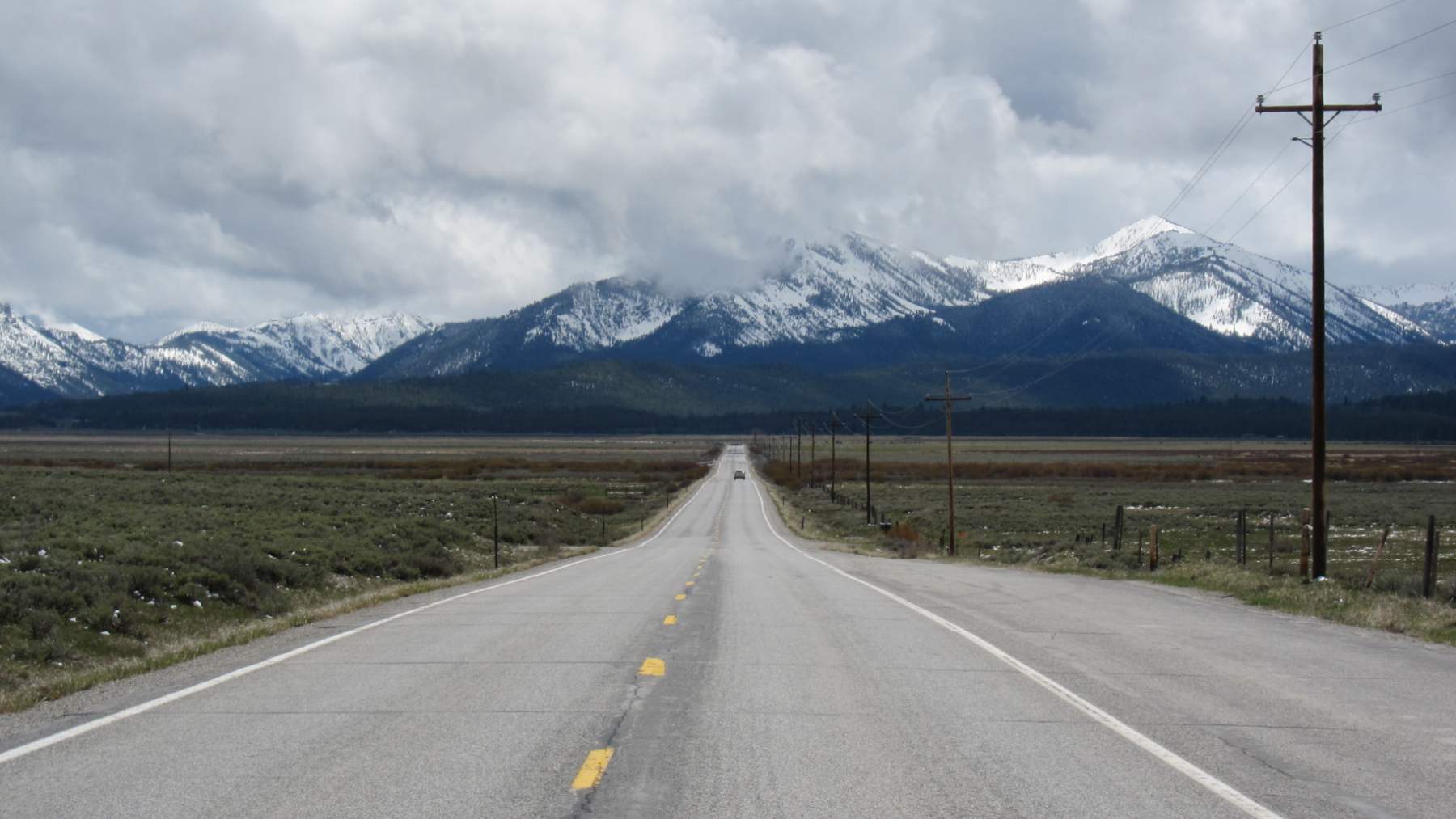
In 2002, Idaho incorporated hundreds of tons of discarded glass into the fill beneath about 60 meters of State Route 75 near Ketchum. The material formed a layer roughly 20 to 30 centimeters thick beneath the roadway.
The experiment offers an unusual image of recycling, with waste finding utility beneath everyday traffic. But it also raises a practical question. What does it take for a discarded bottle to become construction material?
An idea born near the construction site
State Senator Clint Stennett proposed taking advantage of the glass accumulated at the Ohio Gulch recycling center. The proximity of the construction work offered an opportunity to put the material to use.
Roads & Bridges published on May 17, 2002, explains an important detail. About 1.2 meters of fill were planned to be placed over the glass, in addition to the upper layers of stone and asphalt. The glass would therefore sit in a deep portion of the structure.
Why it might work
The United States Federal Highway Administration (FHWA) explains that crushed glass ground into fine particles can behave similarly to sand. In its granular base guide, it describes particles smaller than 4.75 millimeters and notes that they are typically combined with coarser materials to meet specifications.
Grain size and distribution influence how the mix compacts. Processed glass also allows water to pass through, a property relevant to drainage. The idea is to prepare a material with verifiable characteristics before incorporating it into the road.
Cost also matters
Recycling has a less visible side when we drop a bottle into the container. Collecting it, separating the accompanying materials, and preparing it for reuse requires labor and resources. Federal documentation identifies the costs of collection and processing as obstacles to utilizing recovered glass.
Idaho was well aware of that difficulty. In an official retrospective published in 2019 on several previous experiences, engineer Devin Rigby explained that glass had turned out to be “considerably more expensive than extracting granular material from the ground.” That observation referred to the set of those experiences and helps explain why a technically viable solution may encounter economic barriers.
In the project described in 2002, the glass was donated. Even so, Rigby warned that processing it for use as base material could make it more expensive than the stone available in the area. The chosen application mattered as much as the availability of the residue.
Preparing it makes the difference
The FHWA guides indicate that glass intended for granular bases must be crushed, screened, and cleaned. Screening means separating particles by size, while cleaning removes metals and reduces residues such as paper or plastic. These operations determine the quality of the final material.
The documentation also notes that proper crushing can substantially reduce sharp edges. It also describes a low thermal conductivity, which can help limit how deeply cold penetrates. That property alone does not prove that Idaho’s stretch experienced fewer potholes or frost damage.
Each layer has its requirements
Incorporating glass into asphalt presents other conditions. The federal guide on asphalt mixtures reports satisfactory results with proportions of 10 to 15 percent in surface layers, but also warns of potential problems when the amount of glass or the particle size increases.
One of these problems is the loss of adhesion between the glass and the binder that holds the mix together, especially in the presence of moisture. It is prudent to read these figures as references from an archived technical publication, whose recommendations depend on the application. They do not constitute a general authorization for any current project.
What Idaho now covers
Idaho’s 2023 construction specifications explicitly include recycled glass under section 720.05. They cover its use in fills and crushed glass in certain granular layers, with technical requirements. They also require written certification that it comes from waste generated in Idaho.
The practical takeaway is that finding a useful outlet for a waste stream requires studying where it fits, how it is prepared, and how much it costs to use. Idaho’s Department of Transportation posts the official reference documentation, including the 2023 edition and its June 2026 supplements, on its construction specifications portal.
Image: Stephen Hanafin / Wikimedia Commons (CC BY-SA 2.0)