
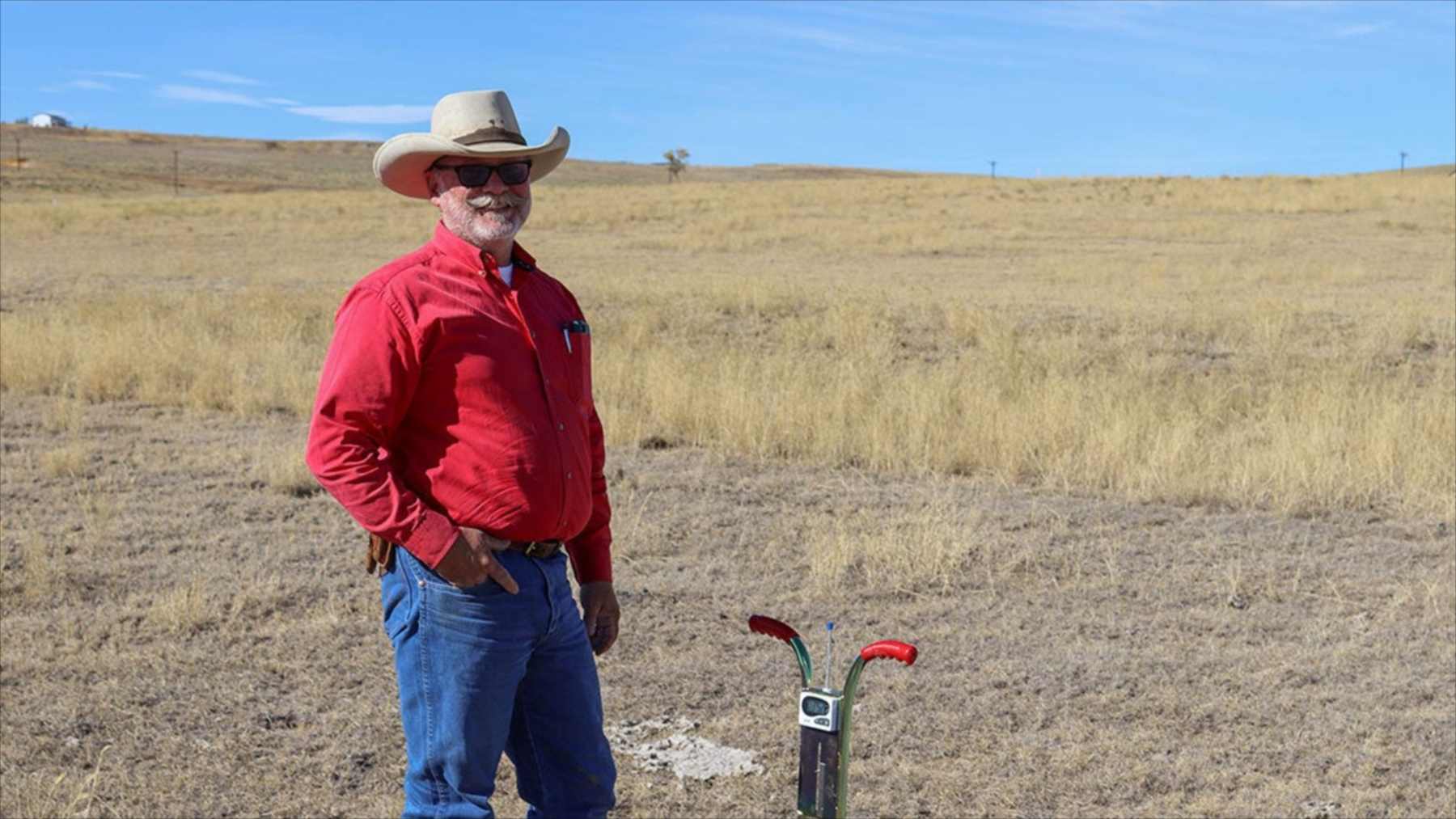
Lance and Lisa Wheeler bought land in Colorado in 2014 to develop a family ranching project. Years later, their Rafter W ranch also stands out for its birds, with 37 species recorded in 2025 compared to 29 in 2019, and twice as many grassland bird detections during that period.
The data come from Audubon Rockies, which published the story on August 31, 2026. The case shows a favorable trend in the bird community on a farm that blends food production and conservation, though it is advisable to distinguish what the counts indicate from what they still do not allow us to confirm.
What the figures say
The increase from 29 to 37 represents eight more species recorded, roughly 28%. This measure is called species richness and answers a simple question: How many different kinds of birds have been found?
Detections of grassland birds rose from 178 to 356. They are double the records, but those figures alone do not prove that the population has doubled, nor that all changes are solely due to grazing.
Audubon also reports a cumulative 26% improvement in the ranch’s bird favorability index since 2019, with an approximate annual growth of 4%. This indicator combines information on abundance, diversity, and resilience of the bird community. Therefore, it provides a broader reading than a simple species list.
From dream to the ranch
Lance grew up in a Los Angeles suburb and dreamed of being a cowboy while watching the Bonanza TV series. His family had ranching roots in Texas, but he and Lisa began their own path raising animals on a small property in Elizabeth, Colorado, in the early 1990s.
In 2014 they bought land in Elbert County and, two years later, added the neighboring property. The underlying idea was captured by Lance in Audubon: “we’re not just raising animals for meat; we’re actually growing pasture.” Taking care of what the cattle eat came to occupy the center of the project.
Grass makes the difference
The Wheelers use rotational and adaptive grazing, moving the cattle across different zones of the ranch. In this way they maintain a mosaic of short and tall grasses that provide different conditions for the birds that use the land.
Why does something as everyday as grass height matter? Because species have different needs for feeding, shelter, or breeding, and a uniform pasture does not offer the same opportunities as a varied one. Audubon explains that breaks between grazing periods allow vegetation to recover and foster that diversity.
Timing also matters, especially for ground-nesting birds. The duration of grazing and the periods without disturbance must be adjusted to site conditions and the species’ reproductive cycles. Moving cows from one parcel to another requires paying attention to those rhythms.
What the seal certifies
Rafter W earned Audubon certification in 2018 for lands managed in favor of birds. The program requires conditions related to habitat, environmental sustainability, and animal welfare, and includes a management plan tailored to each operation.
For consumers buying meat, the useful detail lies in reading what each label guarantees. Audubon clarifies that its certification focuses on habitat conservation and that products may also carry other labels. The seal, by itself, does not equal an organic certification.
Ongoing monitoring is another part of the program, because it allows verifying how bird communities change over time. In the Wheeler case, the story records encouraging results, but it does not present an experiment isolating the effect of each practice. The prudent interpretation is that the observed improvement accompanies their way of managing the farm.
Soil, Water, and Continuity
The family’s work also includes soil monitoring, erosion control, and projects aimed at improving water infiltration and drought resilience. These are objectives related to the land’s functioning, although the article does not provide figures that would enable quantifying these benefits.
The operation also includes free-range chickens that follow the cattle in a movable coop and stir up the manure. The Wheelers also open their doors to birdwatching walks and educational activities for young people, bringing conservation closer to those who may never have set foot on a ranch.
The value of this experience lies in continuing to verify whether production and habitat recovery advance together over the years. The original report on Rafter W Ranch was published on August 31, 2026, in Audubon Rockies.
Image: Aaron Maier / Audubon Rockies