
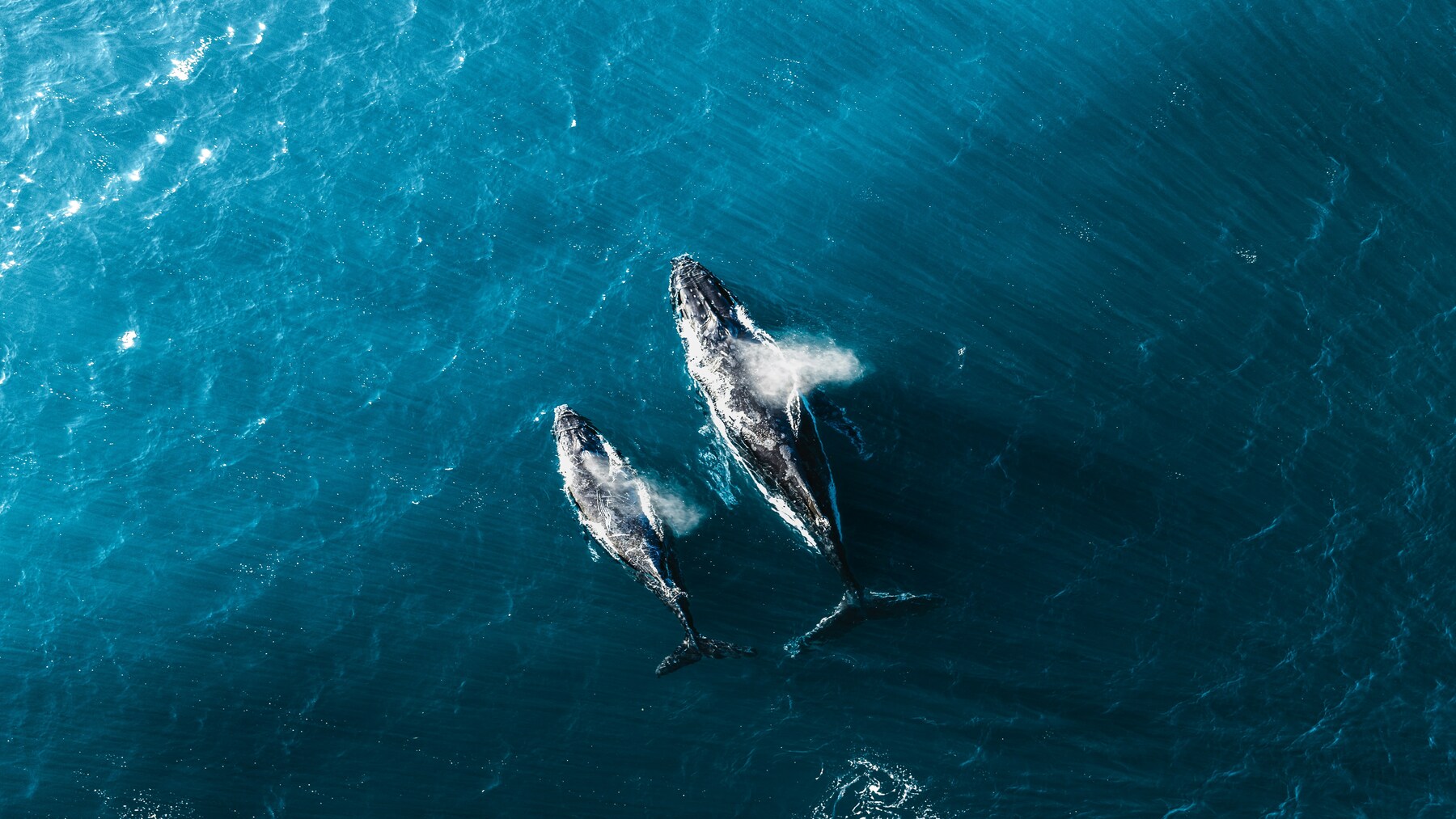
A curious and troubling development for scientists and authorities, especially given that we are talking about a region that is particularly important for the reproduction of the southern right whale, and the need to uncover the cause of whale deaths in Chubut.
The waters where the whales come to breed are now the scene of an investigation into their deaths. In the case of the mortality of southern right whales in Chubut, which principally affects calves, it has raised a question that must be answered as soon as possible and relates to the causes behind this reality in one of the main reproductive hubs for the southern right whale.
The investigation is still ongoing but, from the Institute for Whale Conservation, they point out that this reality and these unusual deaths may be due to certain conditions, where the study of environmental, health, and population possibilities come into play to clarify their causes and potential consequences.
The significance of the place helps to understand the concern. According to Matías Arrigazzi, biodiversity specialist at Greenpeace Argentina, these shores are an ideal habitat for mating and rearing. What happens there affects an especially delicate stage of the whales’ life and reinforces the interest in preserving their marine environment.
The article gathers the warnings from specialists, the hypotheses under investigation, and the data from scientific monitoring. That journey allows interpreting the information cautiously, without conflating census data with a mortality balance or declaring the origin of the episode resolved.
What are the whales dying from in Chubut?
The mortality of hundreds of southern right whales recorded in recent months along the coasts of Chubut province highlights the importance of Patagonian waters for the conservation of the species, according to Greenpeace Argentina told EFE this Sunday.
“It is essential to remember the value of Patagonia’s waters for this emblematic species. These episodes confirm something crucial. This sector forms part of the heart of its critical habitat,” said Matías Arrigazzi, Greenpeace Argentina biodiversity specialist.
The biologist explained that the southern Argentine coastlines are key areas for mating, “for the reproduction, for the rearing of the young, for the sociability of mothers with their calves.”
The mortality cases have been recorded since June on the Valdés Peninsula and in different areas near Puerto Madryn, in Chubut, one of the main breeding zones of the southern right whale in the South Atlantic.
Authorities in Chubut and scientific teams are investigating the causes of a season with an unusually high mortality, especially among calves.
According to reports, among the hypotheses being analyzed is a bacterial infection, although there are not yet definitive conclusions about the origin of the deaths.
“It would involve a bacterium common in the sea that can cause systemic illness in calves, with no evidence yet allowing attribution of the observed mortality to anthropogenic factors (caused by human activity),” they stated in an official message released on Friday.
In the first census of the 2026 season, conducted in September, 1,375 individuals were counted along the shores of Chubut, including 409 calves, according to data from the Center for the Study of Marine Systems (Cesimar-Conicet).
In 2025, the census had reached a record of 2,110 individuals, of which about 800 were calves.
Experts have noted that the difference between the two seasons should be interpreted with caution and that the results of the investigations will be necessary to determine the causes of the mortality recorded this year.
Arrigazzi, meanwhile, stated that “protecting the quality of their marine environment is the best guarantee to ensure the future of the southern right whale.”
The southern right whale arrives each year to the Argentine shores between June and November to reproduce and raise its calves. The species can reach about 17 meters in length and weigh around 40 tons in adulthood. In Argentina it has been protected as a National Natural Monument since 1984.