
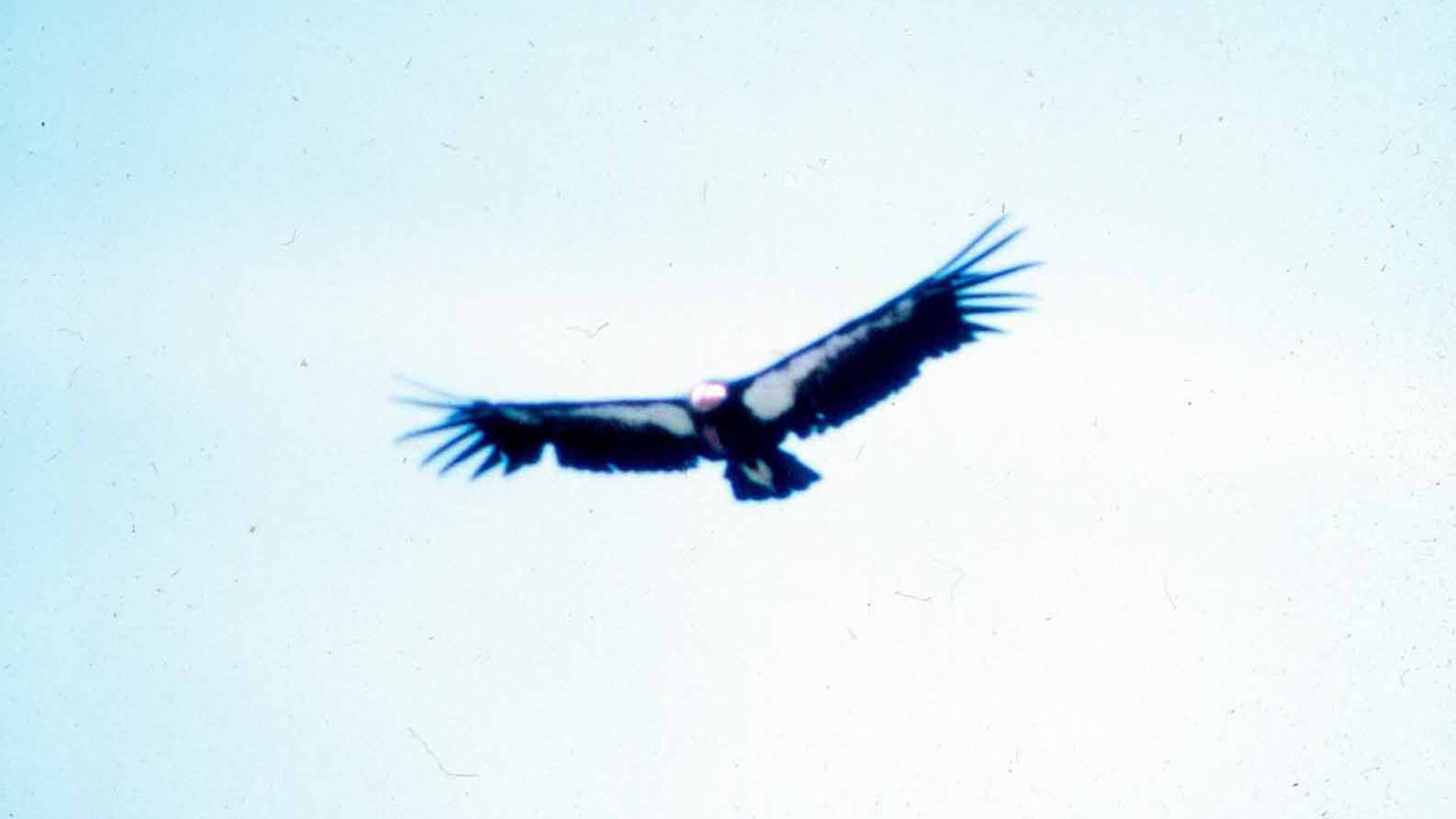
In 1987, the California condor had no wild individuals left. The 27 survivors were housed in two breeding centers, with the future of the entire species at stake. Almost four decades later, the official 2025 tally shows 607 birds, 392 of them in the wild and 215 in captivity. In other words, today there are roughly twenty-two times as many condors as there were back then.
The change demonstrates how far a conservation program sustained for decades can go. But the return to the skies still depends on breeding, monitoring, and veterinary care. Lead ingested through feeding remains the main obstacle for these populations to maintain themselves.
California Condor Figures
| Data | Figure |
|---|---|
| 1987 | 27 individuals, all in captivity |
| Population as of December 31, 2025 | 607 (about 22 times more) |
| In the wild / in captivity | 392 / 215 |
| California | 216 |
| Arizona and Utah | 98 |
| Baja California (Mexico) | 53 |
| Pacific Northwest | 25 |
| Releases in 2025 | 46 |
| Lead deaths (1992-2025) | 161 (about 50% of known-cause deaths) |
April 19, 1987: the last wild condor
On April 19, 1987, biologists captured AC-9 at Bitter Creek Refuge in California. It was the last California condor still living in the wild and was transferred to the San Diego Wild Animal Park. There it joined the program shared with the Los Angeles Zoo.
The decision came after a collapse that left little margin. During the winter of 1984–1985, four of the five remaining free breeding pairs died or disappeared. Bringing together the surviving birds was intended to give them a chance to reproduce under controlled conditions.
The gamble began to pay off. In 1988 Molloko was born, the first chick conceived in captivity, and in 1992 the releases of condors raised in the centers began. The return to their natural habitat was already underway.
Only one chick every two years
Why has it taken so long to grow their numbers? The condor raises only one chick per brood, and both parents spend months incubating the egg and feeding the chick. Even after learning to fly, the youngster continues to need care.
That effort means that, in natural conditions, pairs typically manage to raise one chick every two years. Therefore, losing an adult is particularly costly to recovery. Replacing those losses takes years, even if the surviving birds have food and suitable nesting sites.
392 wild condors across four regions
The balance distributes the free-ranging birds among California (216), Arizona and Utah (98), Baja California in Mexico (53), and the Pacific Northwest experimental population (25). The latter is counted separately from the California group. The recovery thus spans multiple areas of the United States and Mexico.
The report records 46 releases of birds raised in captivity. It includes two releases in early January 2026, both in that category and in the total number of free birds. This nuance is relevant when reading the figures presented as of December 31, 2025.
161 lead-related deaths since 1992
The condor is a scavenger that feeds on dead animals. When it encounters remains of a carcass shot with lead ammunition, it may ingest small fragments of the projectile with the meat. A food source thus becomes a pathway to poisoning.
Between 1992 and 2025, 161 lead-related deaths were confirmed in the wild population. They account for roughly half of the 324 deaths with a known cause and 28% of the 569 total recorded. The distinction matters because in many cases the cause of death could not be determined.
The U.S. Fish and Wildlife Service regards reducing and eliminating that exposure as essential. Therefore, it promotes lead-free ammunition, such as copper, among hunters and ranchers. The remains of animals can continue to feed condors without adding this contaminant.
Transmitters and blood analyses for each bird
Watching one of these birds gliding can give the impression that the rescue has ended. Yet behind that flight lies ongoing work. At Pinnacles National Park, for example, biologists use transmitters to track their movements and assess their behavior.
The program also conducts periodic captures to inspect the gear and analyze lead levels in the blood. Birds with elevated levels receive treatment. Freedom, in this case, comes with ongoing checks that enable problems to be detected and addressed.
Populations not yet self-sustaining
The program’s goal is to establish wild populations capable of sustaining themselves. That requires condors to survive and reproduce without lead poisoning continually impeding their progress. Avoiding extinction is a huge achievement, but work remains in the environment to which they return.
This balance allows measuring how much progress has been made since those 27 survivors. The 2025 annual population report was published on February 25, 2026 by the United States Fish and Wildlife Service.
Image: California Department of Fish and Wildlife / Wikimedia Commons (CC BY 2.0)