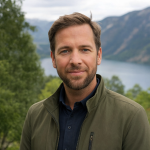
A modest family project in the Florida Keys ended up contributing to a method for restoring damaged reefs. Ken Nedimyer, devoted to tropical fish and aquaculture, began propagating corals with his daughter in 2000, and years later founded an organization whose nurseries can grow more than 50,000 corals per year, according to the foundation itself.
The idea involves growing fragments until they can be moved to the reef, using structures known as “coral trees.” The method enables colonies to multiply, but the real challenge comes afterward, when they must survive in an increasingly warmer sea.
Coral Restoration Foundation figures
| Metric | Value |
|---|---|
| First cultures | 2000, with his daughter |
| Founding of CRF | 2007 |
| Coral trees | Since 2011 |
| Nursery capacity | Over 50,000 corals per year (about 137 per day) |
| Genetic diversity | Around 600 genotypes from more than 20 species |
| Survival in the Keys (2007-2015) | Between 4% and 89% |
| Survival after the 2023 heat | Less than 22% (staghorn) and less than 5% (elkhorn) |
| Relocation plan for 2026 | Around 1,000 corals from 130 genotypes, of 3,500 planned |
From a school project in 2000 to a foundation in 2007
Nedimyer had known about that funding long before setting up a nursery. He had watched the reefs he dived along lose corals and fish, a transformation that ultimately changed his work.
According to the case documented by The Nature Conservancy, in 2000 he began propagating fragments of deer-horn coral (Acropora cervicornis) with his daughter for a 4-H educational project. He then proposed using those specimens to restore reefs, and in 2004 funding arrived for a pilot trial.
In 2007 he founded the Coral Restoration Foundation (CRF). The initial cultivations preceded the famous underwater trees, whose creation the foundation itself places in 2011.
Corals hung like on a clothesline
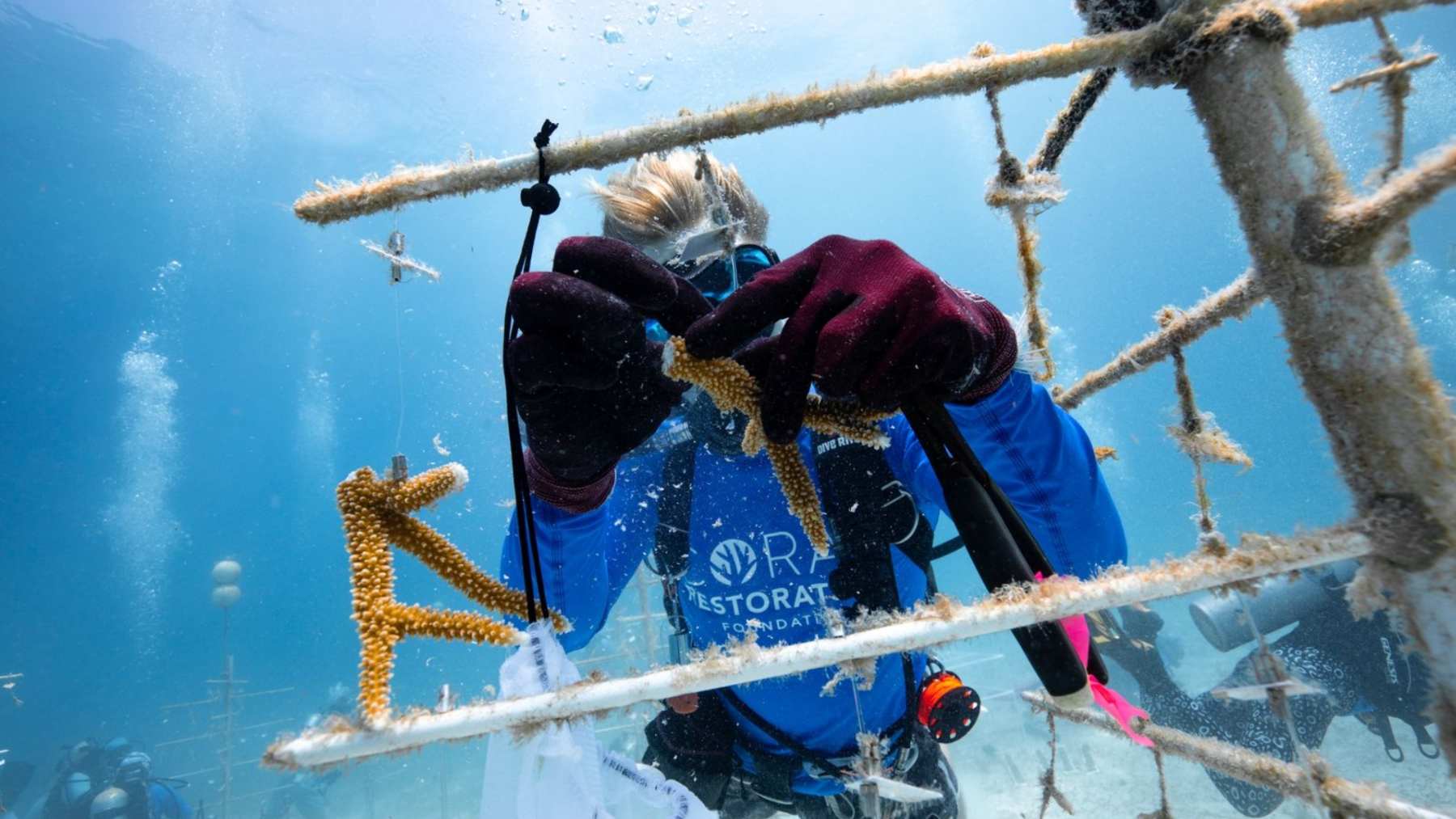
These structures are anchored to the seabed and supported by a submerged buoy. From their branches hang coral fragments on threads, while the whole assembly moves with currents and waves.
The image resembles an underwater clothesline, though it requires considerably more care. Teams clean the structures and adjust their depth to maintain suitable conditions, and the foundation estimates that branching corals can be ready for the reef in six to nine months.
Afterward, divers anchor them in selected zones for recovery. Ongoing monitoring enables researchers to check how much they grow and which part remains alive—an essential task just as the cultivation itself.
600 genotypes from more than 20 species
According to CRF, their Florida nurseries hold around 600 genotypes from more than 20 species. Genotypes represent genetic differences between individuals, an important factor to keep the collection diverse.
The experience also extended beyond the United States. Nedimyer helped create Reef Renewal International with a team from Bonaire, and the work tied to this organization reached places such as Curaçao, the Cayman Islands, and French Polynesia.
Restoring these ecosystems has consequences that go beyond the landscape a diver sees. Healthy reefs provide habitat for fish, lobsters, and turtles, and sustain activities like fishing and tourism upon which coastal communities depend.
Survival rates ranging from 4% to 89%
What happens when corals leave the nursery? A study published in PLOS ONE in 2020 analyzed 2,419 colonies transplanted to Florida Keys reefs, with observations conducted between 2007 and 2015.
In seven cohorts followed for at least five years, survival ranged from 4% to 89%. Moreover, it tended to decline after the first two years, a finding that obliges looking beyond the number of individuals placed.
The authors noted that reducing pressures on the reef was necessary to achieve meaningful recovery. Meanwhile, transplants could help prevent local disappearances and preserve genetic diversity, without by themselves guaranteeing the reconstruction of the ecosystem.
The 2023 heatwave
The 2023 marine heatwave showed that fragility. According to a 2024 assessment compiled by NOAA, among the transplanted corals examined, less than 22% of the staghorn and less than 5% of the elkhorn survived.
Therefore, programs are expanding work with species that withstood better and with the reproduction of surviving corals. They are also seeking to obtain new genetic combinations, because producing many identical fragments from a single colony does not provide the same diversity as crossing distinct progenitors.
A second genetic bank under the water
On August 20, 2026, CRF reported the relocation of about 1,000 corals, corresponding to 130 genotypes, from Tavernier to the Elbow nursery. It was the first phase of a plan to move approximately 3,500 and double its underwater genetic collection at two sites. Those 1,000 corals are less than a third of the 3,500 planned.
“We cannot control the ocean’s temperature. But we can reduce the risk of losing important genetic material,” explained Phanor Montoya Maya, head of CRF’s restoration program. Spreading the specimens ensures their conservation does not depend on the conditions of a single location.
That family initiative today forms part of a collective effort that requires growing, monitoring, and adapting techniques as the sea changes. The statement about this new genetic bank was published on Coral Restoration Foundation’s official website.
Image: Coral Restoration Foundation