
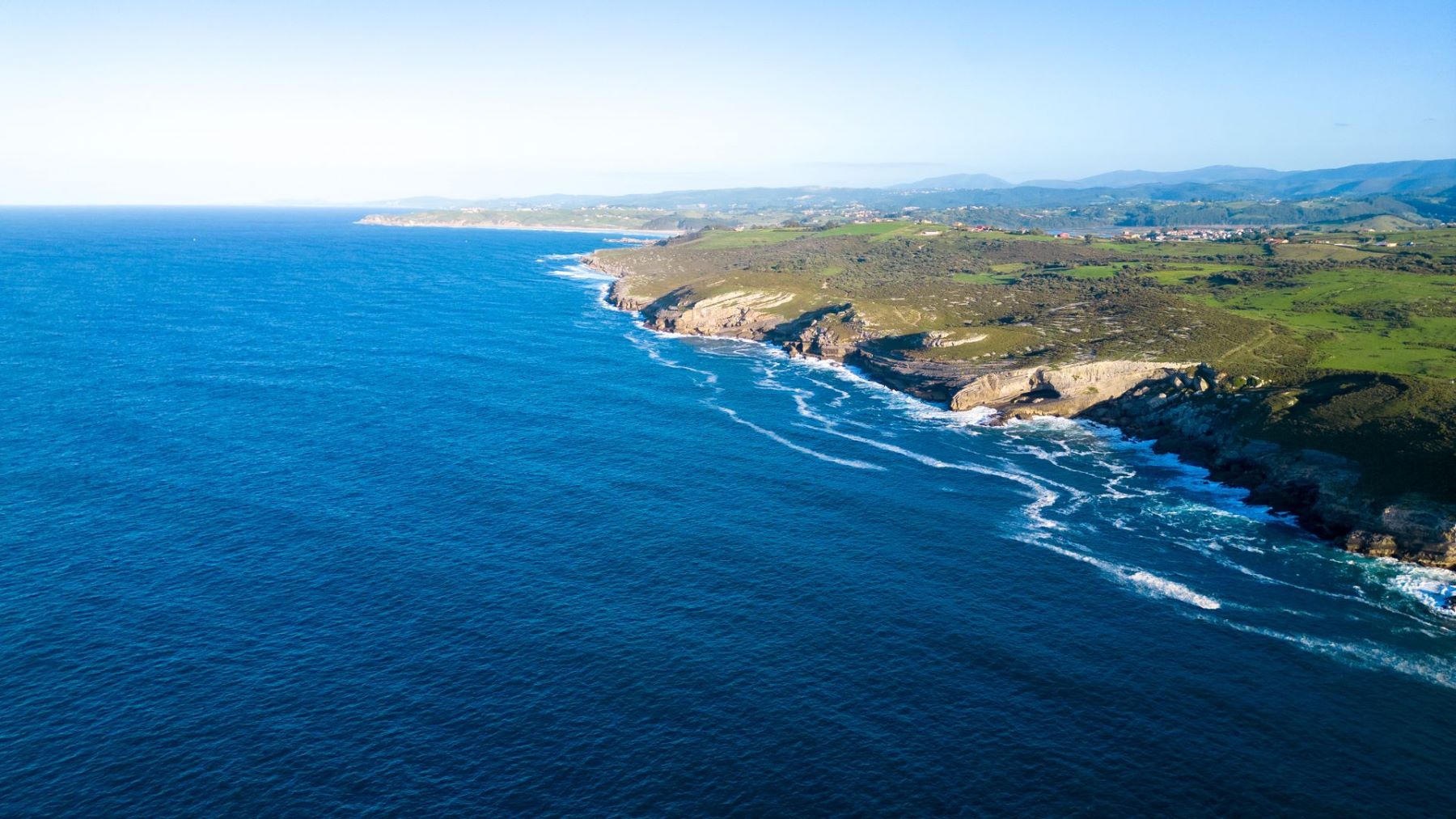
Uhinak 2026 will bring together scientists and administrations in Irún to drive decisions that help adapt the coastline to the effects of climate change.
How to protect coastlines when ocean conditions change? The rise in sea level and extreme events pose a challenge that affects populations, infrastructures, and ecosystems. Uhinak 2026 will focus on how to translate knowledge about those risks into coastal management.
Understanding this connection allows us to assess what information authorities need to anticipate and plan adaptation. We will explain why scientific data, institutional coordination, and land-use decisions must progress together.
The seventh edition of the congress, promoted by Ficoba and AZTI, will be held on October 8 and 9 in Irún. Its program will connect research on ocean changes with the responses required by coastal areas.
Through scientific contributions and management experiences, we will address how threats are studied and what role planning plays. We will take a tour to better understand the central challenge of the event: turning what we know about the sea into actions that better prepare our coasts.
Uhinak 2026
The seventh edition of the International Congress on Climate Change, Uhinak, which will be held on October 8 and 9, will emphasize the need to “convert scientific knowledge into decisions” to adapt our coasts to the climate emergency.
The Director of Natural Heritage and Climate Change Adaptation of the Basque Government, Adolfo Uriarte, the Gipuzkoa Sustainability deputy, José Ignacio Asensio, the mayor of Irun, Cristina Labora, and the executive director of Azti, Rogelio Pozo, have presented this Monday this new edition of the Uhinak congress, which will take place at the Ficoba fairgrounds in the border town.
During the appearance, all of them agreed that “the coastal adaptation to climate change requires scientific data, the ability to anticipate, and coordinated decisions among administrations.”
Climate Change
In particular, the director of Natural Heritage and Climate Change Adaptation of the Basque Government, Adolfo Uriarte, has stressed that “coastal adaptation to the effects of climate change is a priority” for the regional government, since a large part of the population of this community, its strategic infrastructures, and economic activity lie along the coast.
“The response cannot be limited to isolated actions. We need scientific knowledge, planning, institutional coordination, and the ability to anticipate,” he stated.
Meanwhile, the Sustainability deputy, José Ignacio Asensio, recalled that sea-level rise, coastal flooding, shoreline retreat, and marine heatwaves already affect “our ecosystems, our infrastructures, and the safety of people.”
He also explained that “in a territory where 40% of the population lives near the coast, adaptation is not only a necessity but an urgency” and for this reason Gipuzkoa is already equipping itself with pioneering tools to address it, “such as the first Comarcal and Local Climate Change Adaptation Plan or the Foral Network of Videometry.”
The mayor of Irun and president of the Ficoba Foundation, Cristina Laborda, has highlighted that one of the “great values” of this congress is the ability to “bring together two worlds that must go hand in hand: scientific knowledge and management.”
“We need to understand well what is happening, but also turn that knowledge into decisions, projects and concrete actions,” she emphasized.
In this vein, the congress program of Uhinak will start from scientific research and then move toward the decisions and actions required to adapt the coastline to climate change, the organizers explain in a note.
What are the effects on the coasts?
Thus, the two main lectures will allow examining both the changes taking place at the oceanic scale and their effects on the coasts.
In the first, Antonio Turiel, a CSIC scientist at the Institute of Marine Sciences of Barcelona, will analyze recent trends observed in the ocean, especially in the North Atlantic, and the scientific debate about possible inflection points in its circulation.
For his part, Melisa Menéndez, a researcher at IHCantabria, will address the variability of extreme sea-level and wave events, and the methods that allow estimating their probability and magnitude to anticipate risks.
The congress program will be completed with various round tables, oral presentations, and posters on climate change challenges, coastal extreme phenomena, mitigation, resilience, governance, and communication.