
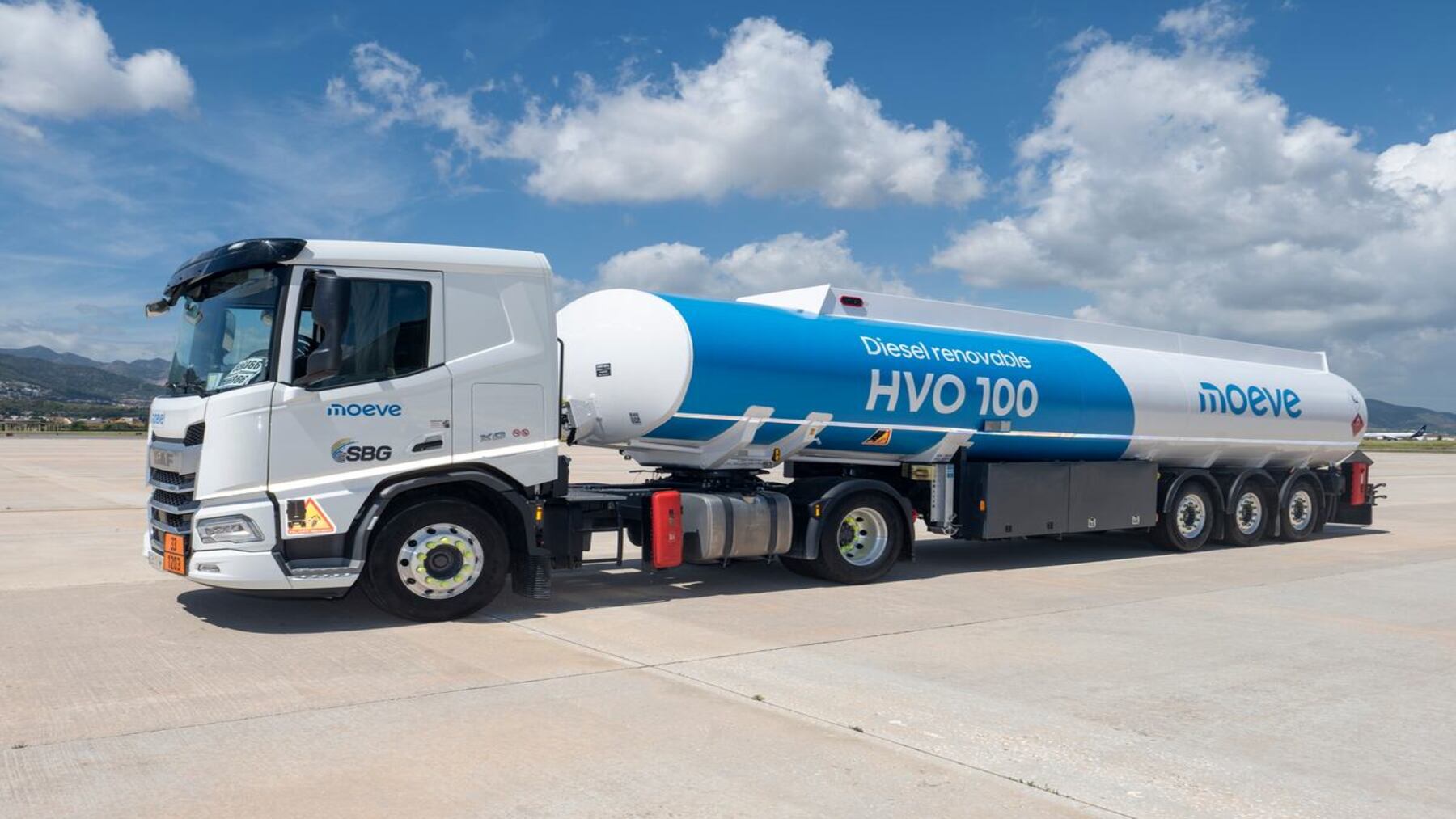
Good news shows that a mine’s heavy machinery can also reduce its carbon footprint. And it’s all thanks to an agreement reached by Moeve and Emerita Resources to supply renewable diesel HVO to the machinery and transport of the Iberian Belt West mining project.
All of this forms part of an initiative in Huelva that is notable as the first of its kind to be carried out in Spain’s mining sector at an industrial scale. Moreover, this agreement opens the possibility of reducing CO₂ emissions in an activity where electrifying certain equipment and heavy vehicles is not entirely straightforward.
This is where renewable diesel enters the field as a highly viable alternative on the path toward decarbonizing these processes that still rely heavily on large amounts of fuel.
In short, the fuel will be supplied by Moeve from its Palos de la Frontera facilities and will be used in the operations of the Iberian Belt West project, located between Puebla de Guzmán and Paymogo.
With this alliance between Moeve and Emerita, renewable fuel becomes a concrete tool to address mining emissions. Its application in machinery and transport will allow on-site testing to determine to what extent HVO can contribute to reducing the environmental footprint of building and operating a mining project.
Renewable diesel gains momentum
Moeve and Emerita Resources have signed Spain’s first agreement to deploy 100% renewable diesel (HVO) at industrial scale within the mining sector, specifically in the operations of the Iberian Belt West (IBW) project, located between the towns of Puebla de Guzmán and Paymogo (Huelva).
Through this alliance, Moeve positions itself as the preferred supplier of this 2G biofuel, which can reduce up to 90% of CO2 emissions across its life cycle compared with traditional diesel.
This 2G biofuel is produced at Moeve’s facilities in Palos de la Frontera (Huelva) and will be implemented in the Iberian Belt West (IBW) operations, led by Emerita Resources, the two companies said in a joint statement.
Specifically, it will be used in both the heavy machinery employed for construction and exploitation at the complex and in the heavy transport of concentrates.
The introduction of this biofuel in the transportation operations during the construction and operation of the mine is estimated to avoid around 2,600 tonnes of CO2 per year, an amount equivalent to the annual absorption of 170,000 trees, which would allow a truck to travel three million kilometers.
Carlos Barrasa, executive vice president of Commercial & Clean Energies of Moeve, stated that accelerating the decarbonization of heavy industry is “one of Moeve’s major strategic axes, and to achieve it we need partners with a forward-looking vision.”
“The agreement reached with Emerita demonstrates that the energy transition can go hand in hand with competitiveness, by leveraging 2G biofuels as an immediate solution for decarbonizing hard-to-electrify sectors,” he added.
Joaquin Merino, CEO of Emerita Resources, stressed the importance of this pioneering agreement for Spain’s mining sector, which is “completely aligned with Emerita’s environmental DNA.”
In this regard, he highlighted that a project like the one the company is developing in Huelva “is the ideal partner for this Moeve project as an example of sustainable mining.”
This agreement stands out for fostering a new industrial ecosystem in the province of Huelva. The proximity between renewable fuel production, mining activity, and the mineral export port enables efficient integration and creates a competitive value chain.
To guarantee access to 100% renewable diesel, Moeve is moving forward, together with its partner Apical, with the construction of a new 2G biofuels plant in Huelva, which will be integrated into the largest second-generation biofuels complex in southern Europe.