
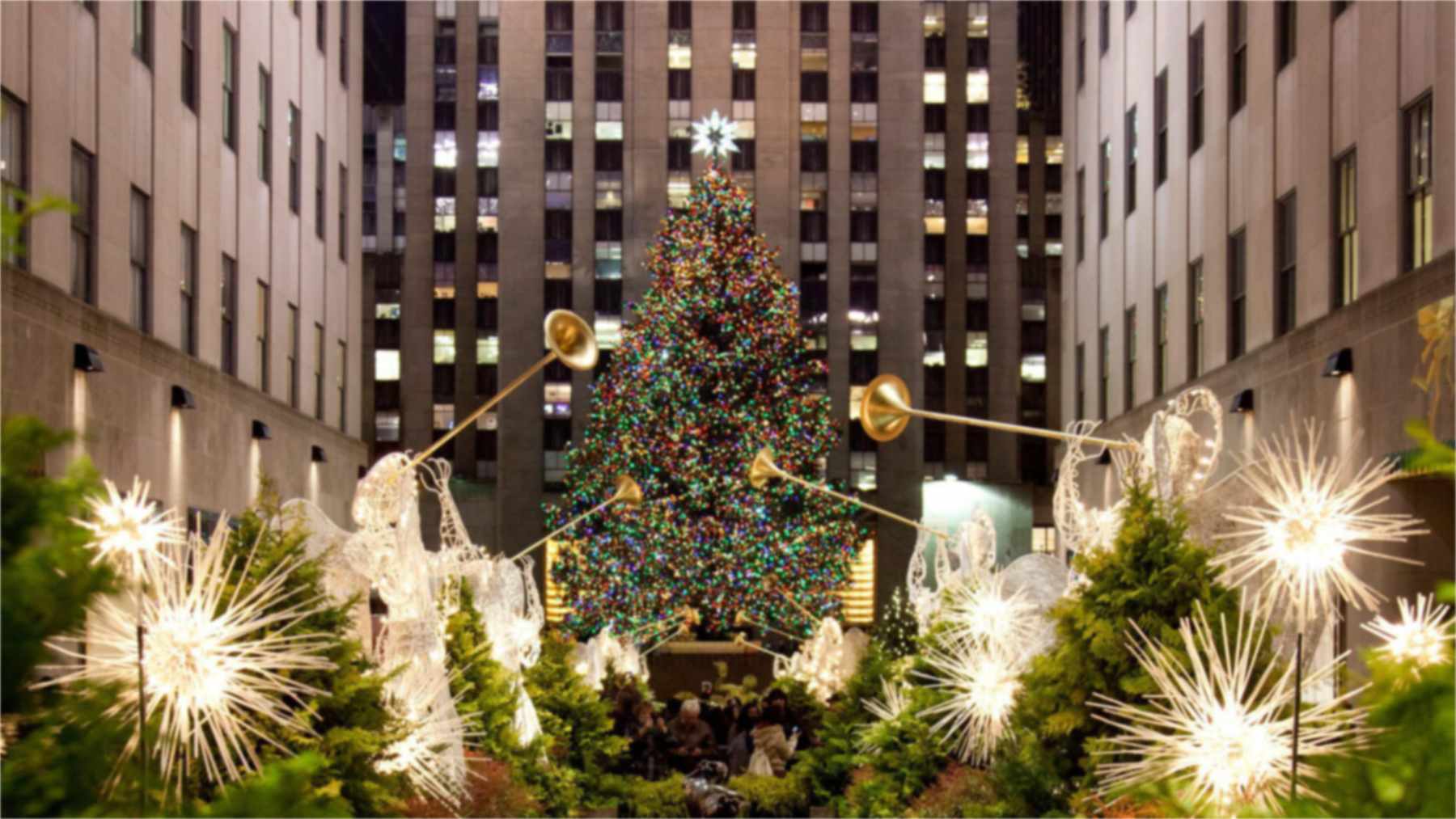
The Rockefeller Center Christmas Tree continues to serve a purpose even after its lights go out. Since 2007, its wood has been donated to Habitat for Humanity to be incorporated into housing and other projects of the organization, continuing a tradition that many people know only from the images of New York in December.
Behind it lies a collaboration with Tishman Speyer, owner and manager of the complex, which donates the material and whose employees participate in the construction alongside the families. The tree thus moves from decorating a plaza to becoming part of everyday spaces, from closets to a terrace where people gather.
The Rockefeller Center Christmas Tree by the Numbers
| Item | Figure |
|---|---|
| Wood donation to Habitat | Since 2007 |
| Tree for 2025 | Norway Spruce from East Greenbush, New York |
| Height | Almost 23 meters (75 feet), about the height of a seven- to eight-story building (own calculation) |
| Age | About 75 years |
| Wood arrival in the Capital District | Announced June 12, 2026 |
| First tree, in 1931 | About 6 meters, nearly four times smaller (own calculation) |
The Wood from the 2025 Tree Is Already in the Capital District
The specimen that presided over Christmas 2025 came from East Greenbush, New York. It was a Norway spruce, also known as a Norwegian spruce, nearly 23 meters tall and about 75 years of age, donated by the Russ family. It stands as tall as a seven- or eight-story building.
Its next destination now has official confirmation. On June 12, 2026, Habitat for Humanity Capital District announced that the wood had arrived in the region and that volunteers would use it in housing projects in the coming months.
That announcement updates Habitat’s overall information, which still states that the receiving communities would be announced in 2026. It confirms the delivery of the material, though it does not identify specific homes where it has already been used.
Sawmill in New Jersey and Oven Drying
How does a Christmas ornament of such size become building material? Rockefeller Center explains that after dismantling, the tree is cut into large sections and transported to a New Jersey sawmill for the initial cut.
Then the wood is dried in an oven and worked into smooth pieces ready to be sent to the chosen Habitat chapter. That preparation is part of the journey from the plaza to the homes.
The recipient organization determines the concrete use of the material according to its projects. Among the applications Habitat describes are floors, furniture, and carpentry work, so the same tree can yield pieces for different functions.
A Terrace and Two Planters Created from the 2022 Tree
One of the closest examples is told by Sarah, owner of a Habitat home in Corinth, New York. She and the volunteers used wood from the 2022 tree to build a separate side terrace and two planters.
The terrace was envisioned as a place for barbecues and family time. In the planters, Sarah and her daughters planted sweet peppers and carrots, turning boards with a festive past into a small space to cultivate food.
For Sarah, those improvements were also linked to the effort required to buy her home. As she told Habitat, she spent nearly eight years improving her credit and savings, and she wanted her daughters to learn that some goals require patience. A story that continues every time the family goes out to enjoy that space.
From Pascagoula in 2007 to Lakisha’s Pantry
The wood from the first tree included in the program, in 2007, arrived in Pascagoula, Mississippi. There it helped build a home for a family displaced by Hurricane Katrina, according to the collaboration story published by Rockefeller Center.
Lakisha keeps another part of that story in her New York home, where there is wood from the 2017 tree. Some pieces of her pantry and her cabinets bear a commemorative seal of the lighting. “Every day, it’s a beautiful reminder of how far I’ve come,” she says in her Habitat testimony.
The celebration itself also originated from a collective gesture. In 1931, Rockefeller Center’s construction workers pooled money to buy a six-meter spruce and decorated it with garlands made by their families. The 2025 tree was almost four times taller.
Reusing the Wood, Without an Emissions Calculation
Environmental thinking starts with something simple: extending the life of a raw material that still has utility. The United States Environmental Protection Agency explains that recovering materials to manufacture new products reduces the need to extract resources and diverts waste from landfills and incinerators.
In this case, terraces, planters, and pieces of carpentry demonstrate what that reuse means in practice. The sources consulted document these uses, but do not provide a specific calculation of the program’s emissions savings.
For the wood from the 2025 specimen, the confirmed step is its arrival in the community that will receive it in its housing projects. The official update was published on June 12, 2026 in Habitat for Humanity Capital District’s bulletin.
Image: Habitat for Humanity