
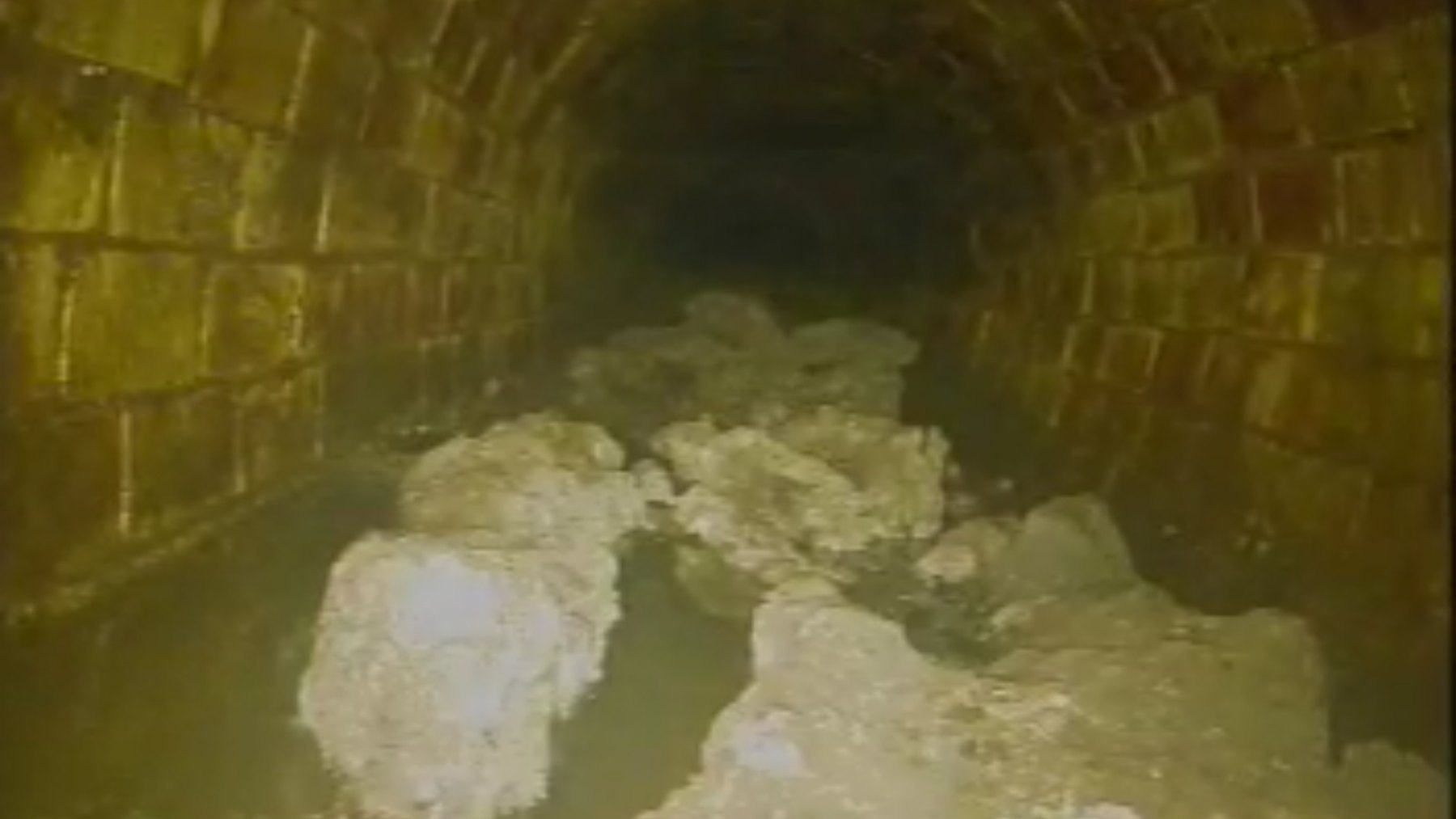
In September 2017, during a routine inspection beneath Whitechapel in east London, Thames Water workers uncovered a mass of fat and wipes weighing around 130 tonnes that was clogging 250 metres of sewer. Part of that blockage later became biodiesel, a fuel that can be used in transport, at a plant in the northwest of England.
Eight years on, the problem has returned to the same neighbourhood. On 22 December 2025, the company announced that it had discovered another fatberg in Whitechapel, about 100 metres long and weighing around 100 tonnes, which it dubbed “the grandson” of the 2017 fatberg.
A grease-and-wipes blockage weighing as much as eleven double-decker buses
A fatberg, or fat iceberg, is a buildup of oils, greases and waste that do not biodegrade and end up sticking to the sewer system. According to the London Museum, the wet wipes formed the main structure of the Whitechapel fatberg, and the museum estimates that it weighed the same as eleven two-deck buses. With that frame as a backbone, the fat solidified fats that arrive from the sink and hinder the flow of wastewater.
“This fatberg is among the largest we’ve ever seen. It’s a genuine monster, and removing it requires a lot of manpower and machinery because it has hardened,” said in September 2017 Matt Rimmer, head of network sanitation at Thames Water, who likened the job to trying to “break concrete.”
The mass blocked a Victorian-era sewer 1.2 metres tall by 0.7 metres wide, according to The Construction Index at the time. A team of eight operatives gradually broke it up with high-pressure water jets and vacuumed it up with tanker trucks, at a rate of between 20 and 30 tonnes per shift. Rimmer stressed that the situation was “totally avoidable” and attributed it to fats and oils poured down sinks and wipes flushed down toilets.
The removal took nine weeks: Thames Water declared the operation finished on 3 November 2017.
About 50 tonnes for the Argent Energy plant
Instead of sending the entire blockage to landfill, Thames Water handed a portion to Argent Energy, a company that manufactures biodiesel from waste fats. “It may be a monster, but the Whitechapel fatberg deserves a second chance,” said Alex Saunders, head of Thames Water’s sanitation network, who spoke of turning “an evil, nauseating, and rancid mass into pure green fuel.”
Saunders explained that until then there had been two outlets for these clogs. “Either we remove the fatberg from the pipes and send it to landfill, or we break it down and feed it back into the treatment process,” he said, adding that while they are “our worst enemy,” reviving them as biodiesel was a “much better solution for everyone.”
The announcement envisaged obtaining around 10,000 litres of fuel. According to The Chemical Engineer, the journal of the Institution of Chemical Engineers, Argent would process around 50 tonnes of the mass at its Ellesmere Port plant, which in September 2017 was still in the commissioning phase.
A rancid fat that demands a tougher process
The material found in a sewer is far from clean oil. “We have a large reception area where all material ends up in basically a big pit with several screens,” explained Dickon Posnett, Argent’s director of corporate affairs, to the journal. He then described how the material passes through more filters, processes to remove water, and another filtration before the chemical reaction begins.
The challenge lies with free fatty acids, which appear as the fat degrades. Posnett said Argent can handle content up to 100%, while few plants comfortably manage more than 20%. “A biodiesel plant working with clean oil, such as rapeseed or palm oil, would use only a single esterification, but that does not work with waste,” he explained.
That is why the company performs a pre-esterification step and then several transesterifications, the reaction that converts fats into esters—the biodiesel. The process ends with a double distillation. “This helps to remove impurities or by-products, so what remains is a very pure fuel with a high ester content,” Posnett said.
The executive himself acknowledged that the business case was not entirely clear. “It’s a new supply chain: there isn’t a fatberg-to-biodiesel supply chain,” he said. “Will it make money? Probably not. But it’s another waste stream that can end up as biofuel.”
B20 and B30 blends on Metroline buses
The link to London’s buses lies with operator Metroline. Argent explained in a December 2021 post that it had supplied fuel to Metroline since 2015 and that its buses had used the B20 blend and, later, also the B30 blend. These acronyms indicate 20% and 30% biodiesel in diesel.
Argent also produces its fuel from used cooking oil and other waste fats, so the Whitechapel fatberg cannot be credited for all the fuel that reached those buses. The sewers were merely one among several feedstocks.
Less fossil diesel, but not zero emissions
To measure the climate benefit of biodiesel, you must account for its entire lifecycle—from feedstock collection to combustion in the engine, which is known as a life-cycle analysis. Using that approach, the United States Department of Energy notes that emissions from pure biodiesel, B100, are 74% lower than diesel, according to Argonne National Laboratory.
That figure refers to the pure fuel and not to blends such as B20, and engines still have to meet the same exhaust limits. A bus burning biodiesel may emit less over the lifecycle, but it is not a zero-emission vehicle.
Another 100-ton fatberg in December 2025
“This latest fatberg shows exactly what happens when fats, oils and wipes end up in our drains: they don’t disappear, they accumulate and cause serious damage,” said Tim Davies, head of wastewater operations for north London at Thames Water, when announcing the new discovery.
According to the company, fats and oils cause more than 20,000 blockages per year on its network, 28% of the total, and clearing those in December and January costs about £2.1 million. If you tally these figures, the network would total around 71,000 blockages annually, and the new blockage weighs about one tonne per metre, compared with around 0.52 tonnes for the 2017 one.
A survey commissioned by the company among 2,501 adults in London and five southern English counties found that more than 40% had poured meat juices down the sink, and 39% meat gravy. “Now that this fatberg has been discovered, we will prioritise its removal, which could take weeks to complete,” Davies added.
What this story does not prove
The 10,000 litres were a forecast, not a measurement of the fuel that ultimately left the site. The London Museum, which preserves a fragment of the fatberg, states that “the majority was destroyed” and that only part was converted into biodiesel, so the 130 tonnes were the mass’s total weight, not the weight of the fuel produced.
The fragment that remained in London had its own story, because the London Museum was the first in the world to preserve and display a fatberg. “The Whitechapel fatberg will be one of the most fascinating and repugnant objects we have ever exhibited,” said Vyki Sparkes, curator of social and labour history at the museum, before displaying it in 2018. Inside its sealed display case, mold grew and flies hatched, according to the museum.
Concerning the 2025 block, there is less information, as the press release did not state that it would become biodiesel, and the sources consulted do not indicate how its extraction concluded or what happened to the material.
Used oil, to the container and not down the sink
Thames Water recommends letting used oil cool, collecting it in a container, and not pouring fats, sauces or custards down the sink. In Spain, the system depends on the municipality: Madrid, for example, has dedicated containers and clean points, and notes that separated oil can be used to produce biofuels.
In the bathroom, the company asks that you flush only urine, feces and toilet paper, and that wipes be thrown in the bin. The official statement about the new Whitechapel fatberg was published on 22 December 2025 on Thames Water’s website.
Imagen: Thames Water