
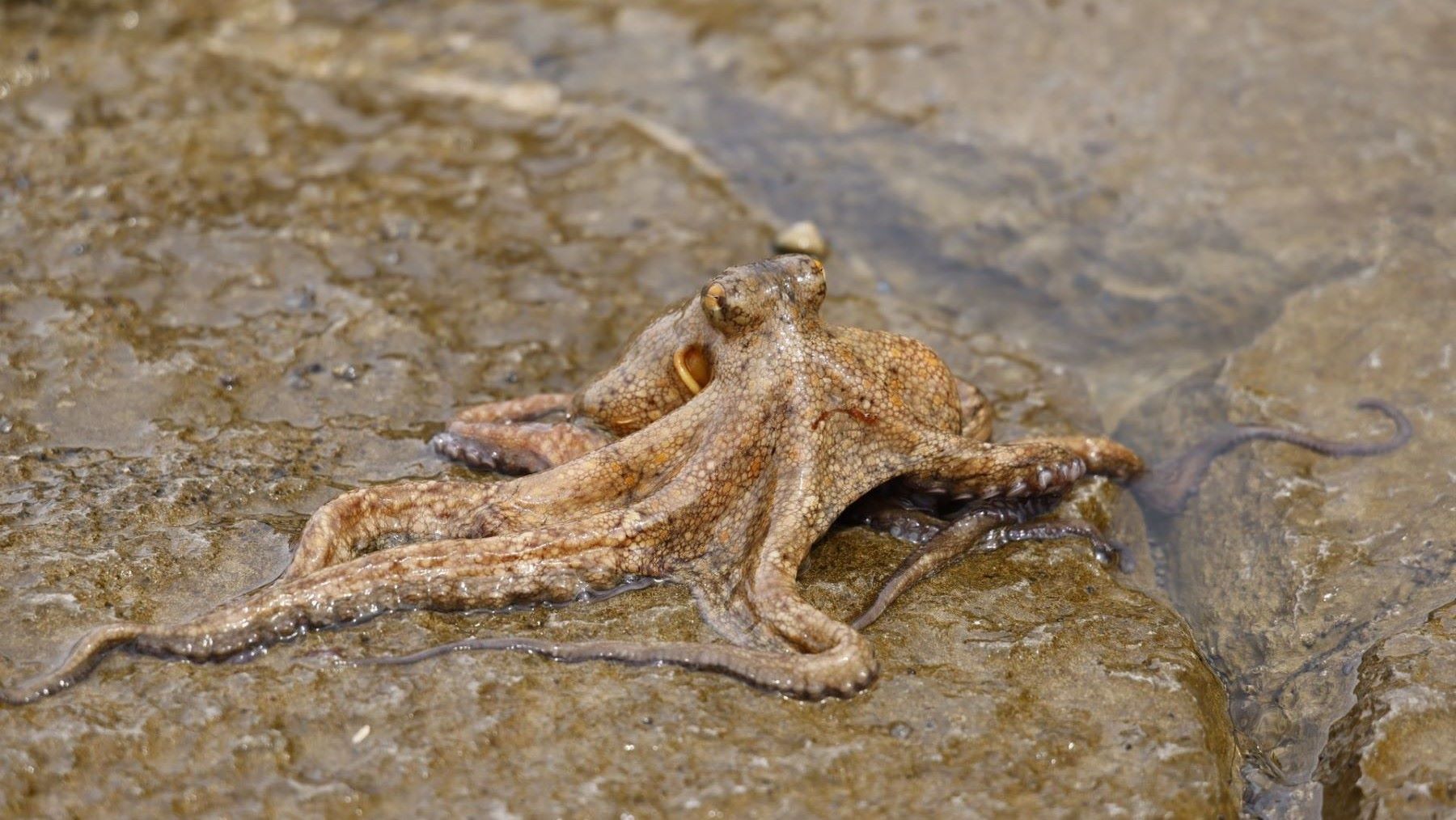
International Octopus Day 2026 is celebrated on October 8: three hearts and about 500 million neurons in the common octopus, according to the Natural History Museum in London, drawing the public closer to the unique biology of these cephalopods.
Today, October 8, International Octopus Day 2026, is a celebration that reminds us how remarkable this species can be. This date, also acknowledged by the United States National Oceanic and Atmospheric Administration (NOAA), invites us to learn about the complex intelligence of this cephalopod, its distinctive behavior, and the ecological importance it holds for marine ecosystems.
The Natural History Museum in London notes that the common octopus, Octopus vulgaris, possesses around 500 million neurons and its nervous system is distributed predominantly in the arms; moreover, it has three hearts, two of which pump blood to the gills and the third distributes it to the rest of the body.
How does an octopus explore its surroundings and what role does it play in marine ecosystems? Below, we will attempt to answer these questions and others such as, for example, how it searches for food, how it avoids predators, and whether it has particular ways of interacting with its environment. International Octopus Day 2026 is the perfect excuse to learn about and protect one of the most enigmatic species of marine ecosystems.
International Octopus Day 2026
The International Octopus Day 2026 is celebrated every October 8 and serves to highlight one of the most emblematic species of the world’s marine ecosystems. According to data from the Natural History Museum in London, the Octopus vulgaris boasts the staggering figure of 500 million neurons spread throughout the body, but especially in its eight arms, which also stand out for their astonishing regenerative power.
Its cardiovascular system is amazing; it has three hearts that perform different functions. Two of them are devoted exclusively to pumping blood to the gills, aiding the octopus in breathing effectively in any situation. The third oxygenates the rest of the animal’s vital organs.
The blue color of octopus blood is due to hemocyanin, a copper-rich protein that colors the blood and enables survival in the cold waters of seas and oceans. Additionally, it possesses pigment cells called chromatophores, which reside in the epidermis and allow it to camouflage with hyperrealistic precision in a matter of milliseconds, ensuring survival against predator attacks.
Neurological Complexity and Marine Ecosystems
Celebrating International Octopus Day 2026 requires understanding the strategic role of octopuses in the food chain. These animals are benthic predators, meaning they feed on other organisms that live on the seabed (the benthos) and help regulate populations of crustaceans and mollusks on reefs and seagrass meadows.
The cognitive capacity of octopuses enables them to solve complex problems, use tools such as stones or other “marine utensils” and provides them with highly advanced working memory. Since their nervous system is distributed mainly in the arms, these cephalopods possess complete autonomy in their eight limbs.
Octopuses are so biologically sophisticated that they even have tissue regeneration abilities, which allows them to grow new arms if a predator regrafted them during an attack. However, they are very territorial and solitary, which makes them more vulnerable to such encounters, sometimes deadly.
Climate Threats and Fisheries Regulation
International Octopus Day 2026 is also a day of advocacy. From the scientific community, there are alerts that the degradation of marine ecosystems worldwide, along with ocean acidification and overfishing, are decimating octopus populations in parts of the Atlantic Ocean and the Mediterranean Sea.
International organizations demand that minimum landing sizes for fishing be established and that they are enforced with fines and penalties for non-compliance; in addition, they highlight the need to implement mandatory closed seasons to avoid further destroying coastal biodiversity.
Moreover, industrial progress along the coasts is destroying the most important ecosystems for octopus reproduction, which translates into lower catches, forcing many to engage in unethical fishing practices. Without effective conservation policies and fishery management, it becomes a vicious circle of destruction that will ultimately push this species, vital to marine ecosystems, toward extinction.
Public Awareness and the Species’ Future
Within the framework of International Octopus Day 2026, various organizations promote educational workshops for children, youth, and adults at aquariums and research centers on the peninsula Afor the scientific community, spreading the fascination they feel for these cephalopods translates into greater public awareness and a conservation ethic that perhaps they did not previously possess.
This day also serves to promote a gradual transition from mass gastronomic consumption of octopuses toward one where the protection of the species can coexist with the oldest culinary traditions of our region.
Thanks to satellite monitoring of fishing fleets, potential illegal catches can be controlled, and the creation of new protected marine reserves will also help protect this species from extinction. It is time for international bodies to develop biodiversity conservation policies that recognize the biological sensitivity of marine life.