
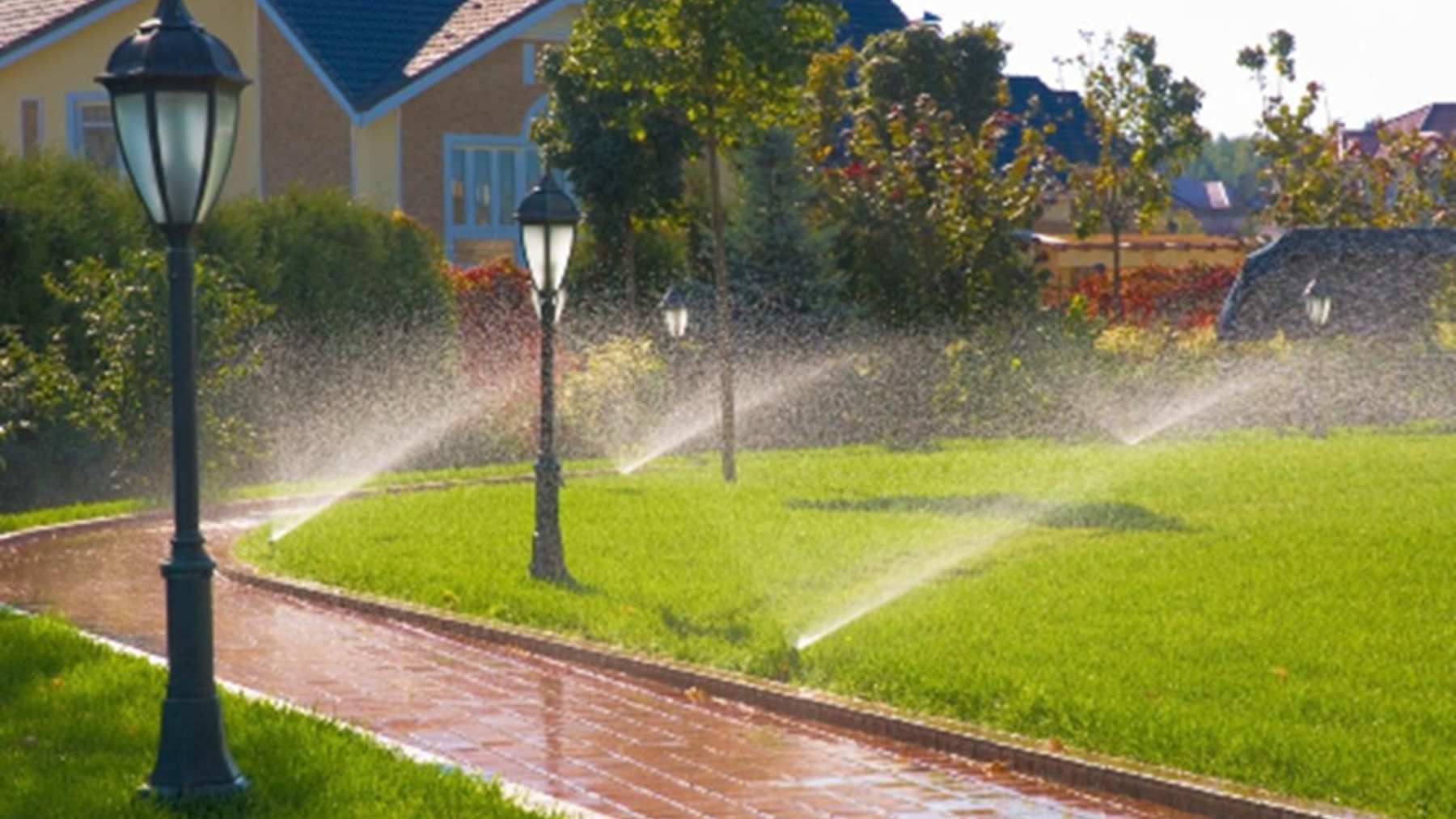
Starting January 1, 2027, cities, local and regional public bodies, and the California Department of General Services will not be allowed to water decorative lawns with potable water, such as the grassy strips in parking lots, except in disadvantaged communities, which have more leeway. The prohibition will also apply in drought-free years and will later be expanded to businesses and residential developments.
The measure stems from AB 1572, which Governor Gavin Newsom signed on October 13, 2023. It was drafted by then-California Democratic Assemblymember for Burbank Laura Friedman, and was backed by the South Coast Water District, the Natural Resources Defense Council (NRDC) and Heal the Bay.
“Pouring ever more water on nonfunctional and ornamental grass is a lost battle that wastes drinking water and money,” Friedman said in June 2023, when the metropolitan district announced its support. According to the legislator, the law would help communities conserve water and switch to more sustainable alternatives “that keep landscapes beautiful.”
Single-family-home lawns remain exempt from the ban, as does grass used for sports, recreation, or hosting gatherings.
The affected lawn is the one that is only decorative
California’s State Water Resources Control Board defines nonfunctional grass as trimmed turf not located in a recreational area or a common space. Among its examples are street median lawns, lawns fenced off to keep people out, and grass surrounding signs or buildings.
Functional grass is the kind used for community gatherings, informal games or play. The law includes as recreational areas sports and golf fields, playgrounds and picnic areas.
The rule limits irrigation to potable water and does not require removing the grass, so lawns may still be watered with recycled water or collected rainwater.
A phased timetable from 2027 to 2031
On January 1, 2027, the properties managed by the Department of General Services, which administer state government facilities, and those of local governments, public agencies, and public water systems, will begin. On the same day, water suppliers must have incorporated the prohibition into their rules and notified their customers.
On January 1, 2028, all commercial and industrial properties and the remaining institutional properties—such as hospitals, churches, and higher education institutions—will be added. January 1, 2029 marks the inclusion of HOA common areas and other planned communities of common interest.
Properties under local administrations and agencies and public water systems located in disadvantaged communities, defined by the law as those with a median household income below 80% of the state median, have until January 1, 2031. If the state has not provided funds to upgrade those gardens by then, the deadline will be extended until funding is available.
Half of urban water use goes to outdoor areas
In its statement of purpose, the California Legislature declared that using potable water to irrigate nonfunctional grass is a “wasteful use” that conflicts with state policies on climate change, water conservation, and reducing dependence on the Sacramento-San Joaquin Delta ecosystem.
In the analysis prepared by the Assembly’s Committee on Water, Parks and Wildlife in April 2023, Friedman argued that “in a year without drought restrictions, roughly half of all public water supply is used outdoors, primarily for lawn irrigation.” She also noted that a 2005 study estimated California had about 1.1 million hectares of lawn, almost all of it irrigated with treated drinking water.
According to the board, stopping irrigation of this grass reserves water for other uses and saves the energy required to treat it into drinking water. The board presents it as one of the structural changes by which California adapts to a drier and hotter climate, beyond emergency restrictions triggered by drought.
“After three severe droughts across the state in just 15 years, state leaders have realized that watering purely ornamental grass in public spaces is unwise,” wrote Ed Osann and Linda Escalante, then with NRDC, when the law was passed. According to NRDC, the rule is expected to save up to 300,000 acre-feet per year (about 370 million cubic meters) just in the six counties of the Metropolitan Water District, equivalent to the annual consumption of about 900,000 homes.
Trees, cemeteries and recycled water are exempt
The law allows using the necessary potable water to keep trees healthy, which provide shade and reduce heat, and other perennials that are not grass, such as shrubs. It also allows watering when needed to address an immediate health or safety concern.
Cemeteries are excluded, and the restriction does not apply to irrigation with recycled or reclaimed water.
Assistance to replace grass with low-water plants
A month after signing, on November 14, 2023, the California Department of Water Resources awarded $38 million to the Metropolitan District to, among other things, raise in 2024 the grant to businesses and institutions that replace their lawns from $2 to $3 per square foot (about $32 per square meter).
“We had a very wet winter, but now is the time to adapt to California’s drier future. It’s the perfect moment to transform our gardens and move from thirsty lawns to drought-tolerant gardens,” said Karla Nemeth, then the department’s director, in the department’s statement. “Today’s funding ensures that communities, regardless of income level, can withstand future droughts,” she added.
“As businesses and institutions meet this new mandate, we expect them to replace their nonfunctional lawns with sustainable landscapes,” said Adel Hagekhalil, then the Metropolitan Water District’s general manager.
Farther north, Valley Water, the Santa Clara County water agency, recommends identifying the affected areas, designing a low-water garden that protects existing trees, applying for the grants, and upgrading irrigation before the deadlines. The agency notes that, at a minimum, simply stopping irrigation of the affected grass is enough to comply.
Valley Water offers grants of up to $100,000 for commercial, institutional and multi-family projects, and in Palo Alto the cap goes up to $135,000. Its advice to homeowners’ associations is to plan the transition early to take advantage of the grants and avoid future fines.
Some cities have already begun. Pleasanton identified nonfunctional grass on ten municipal properties, and its council approved in July 2026 a contract to replace it with low-water vegetation, while recreational grass remains. According to the city, work was slated to begin in September 2026 and be completed before the end of the year.
Fines of up to $1,000 per day and mandatory certifications
Those who violate the law face penalties under California Water Code Section 1846, which sets a maximum of $1,000 for each day of violation, or penalties imposed by their water provider under its ordinances. In a 30-day month, the state fine could reach up to $30,000.
From June 30, 2030, owners of commercial, industrial and institutional properties with more than 5,000 square feet of irrigated area (about 465 square meters) will have to certify to the state board that they are in compliance, and repeat this every three years until 2039. Homeowners associations will begin on June 30, 2031.
The board may extend any deadline up to three years for justified reasons, such as economic hardship, a critical business need, or health or safety risks to individuals.
What the law still does not clarify
The state board’s official page does not provide a statewide figure on how much water will be saved, and the NRDC’s estimate is limited to the Metropolitan district area. The 2031 deadline for disadvantaged communities also depends on public funds being available to transform their gardens.
In a park or a campus, the boundary between functional and decorative grass is not always clear, which is why Valley Water and NRDC recommend consulting each case with the local water supplier.
Official information about the measure, updated August 10, 2026, is published by the California State Water Resources Control Board.
Image: California State Water Resources Control Board