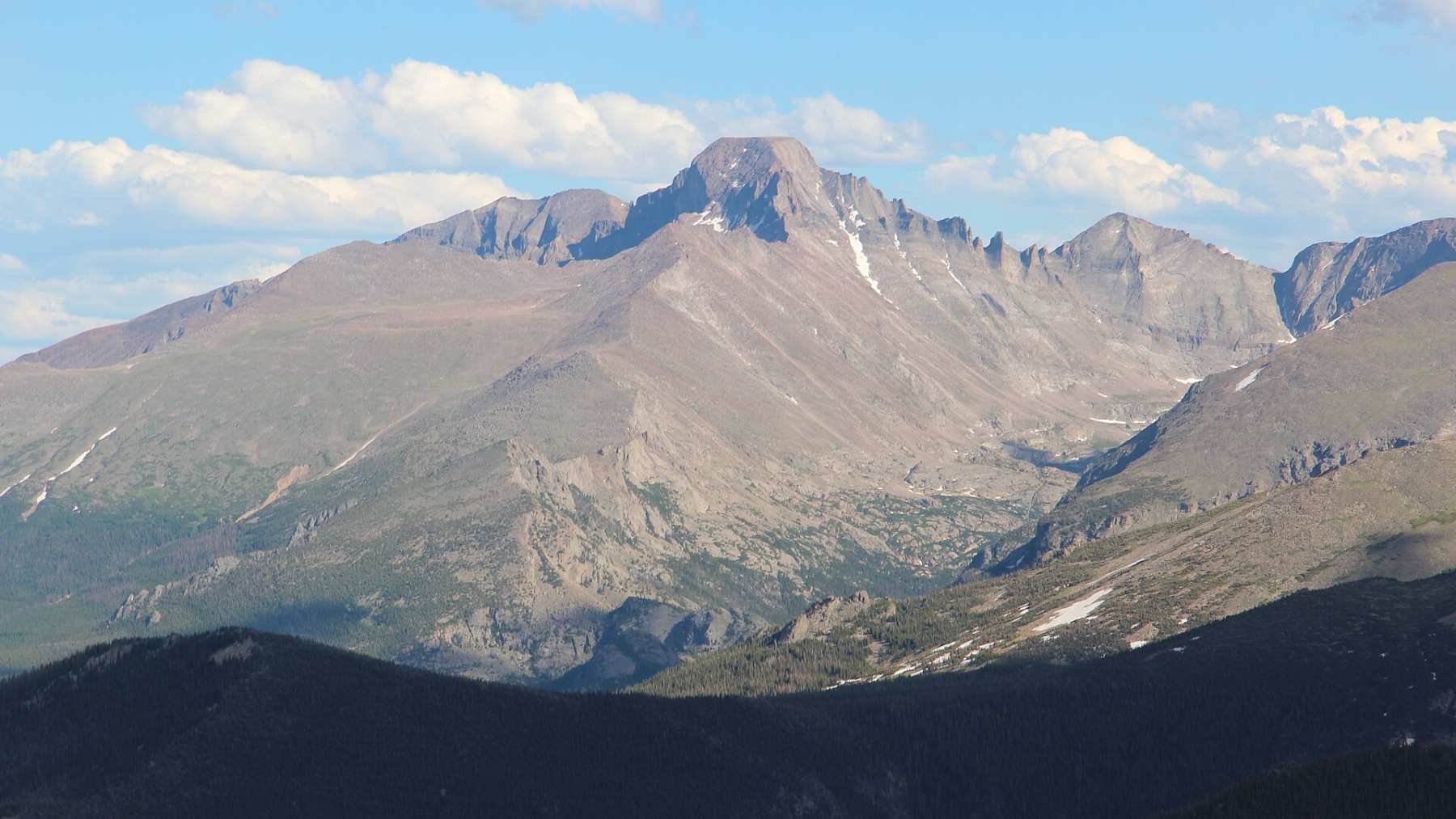
In 1885, at the age of 15, Enos Mills built a small, single-room log cabin at the foot of Longs Peak in Colorado. Thirty years later the Rocky Mountain National Park would be born, created on January 26, 1915 after a campaign he himself estimated had lasted six years, and The Denver Post would eventually call him the “father” of the park.
The cabin remains standing and, in 2016, operated as a museum with pre-arranged visits, according to ColoradoBiz. The file that placed it on the United States National Register of Historic Places, prepared in 1972 by historians F. R. Holland and Perry Eberhart, describes its owner as “undoubtedly the greatest naturalist in Colorado,” even though he was self-taught.
A Log Cabin Built When He Was Fifteen
Mills was born in Kansas and moved to Colorado when very young due to a digestive illness, according to his biography in the National Park Service. ColoradoBiz recalled in 2016 that he was the son of Quakers and grew up on a wheat farm, listening to his mother speak of the Rocky Mountains.
The National Register file details how the refuge looked, with logs joined together, joints filled with wood and mud, a sheet-metal roof, a single door, and a single window.
“Here he studied nature, in books and firsthand,” write the authors of the file, who add that in that cabin he also produced “the majority” of his first writings. He learned a great deal about Longs Peak from Reverend E. J. Lamb, his cousin according to ColoradoBiz, who owned a nearby farm and who, along with his son Carlyle, had spent years guiding visitors to the summit.
At fifteen he first climbed Longs Peak, which stands at 4,345 meters. Over his life he repeated the ascent 40 times on his own and nearly 300 more as a guide, according to the National Park Service.
An Encounter with John Muir That Changed His Life
After a few years working in Butte, Montana, in 1889 Mills happened to meet the naturalist John Muir on a San Francisco beach by chance. “From that moment, Mills devoted his life to conservation activism, public talks, and writing,” sums up the National Park Service.
His climbs of Longs Peak were more than mere walks. “They were ‘nature journeys,’” write Holland and Eberhart, attributing to him the creation of the ascent to that peak as a “national pastime,” and recalling that he was once dubbed the “father of the field outing.”
A Hotel Without Alcohol or Card Games at the Foot of Longs Peak
In 1902 he returned to Colorado and bought Longs Peak House from a cousin in Estes Park, which he later turned into Longs Peak Inn. From there he led guests on mountain excursions and gave talks about nature in the evenings.
According to ColoradoBiz, the hotel prohibited smoking, drinking, playing music, or cards, because Mills considered these activities distractions from the surrounding natural environment.
“Enos spent his life trying to debunk the myth that wild animals were ferocious and that pristine nature was dangerous,” his great-granddaughter Eryn Mills told the magazine. “Until the day of his death he encouraged people to go out into nature and experience it peacefully,” she added.
Between 1902 and 1906 he also served as Colorado’s official snow observer. He measured snow depth to forecast how much water would run off with the spring and summer melt.
Flowers Torn Up by the Roots and Mountains Stripped of Their Landscape
By 1900, besides ranchers, hunters, miners, and settlers, tourists had joined the fray. Other parks in the West already faced similar pressures, and in Yosemite a tunnel through a giant sequoia had opened in 1881 to let stagecoaches pass. In Estes Park, a local association for protection and improvement actively promoted the conservation of the surroundings.
“Those who uproot flowers by the root will be condemned by all decent people,” warned that association, as recorded in the park’s official history.
Mills took the complaint further in his book The Rocky Mountain Wonderland, published in April 1915. There he compared the Rockies to Switzerland and lamented that “the attractions of the Alps are being preserved, while the Rocky Mountains are being stripped of their landscape.”
Thousands of Letters and Lectures Across the Country
In 1909 Mills began publicly advocating for the creation of what would become the tenth national park. For several years he gave lectures across the United States, wrote thousands of letters and articles, and pressured Congress, according to the National Park Service.
Entrepreneur F. O. Stanley, co-inventor of the Stanley Steamer and owner of a large hotel in Estes Park, paid for his travel and pressed East Coast politicians. James Pickering, a University of Houston professor and author of numerous works on the region’s history, explained this to ColoradoBiz.
“There is no earthly reason, given their origins and interests, for these two men to have allied in such a symbiotic way,” Pickering said. “They shared that common passion and the desire to do something about it, as a gift to the nation.”
Most civic leaders supported the idea, just as the Denver Chamber of Commerce, the Colorado Mountain Club, the Sierra Club, and the Daughters of the American Revolution did. In general, mining, logging, and agricultural interests opposed it. Protecting a territory already required discussing its uses, something that citizen campaigns like Doñana Action continue to demonstrate today.
Will Shafroth, then president of the National Park Foundation and the great-grandson of Governor John Shafroth, who supported the campaign, told ColoradoBiz that Mills “lit a prairie fire of action” across the state. “Enos Mills was a classic citizen activist, the sort of person passionate about protecting places special to this country,” he said.
The campaign also had champions. Mary Belle King Sherman, a professor of parliamentary law at the John Marshall School of Law in Chicago, settled in Estes Park in 1909 and toured women’s clubs in Colorado and other states to garner support.
“Every community should have a place where people can spend their leisure, where they can directly engage with the beautiful and interesting aspects of the outdoors,” she said on March 13, 1915, at a conference on national parks held in Berkeley, California. Over the years she was known as “the Lady of the National Parks.”
The Law Woodrow Wilson Signed on January 26, 1915
On January 26, 1915, President Woodrow Wilson signed the Rocky Mountain National Park Act. The first administrators had to protect 358.3 square miles, about 928 square kilometers, with a tight budget.
Mills celebrated in a note in his book, added as the text went to press. The park, he wrote, “has been established after a six-year campaign.”
“In the years to come, when I sleep beneath the pines, thousands of families will find rest and hope in this park,” Mills predicted, according to the official history. On September 4, 1915 he posed at the inauguration ceremony alongside Stanley, Sherman, Ed Taylor, and Governor George Carlson. This year, 2026, marks 111 years since the law was enacted.
The Burnell Sisters and the Fight Over Park Transportation
Elizabeth and Esther Burnell arrived in Estes Park in the summer of 1916 to stay at Longs Peak Inn. In 1917 Mills encouraged them to take the natural history teaching exam; both passed and the park licensed them as guides.
Elizabeth became the first female guide on Longs Peak and directed for twelve summers Mills’ Trail School. Esther married him in 1918 and helped run the hotel, according to the park’s page dedicated to these women.
That same year, the National Park Service granted exclusive rights to transportation within the park to a single company, effectively excluding cars from hotels like Stanley or Longs Peak Inn, and Mills and Stanley fought that monopoly.
Mills died in 1922, at the age of 52. Esther continued to run the hotel for more than twenty years and to disseminate her husband’s writings, according to the park. Together with Elizabeth and Stanley, she sustained the transportation battle until victory in 1927, according to ColoradoBiz.
What the History of the “Father” Still Fails to Clarify
The numbers of Mills’ life do not always align across sources. The National Park Service mentions close to 300 ascents as a guide, while the 1972 file “estimates” more than 250 in around thirty years, and ColoradoBiz dates the purchase that the park places in 1902 as 1901.
The label of father of the park is an oversimplification, because the law’s passage depended on a network of clubs, businessmen, politicians, and women like Sherman.
These mountains were not an empty land either, for official history recalls that the Ute people inhabited those valleys until the late eighteenth century, though they never lived there year-round, well before settlers and tourists arrived. And, as with any newly protected space, the law was only the beginning of its management.
Mills’ official biography is published by the United States National Park Service, in an entry updated August 1, 2021.
Image: Thomson200 / Wikimedia Commons (CC0)