
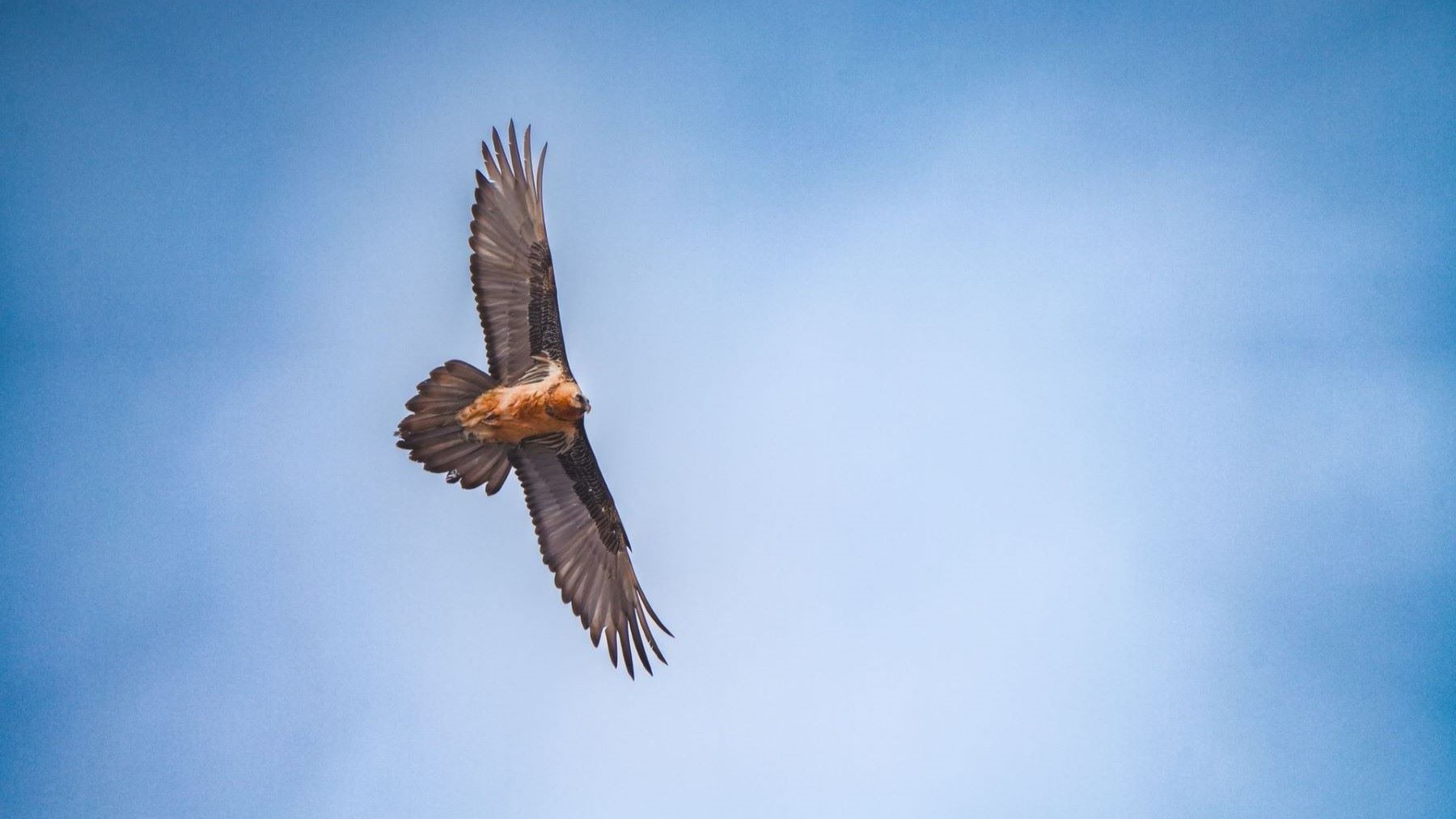
Recognizing a marked bearded vulture can help better understand its life in the wild. With this idea in mind, the Bearded Vulture Conservation Foundation (FCQ) unveils a new version of its bearded vulture tracking app, designed to facilitate consulting the information available about the censused individuals.
In addition, citizen observations can be incorporated into the app, available for iPhone and Android, helping to create a map of the birds’ locations. How to identify an individual and contribute a useful sighting for its conservation? Below, we explain how to access the app’s features and what tools it offers to record observations.
According to the FCQ, the new version includes satellite-tracking information, routes, maps, and identification sheets for each bearded vulture, as well as downloadable PDF sheets for field consultation. The organization, founded in 1995, thus brings to mobile a portion of the ground and satellite tracking work it has been carrying out for years.
The Bearded Vulture Tracking App Is Renewed
The Bearded Vulture Conservation Foundation has opened a new version of its mobile application that allows tracking of the individuals that the organization has tagged, thereby improving knowledge of how the birds are faring in their habitat.
The new version of this app is available for iPhone and Android and includes satellite search for bearded vultures, access to routes, maps, identification sheets, and new tools to bring these birds closer to the public and to conserve the species.
It also allows recording and sending observations and downloading PDFs to facilitate field identification of the birds.
According to the conservation organization, this new design represents a major leap in the possibilities for querying and public access to information.
The foundation has been using terrestrial and satellite tracking technologies for years to obtain data on the movements, dispersal, and use of the bearded vulture’s territory.
Tracking of marked individuals allows studying aspects relevant to their conservation, such as survival, juvenile dispersal, soaring areas, or causes of mortality, among other parameters.
In this way, the tool brings to the digital realm a portion of the monitoring work that the Foundation carries out and strengthens its citizen science aspect, making it easier for naturalists, professionals, wildlife observation enthusiasts, and interested citizens to identify individuals and contribute their own observations.
The vice president of the Bearded Vulture Conservation Foundation, Gerardo Báguena, has highlighted the importance of bringing, with these systems, to the citizen a species that “not everyone has the possibility to observe.”
“We make it accessible to all audiences and we forge a closer relationship with the bearded vulture, aiding its understanding by the population and, consequently, its conservation as a species beloved by all,” he added.
