
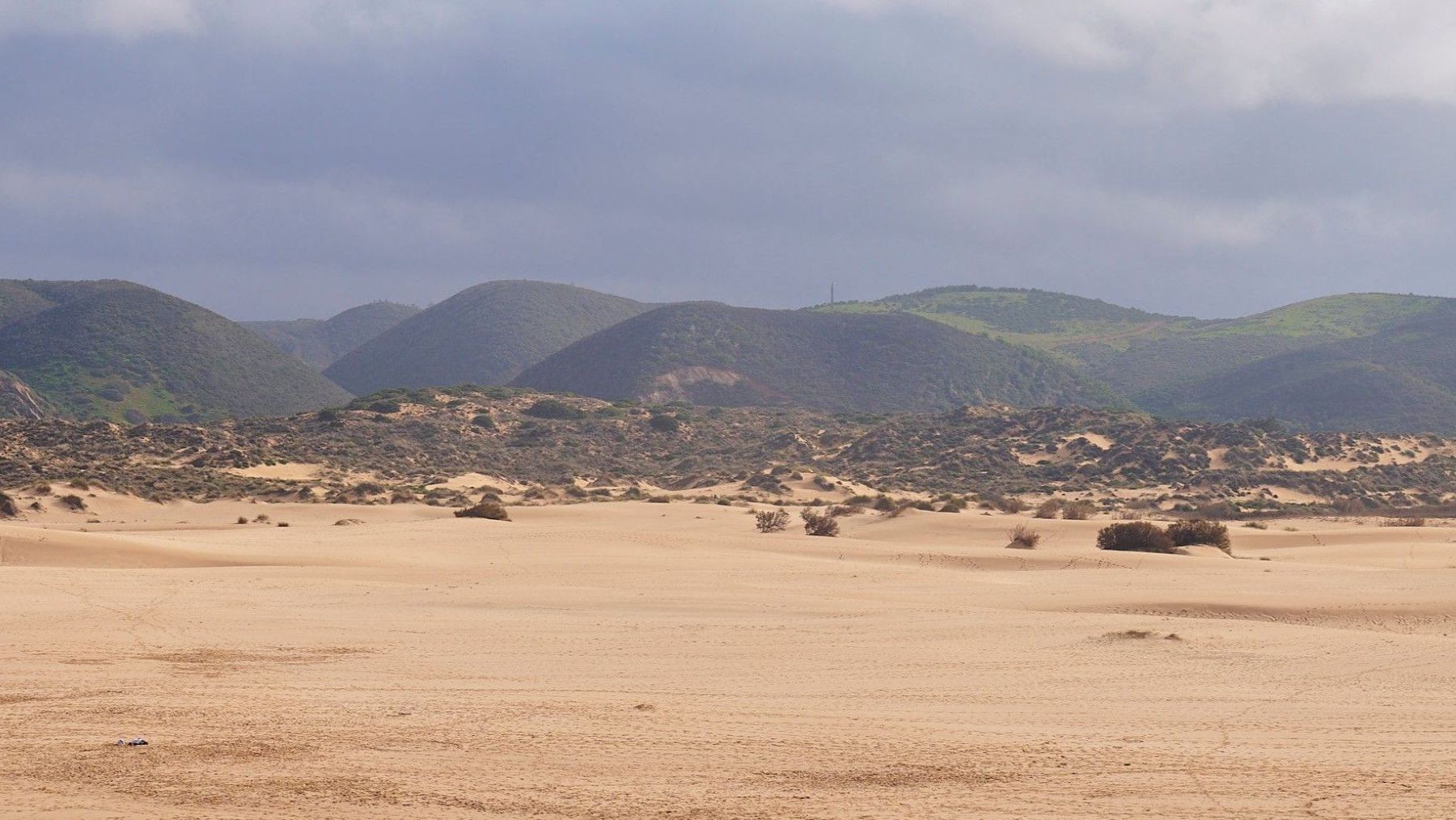
The Africanization of the Spanish monte is the explanation offered by researchers at CIDE for why some plants are now better adapted to heat and drought, while certain pine forests may be reaching their climatic limit due to a lack of shade.
Forests provide shade, and at the same time they need shade to protect themselves; the absence of this natural phenomenon is being studied by researchers from the Center for Desertification Research (CIDE, CSIC-UV-GVA).
Scientists refer to the Africanization of the Spanish monte to describe a phenomenon they have observed: many plants (present in North Africa and also on the Iberian Peninsula) are adapting to the new aridity conditions imposed by global warming.
To determine which plants require specific microclimates and shade to survive and which are adapting more readily to these changes, about five hundred sensors have been installed in spaces in Valencia and Murcia.
The article explains what the experiment consisted of, what specimens and climatic conditions were studied and the terrain in spaces of great environmental value, and what conclusions have been reached regarding the changes the Mediterranean landscape could undergo due to the Africanization of the Spanish monte.
Was pine reforestation a good solution?
By the mid-19th century, the extent of tall, wooded monte in Spain reached a historical low: about 6 million hectares, compared with the 19.2 million hectares of forested land with trees counted by MITECO in 2022.
For decades, one of the main protagonists of national reforestation was the pine, due to its timber, its resistance to drought, and its adaptation to soils.
In line with this forest policy, over the last 60 years the average temperature in Spain has risen by 1.3 degrees and some areas have experienced a decline in precipitation, altering the scenario in which those trees were planted up to the limit of their bioclimatic tolerance.
The pine acts as a nurse species that shelters other plants under its shade, in a microclimate in which the temperature can vary by as much as 30 degrees from the outside.
However, if these conifers begin to deteriorate in a new climatic scenario, not only is the tree at risk, but also its ecosystemic role.
“We cannot control climate change, but we can control the microclimate,” explains Miguel Verdú, researcher at the Center for Desertification Research (CIDE, CSIC-UV-GVA).
Who gains from climate change and who loses?
Guaranteeing the microclimate in a context of may mean betting on other nurse plants. “With climate change there will be winners and losers, but we cannot keep betting on those we know will lose,” summarizes Verdú.
And to know which species are more adapted to the new climates, it must be measured. In the Chera – Sot de Chera Natural Park (Valencia), a team of technicians from CIDE traverses hundreds of different nurse plants and clearings, taking measurements of light, soil moisture, and soil temperature under rosemary, rockrose, or albaida. Then they repeat the operation in nearby clearings, without vegetation.
“Comparing both values, both in the clearing and in the nurse plant, helps us to know whether that plant is providing an adequate microclimate underneath,” explains Pascual Gil, a CIDE field technician, during the sampling.
That hard manual work coexists with a network of 500 microclimate sensors that Verdú’s team keeps permanently installed, some for a year and a half now, in Doñana and several points in the Valencian Community. Recently, the team has added new variables: the role of soil and effects on bacteria and fungi.
What is the Africanization of the Spanish monte?
Although temperatures cannot be avoided rising, one can choose which species to plant as nurse plants to generate, with their shade, the conditions that other plants need to survive.
In general, the more ‘modern’ the tree is in evolutionary terms, the less it suffers. Many large Mediterranean trees, Verdú explains, evolved in a nearly tropical climate, preceding the current Mediterranean climate, and do not have the physiological tools to resist increasingly harsh droughts.
The shrubby understories, on the other hand, have recently evolved in a Mediterranean climate, which is what is called the Africanization of the Spanish monte, and are better adapted to the current aridity.
That is why the landscape is evolving toward shrubland. Among the ‘winners’ are the Ibero-African species: plants also present in North Africa and better adapted to drought and extreme heat.
Two recent restoration projects illustrate, with different nuances, how this idea of the Africanization of the Spanish monte has already been applied in practice: one in the Calblanque Regional Park and another in the dunes of Guardamar del Segura.
Fewer Aleppo pines and more sabina mora in Calblanque
In the Calblanque Regional Park (Murcia), with the collaboration of CIDE, the protagonist is Tetraclinis articulata, the sabina mora. This North African-origin conifer is listed as a priority habitat by the European Union.
The European LIFE Tetraclinis project launched actions to improve its habitat between 2014 and 2019, many of them focused on competition with the Aleppo pine. In some areas of Calblanque, the most recent episodes of extreme drought had caused notable pine mortality.
A report from the Mediterranean Ecosystems Research Group of the University of Murcia allowed parcel-by-parcel diagnosis of which action was suitable at every point in the park: where to thin pines, where to let sabina mora or other better-adapted species colonize on their own.
Flora changes in the park were accompanied by a social education effort. A small building with permanent staff was installed to explain to visitors why trees were being cut, a children’s story was published, and talks were held in schools and neighborhood associations. “People understand it if you explain it well,” sums up Andrés Muñoz, who directed the park for a decade.
Desert shrubs? The dune problem at Guardamar del Segura
About 200 kilometers away, in the dunes of Guardamar del Segura (Alicante), the starting problem was different, but the solution pointed in the same direction, based on the Africanization of the Spanish monte. In the early 20th century, a pine forest was planted to fix dunes that threatened to swallow the town.
That pine forest, about 125 years old, was at the end of its longevity and the decline of rainfall and the water table meant that young pines could not survive.
When the Valencian Government asked CIDE for advice to rethink the restoration, the conclusion was that pines could not be replanted.
In its place, native shrubs of the southeast peninsular were chosen, capable of tolerating much more intense droughts. But the neighbors wanted their pine forest back. “They didn’t like the shrubs because they said that was desert,” recalls Miguel Verdú.
Ultimately, it was agreed to plant some pines along the main roads that the town would support with irrigation. Nevertheless, Vicente Deltoro, then the project technician, concedes that the final execution did not fully match the original design, so today it is not possible to draw clear conclusions about its ecological outcome.
The ‘new’ Mediterranean landscape
Replacing one species with another is not a mere swap. If a nurse plant — a pine, for example — disappears and is replaced by sabina mora, are the species that used to live under the pine capable of rewiring their relationships and surviving under the new nurse plant?
For the moment, some species and interactions are generalist enough to adapt and others face the risk of disappearing along with the plant they depended on.
It is also important to note that replanted pine masses, with little diversity and poor discontinuity, burn more easily than a natural forest in a context of high fire risk. Replacing them with a more varied mosaic of species is not only a strategy against climate change but also a defense against fire.
In a changing climate, the objective is to guarantee ecosystem services. “We no longer have the climate of the 20th century; we cannot have the species of the 20th century,” sums up Verdú. Science, for now, has already begun seeking allies for that new landscape through the Africanization of the Spanish monte.
