
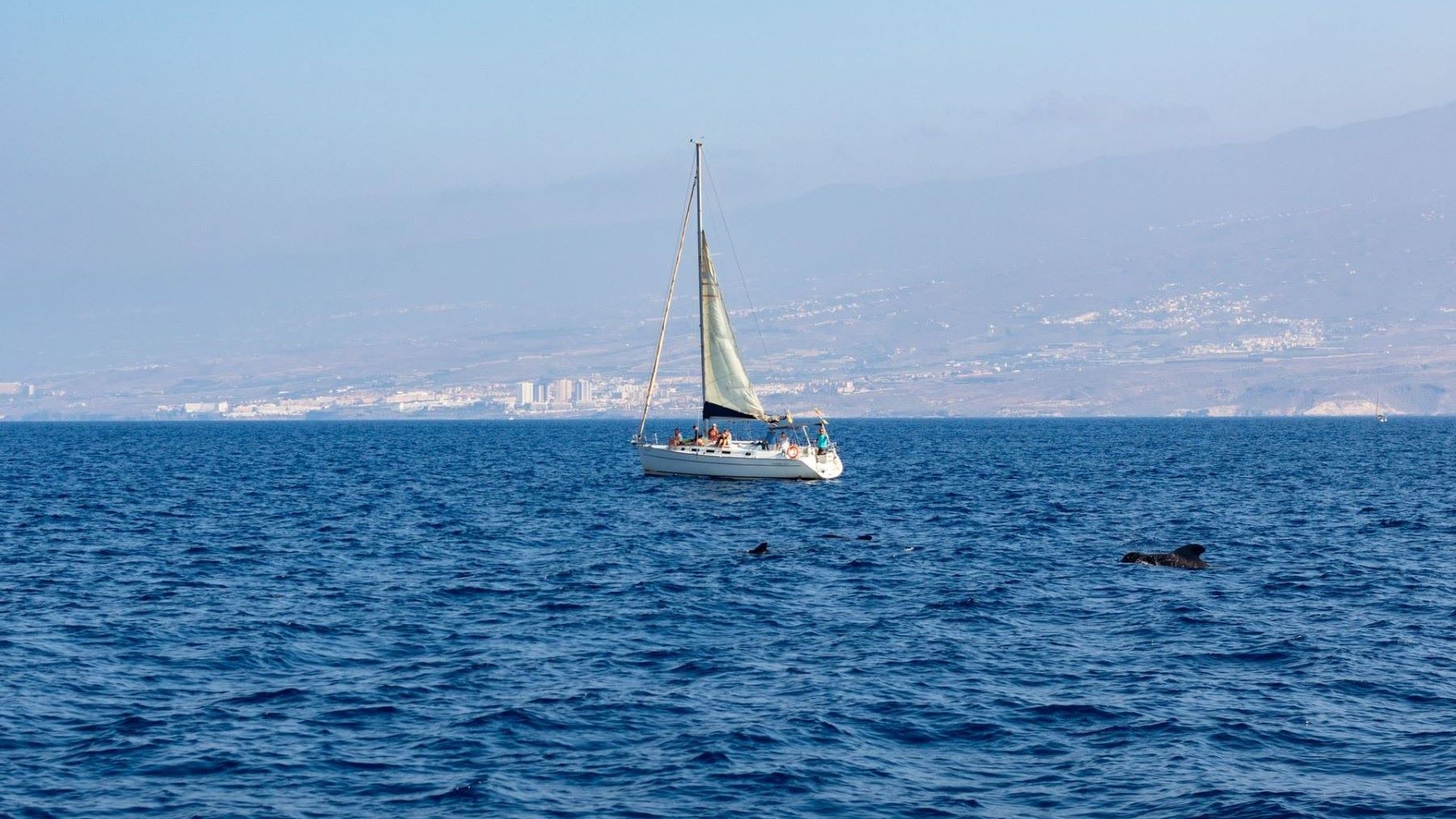
A collision with a vessel can be fatal to a whale or a dolphin. Consequently, six environmental organizations are calling for mandatory reductions in ships’ speeds in the habitats of these species to protect cetaceans and reduce the risk of accidents.
ClientEarth, Ecologistas en Acción, Greenpeace, GOB Mallorca, OceanCare, and WWF have jointly submitted comments to the Miteco consultation regarding the modification of Royal Decree 1727/2007.
The entities point to as priority areas the Mediterranean Cetacean Migration Corridor, the Strait of Gibraltar, the Alboran Sea, and the Canary Islands. They also denounce unregulated maritime traffic and underwater noise.
In this article we will explain what changes the organizations propose, how they want to strengthen the monitoring of the ecosystems where cetaceans live, and why they are calling for an improvement in regulating recreational cetacean-watching activities.
Protecting Cetaceans
Six environmental organizations, including GOB Mallorca, have urged the Ministry for Ecological Transition (MITECO) to establish mandatory reductions in vessel speed in critical cetacean habitats to reduce the risk of collisions.
ClientEarth, Ecologistas en Acción, Greenpeace, GOB Mallorca, OceanCare, and WWF have submitted joint comments to the ministry’s public preliminary consultation opened to modify Royal Decree 1727/2007, which establishes cetacean protection measures in Spanish waters.
The entities have warned, moreover, that any modification reducing the current scope of this regulation, both in the areas where it applies and in the measures envisaged, would undermine, in their view, the principle of non-regression by weakening the existing protection without justification.
This royal decree is, according to the organizations, one of the few Spanish legal instruments that specifically implements the obligations derived from the Habitats Directive for the strict protection of cetaceans.
Reducing Speed
Among the main measures proposed, the six organizations are demanding a mandatory reduction in vessel speed across all critical cetacean habitats identified in the Spanish Catalogue of Threatened Species.
These include the Marine Protected Area and the Mediterranean Zone of Special Protection of Importance (ZEPIM) within the Mediterranean Cetacean Migration Corridor, as well as the Strait of Gibraltar, the Alboran Sea and the Canary Islands.
According to the organizations, these zones are internationally recognized for their ecological importance and present a high likelihood of collisions between ships and cetaceans, thus they consider reinforced protection necessary.
The organizations recall that the regulation created the so-called Mobile Cetacean Protection Space, divided into five zones with different protection levels depending on the distance to the animals.
Its provisions apply to both domestic and foreign vessels operating in areas with cetacean presence and to maritime traffic in general in waters under Spanish sovereignty, sovereign rights or jurisdiction, including the Exclusive Economic Zone.
More Traffic and Greater Pressure on Cetaceans
The organizations contend that, since the royal decree was approved, maritime traffic has increased across all segments of the fleet, including merchant, passenger, and recreational boating, intensifying impacts on cetaceans.
Among these effects they identify are collisions with vessels, underwater noise pollution, space occupation, behavioral changes, and the risk of death, which add to other pressures such as pollution and the growth of coastal tourism and recreational activity along shorelines.
The organizations lament that the implementation of the royal decree has thus far focused mainly on cetacean-watching activities, without adequately developing its application to other navigation-related pressures.
More Cetacean Observation
In addition to speed restrictions, the organizations propose tightening the regulation of cetacean-watching activities by incorporating the latest international recommendations from ACCOBAMS (Agreement on the Conservation of Cetaceans of the Black Sea, the Mediterranean Sea and the Adjacent Atlantic Area).
They also propose developing methodologies to determine the carrying capacity of these activities, considering the number of vessels, frequency of visits, areas used, and the cumulative pressure on the different cetacean groups.
Another demand is to strengthen monitoring through real-time tracking systems, as well as to create public databases that allow comparing the evolution of pressures and compliance with the regulations.
The organizations also demand an effective enforcement regime and greater human and technical resources for the authorities responsible for ensuring the protection of these animals.
