
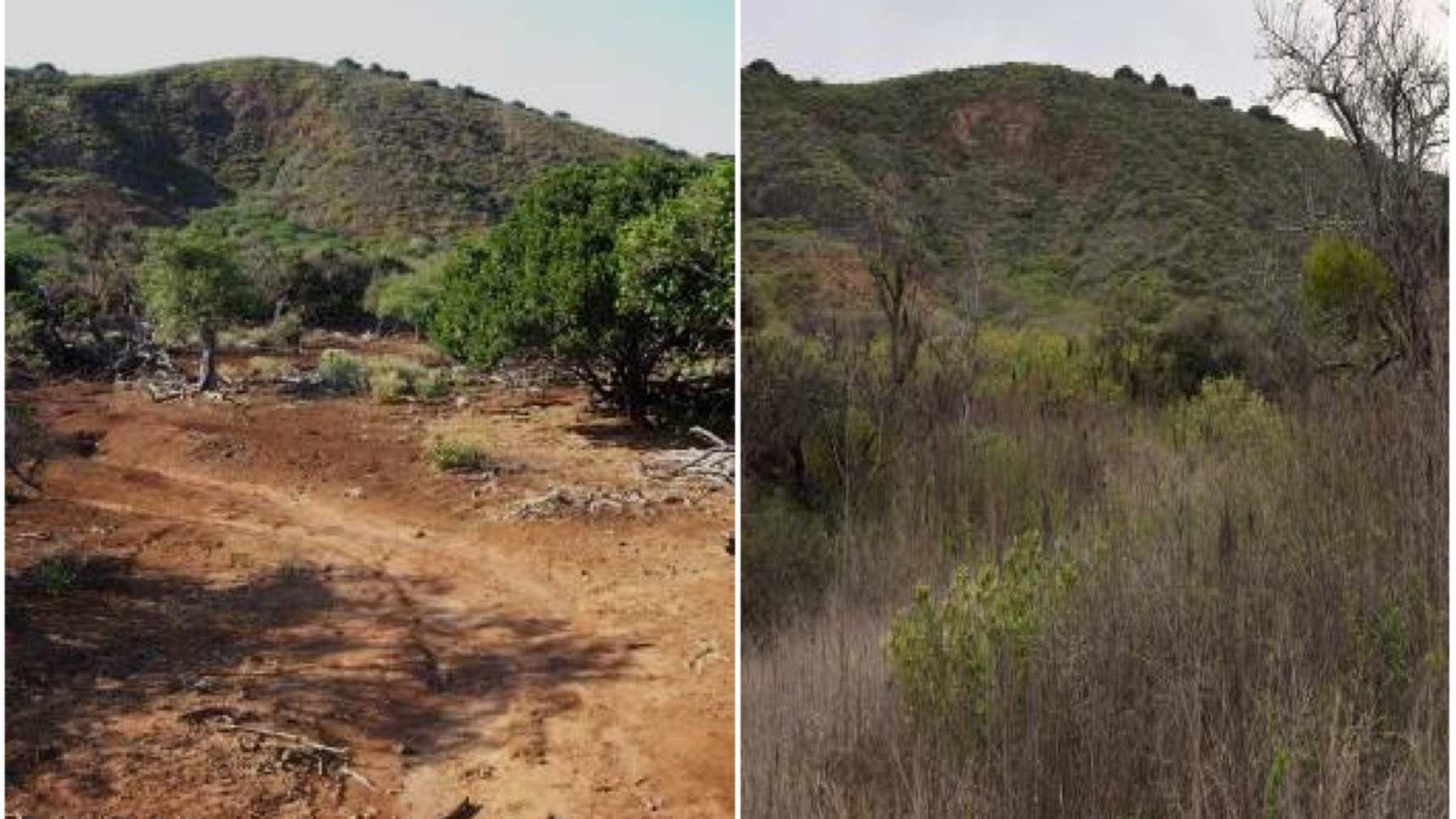
Between April 20 and 29, 2009, a helicopter carrying two hunters on board traversed Socorro Island in the Mexican Pacific. Over 35 hours of flight they killed 1,257 feral sheep, roughly 70 percent of those living on the island.
Those animals descended from 100 sheep landed in 1869. In 2013, a year after the last one fell, the vegetation cover on the forest plots monitored by scientists had risen from 29.29% in 2009 to 85%.
The study was authored by researchers from the Northwest Biological Research Center (CIBNOR), in La Paz, and the Group of Ecology and Island Conservation (GECI), based in Ensenada. The first author is Antonio Ortiz-Alcaraz, who at the time was pursuing his PhD at CIBNOR and led GECI’s Gulf of California island project.
One Hundred Sheep Brought From Australia
Socorro is a volcanic island in the Revillagigedo archipelago, covering 132 square kilometers with a maximum altitude of 1,040 meters. It lies about 460 kilometers west of Los Cabos and is crossed by tropical cyclones from June to November, with an average of 2.75 per year.
According to the study, nearly 27% of its 117 vascular plant species are endemic, meaning they do not naturally grow anywhere else in the world. There are no records of native herbivorous mammals on the island.
The 100 sheep from 1869 arrived from Australia to provide meat for sailors and fishermen. With no natural enemies, they feralized and reached about 5,000 individuals by 1960. The Mexican Navy hunted them down to around 2,000 in 1988.
«For more than 140 years, Socorro Island’s habitat in the Mexican Pacific has been altered by the presence of exotic sheep,» the authors write at the start of the study.
Thirty Percent of the Island Lost Soil and Plants
In the center and south, where grazing was concentrated, the vegetation was uprooted, seedlings were destroyed, and the leaf litter layer that protects the soil was removed.
With the torrential rains of hurricanes, water ran across the bare areas and along the trails that sheep had opened to move from one pasture to another. This led to deep gullies—channels carved into the land by runoff.
The researchers attribute soil loss and vegetation cover destruction to the sheep across 30% of the island’s surface, and the disappearance of more than 2,000 hectares of native vegetation. Erosion in the deforested zones was estimated at 20 to 90 tons per hectare per year.
The sheep also helped spread introduced plants, since they carried seeds in their wool and waste. This is a problem that recurs with invasive species on other islands with substantial unique flora.
Three Years of Hunting by Helicopter, Judas Sheep, and Dogs
The campaign was conducted by GECI, a Mexican civil organization, with support from the Navy, which maintains a southern island base housing 40 to 50 personnel. During the 2009 flights, 12 live sheep were captured, sterilized, and released with radio collars.
They are the so-called Judas sheep. Since they tend to gather with other individuals, the signal from their collars guided hunters to the groups still present.
Between March 2010 and April 2012, ground hunters killed another 505 sheep, bringing the total to 1,762. For the last ten animals, the hardest to locate, the team used two dogs, a beagle and a foxhound, both fitted with GPS collars.
«The use of Judas sheep and trained tracking dogs was essential for locating the last remaining sheep,» summarized Ortiz-Alcaraz and colleagues in a March 2016 article in Interciencia. In Mexico, sheep are called borregos.
Between May 2012 and December 2014, 14 expeditions of 21 days found not a single footprint or excrement. The island was declared free of feral sheep in June 2014. The project cost about $500,000, or $38 per hectare, not counting the Navy’s help or the two years of verification, and lasted three years, whereas some operations against feral sheep on islands have taken decades.
What Satellites and Transects Revealed
To measure the change, the team compared satellite images from May 2008 and May 2013 using the NDVI index, which estimates vegetation vigor from the terrain’s reflected visible and infrared light.
The calculation found a clear vegetation increase across 1,452 hectares, or 11% of the island.
In the field, the researchers laid out 20 transects of 10 by 100 meters on the east side of the island. These are fixed strips where all plants are counted and measured. Seven were in forest, six in mixed scrub, and seven in eroded surfaces.
Between 2009 and 2013, the average vegetation cover rose from 29.29% to 85% in the forest, from 19.17% to 72.5% in the mixed scrub, and from 14.29% to 50.29% in the eroded areas. In the forest, the average number of species per transect increased from 8.86 to 15.
The Soil Gained Nitrogen and Carbon
The team also measured soil hardness with a penetrometer and analyzed soil samples. The eroded soils were the most compacted, and they became less compact as vegetation returned.
Where vegetation had recovered, nitrogen and organic carbon doubled, and phosphorus and calcium nearly tripled compared with the eroded soils.
In a later balance, published in 2019 by the International Union for Conservation of Nature (IUCN), the same group counted up to 43 Socorro lizards per hectare on eroded surfaces, where in 1994 other researchers had seen none. They believe this may be due to vegetation returning and to the capture of cats.
“Socorro Island appears resilient enough to recover within a relatively short time frame after the pressures caused by exotic mammals are removed,” they conclude in that work.
What the Figures Do Not Tell
The jump from 29% to 85% comes from seven forest transects in the island’s most damaged area, measured in 2009 and 2013. It does not describe all of Socorro or its current state.
The authors themselves provide somewhat different figures depending on sites and years. In Interciencia they spoke of an average coverage of 21% in 2009 at the most affected places and 79% in 2014.
More greenery does not necessarily mean the original vegetation has returned. Among the first plants that colonized the bare soil were native and endemic species, but there were also exotics such as Hyptis pectinata, and some introduced grasses now abound along the trails because there are no longer sheep to graze them.
“Some plants that colonize eroded soils could become very aggressive, which would likely impede biodiversity recovery,” warn the authors, who cite the fern Pteridium caudatum as an example.
“The time elapsed since the removal of the sheep has so far been too short to determine the ecosystem’s trajectory, but it is clear that the system had already begun to change by 2013,” they wrote in 2016.
Erosion, however, remains. In April 2020, the National Commission for Protected Natural Areas explained that 30% of the island shows loss of vegetation cover, soil compaction and erosion from the introduced sheep “which have already been eradicated but whose impacts on the habitat persist to this day.” That year, park staff erected the first stone barrier tests in February and March to curb land runoff.
The Socorro Dove Is Still Distanced From Its Island
The studies by CIBNOR and GECI place the blame on the feral sheep and feral cats for the Socorro dove (Zenaida graysoni) going extinct in the wild. Today it only survives in zoos and specialized breeding centers.
The Frankfurt Zoo, which coordinates the European captive-breeding program since 1995, announced on September 23, 2026 that a female has hatched on August 10.
“Having a Socorro dove chick hatch at the Frankfurt Zoo, a species extinct in the wild, is a major breeding success,” said Ina Hartwig, head of the Culture and Science Department of the city of Frankfurt.
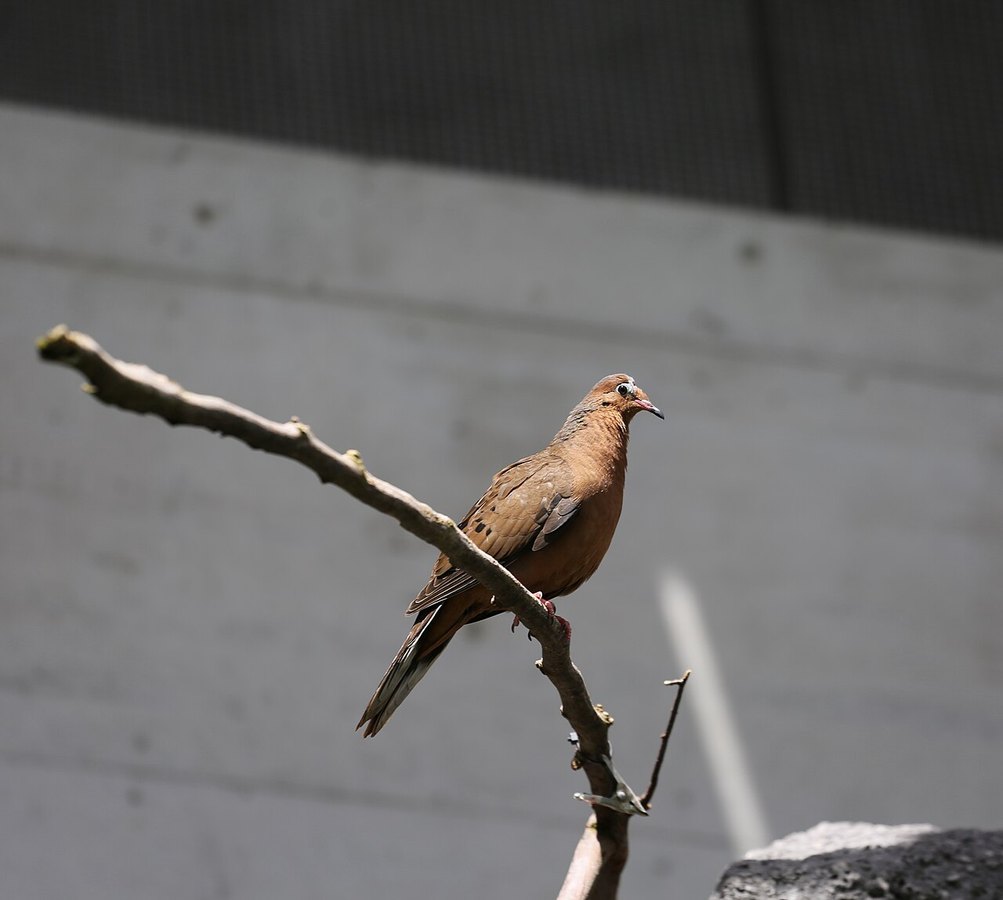
The zoo notes that the removal of the sheep “has already been accomplished” and that this “fulfills a fundamental prerequisite for the planned reintroduction of the doves to Socorro.” The remaining project is to remove the cats that residents of the military base brought to the island.
By December 2016, the campaign against cats, begun in 2011, had removed 502 animals, according to the balance published in 2019 by the same team.
The main study was published on April 22, 2016 in the journal Forests.
Image: Ortíz-Alcaraz et al. / Forests, CC BY 4.0
