
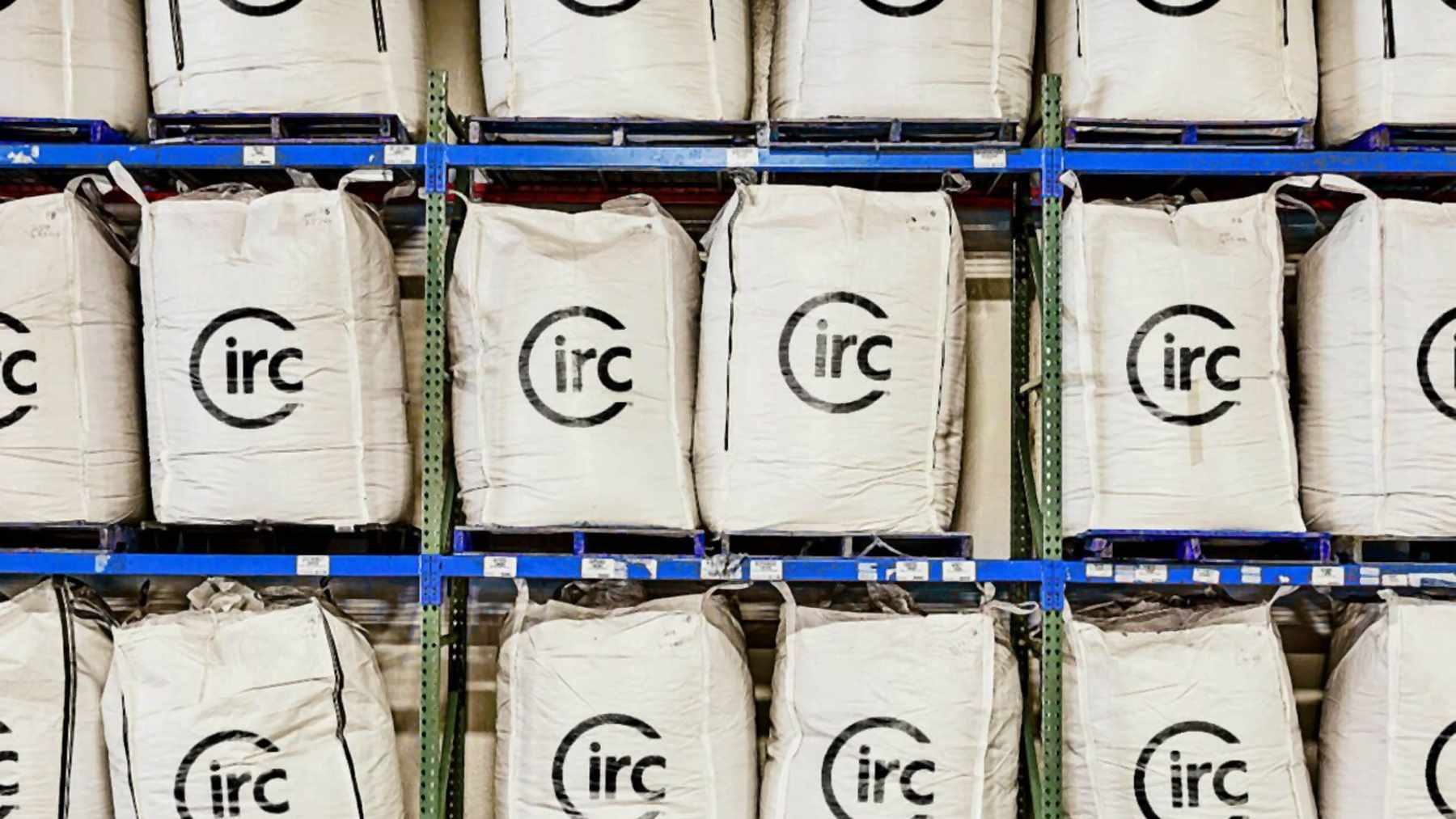
A T-shirt that blends cotton and polyester is cheap to manufacture and very hard to recycle, because separating the two fibers without damaging one of them has long been an industrial problem without a solution. Primark has signed an agreement with the American company Circ to begin using, in 2029, recycled polyester obtained from that kind of textile waste, provided that Circ’s plant planned in France is ready on time.
The deal was announced on September 28, 2026 and it marks the first multi-year offtake agreement between Primark and a textile-to-textile recycling company, according to the joint statement from the two firms. The chain, founded in Ireland in 1969, operates more than 480 stores across 19 countries in Europe, the United States, and the Middle East.
A multi-year offtake contract
In the sector, this is referred to as an “offtake” agreement, wherein the buyer commits in advance to take a portion of a plant’s future production. The note does not specify volumes, prices, or the exact duration of the contract.
Peter Majeranowski, Circ’s chief executive, presented it as a signal to the rest of the industry. “This alliance with Primark represents exactly the type of long-term commercial commitment needed to move textile-to-textile recycling from innovation to industry standard,” he said in the press release.
“When a global fashion retailer commits to integrating recycled materials into its future collections, it sends a powerful signal to the sector: demand is here, materials are ready, and the opportunity to scale circular material supply chains is real,” he added.
On Primark’s side, Lynne Walker, director of Primark Cares, the chain’s sustainability program, commented: “We launched Primark Cares focused on improving the quality and durability of our clothing and, in the process, showing that clothing built to last longer does not have to cost more.”
“This alliance is an important milestone to accelerate our ambition to embed circularity even more deeply into our business and to help scale innovative textile-to-textile recycling solutions that could play a transformational role in fashion’s future,” Walker added.
Why cotton–polyester blends resist recycling
These blends, known in the industry as polycottons, pair the natural cotton fiber with polyester, a plastic derived from fossil fuels. They are cheaper, tougher, and quick-drying compared with pure cotton, and Circ describes them in its note as one of the most widely used materials in fashion and among the historically most difficult to recycle.
As Circ explains on its website, previous attempts to separate the polyester from the cotton in these blends ended up destroying one of the fibers, whereas with its technology “both fibers can be recovered and reused to manufacture fabrics as good as new.”
Other groups pursue similar separations by different routes, such as a Vienna researcher’s menthol solvent that separates cotton and polyester in five minutes or the RECIMAP project to recycle cotton–polyester blends.
Hot water and pressure to recover the two fibers
Circ, based in Danville, Virginia, uses a patented hydrothermal process. The company collects polycotton textile waste from various industry sources, classifies and mechanically shreds it before treating it with hot water at elevated temperatures.
The polyester is broken down into its monomers, terephthalic acid and ethylene glycol, the chemical building blocks used to remake the plastic. The remaining cotton becomes cellulose, which the company dissolves to spin lyocell, an artificial fiber made from cellulose.
On Circ France’s page, the plant’s yield from textile-to-textile feedstock is projected to exceed 90%.
A plant in France for around 70,000 tonnes per year
The note indicates that the polyester will be produced at Circ’s commercial plant, and Circ has plans for its first industrial-scale facility in Saint-Avold, in the Moselle department of France. According to Circ France’s page, it will be able to process 70,000 tonnes per year and will create 200 jobs.
“This is the moment we have been working toward since Circ was founded,” Majeranowski says on that same page. “It is not only a major milestone for Circ, but a breakthrough for the entire circular economy at a time when the world urgently needs scalable climate solutions.”
Waste will come from several countries, both used clothing and factory offcuts, and the note specifically mentions the utilization of European textile waste, a portion of Europe’s mountains of used clothing that the region is seeking to reduce.
Today’s recycled polyester comes from bottles
In 2024, the world produced 132 million tonnes of fibers, according to Textile Exchange’s Materials Market Report 2025. Polyester is the most manufactured fiber, accounting for 59% of the total, and 88% of that polyester originates from fossil fuels.
The recycled polyester manufactured today almost entirely comes from plastic bottles, specifically 98%, according to the same report. Therefore, Circ’s material, made from garments and textile scraps, is different from the recycled polyester that currently fills labels.
What the agreement still does not guarantee
The timeline is tight. Circ states on its website that construction of the French plant will begin “soon” and that it will be fully operational in 2029, the same year Primark expects to have the material, but it does not provide a date for the construction permit or first production.
Nor is it known how much polyester Primark will purchase or what portion of its clothing will carry it. The environmental benefits of the process, for now, come from Circ’s own assertions, and none of the cited sources includes an independent analysis validating them.
For a chain that draws millions of customers each week, the test will be price, and Circ states in the announcement that the material will be delivered to Primark’s customers “at scale and at an affordable price” in 2029.
Foto: Circ
