
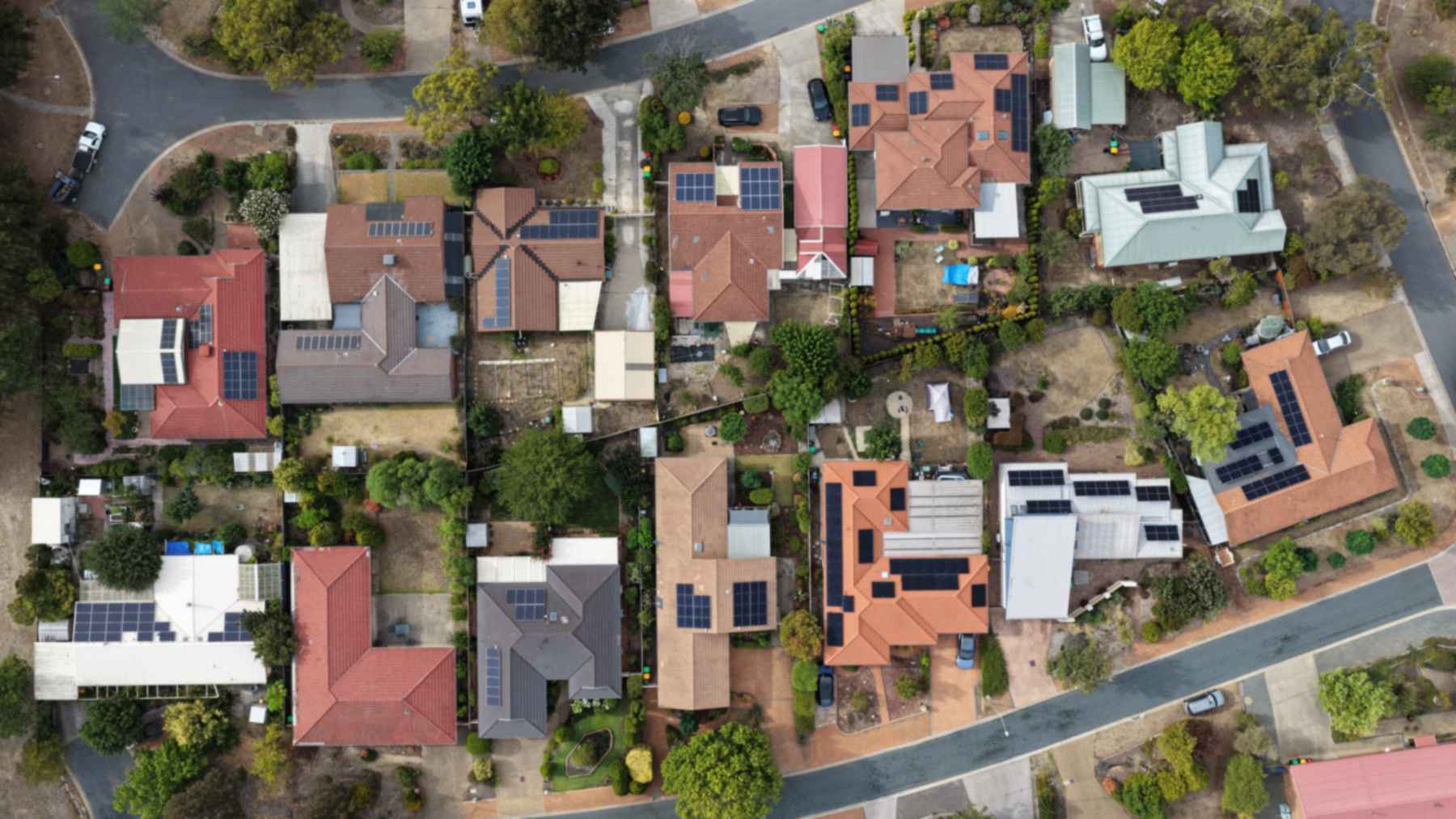
Between January and June 2026, Australian households installed 276,011 home batteries, a 52% increase from the previous six months, when 181,428 were installed. The figure comes from the latest semi-annual report by the Clean Energy Council (CEC), the association that groups the country’s clean energy companies, and it is the highest since the federal battery subsidy program began.
These batteries add up to 8,691 megawatt-hours (MWh) of storage, more than double the 4,221 MWh added in the second half of 2025.
More Batteries than New Solar Panels
The report also tracks how many batteries are installed per each new rooftop solar system. In the first half of 2026, 153 batteries were installed per 100 new rooftop solar systems, up from 130 per 100 in the second half of 2025.
“This indicates a substantial adaptation of homes that already had solar panels, together with the solar-plus-storage packages for new builds that are driving the rooftop photovoltaic rebound,” writes the CEC in the document.
Roofs have also recovered. In those six months, 180,878 solar installations were mounted, 35% more than the 134,013 in the same period of 2025, with 1,894 MW of new capacity, up 41% from a year earlier and the best semester on record. Only the second quarter added 102,234 installations and 1,079 MW, the best quarter of the series across all states, according to the CEC’s note.
“Rather than displacing rooftop solar, battery incentives appear to be pulling in new solar installations, and many households install or expand their solar system at the same time as adding storage,” the report notes. Rooftop solar contributed 12.9% of the country’s electricity in that semester.
The Subsidy Program Reaches One Year
The engine behind all this is the federal government’s Cheaper Home Batteries program, which began operating on July 1, 2025 and reduces the purchase price of a battery by about 30%. In its first twelve months, 457,439 batteries were installed under it, with a total capacity of 12.9 gigawatt-hours (GWh).
In August 2026 the program surpassed half a million installed batteries, according to a joint statement by Prime Minister Anthony Albanese and Federal Minister for Climate Change and Energy, Chris Bowen. More than three-quarters of these batteries have been installed in outer suburban areas and regional communities.
“Cheaper Home Batteries is doing exactly what we said it would: help households reduce their bills, store cheap solar and take control of their energy consumption,” Bowen said in that statement.
Batteries Growing in Size
Capacity has grown faster than the number of units, and the CEC explains this by size. “The average battery installed in July 2025 was 17.2 kWh; by April 2026 it had reached 35.3 kWh, more than double, before dropping to 26.6 kWh in June,” the report details. A kilowatt-hour (kWh) is the energy used by a 1,000-watt appliance in one hour.
That rise in size is important to consider when planning home rooftop solar self-consumption with storage.
The larger units pushed up the program’s cost, with funding rising from AU$2.3 billion to AU$7.2 billion, and since May 1, 2026 the subsidy is lower for each kWh that exceeds 14.
“The April peak coincided with the largest month for both battery installations and rooftop photovoltaic installations, and the subsequent moderation of the average size will deserve monitoring in the next report period,” writes the CEC.
Thomas Longden, a researcher at the Urban Transformations Research Centre of Western Sydney University, and Debasish Das, economics professor at UNSW Sydney, saw in the postal code data that many households rushed to beat the May 2026 cut. “We found that many of these households who moved quickly also secured a larger subsidy by installing a bigger battery,” they wrote.
The Grid Notices the Effect in the Evening
The latest quarterly report from the electricity market operator (AEMO) concluded that domestic batteries are changing demand on the networks, as they supply household consumption after sunset and reduce the late-afternoon peak, according to the August government note.
From July 1, 2026, the new Solar Sharer offering also provides three hours of free electricity daily, a window that battery owners can use to charge them.
Those home batteries coexist with other large grid-connected storage, such as Waratah Battery in New South Wales, erected where a coal-fired plant once stood.
Ahead of the Operator’s Plans
AEMO’s reference plan for 2026 projected 33 GWh of consumer batteries in the national electricity market, which covers the eastern and southern parts of the country, in the 2029-2030 period. If the pace of the past year continued, it would reach 59.2 GWh, a 79% increase, according to CEC calculations.
Rooftop solar would reach 40.3 gigawatts (GW) at the current pace in 2029-2030, 13% above the forecast, and would complement the large plants, which in September set records for large-scale solar in Australia.
The executive director of the CEC, Jackie Trad, summed it up in the report’s press release. “Australia is in the midst of a rooftop solar boom,” she said. “We now have more rooftop solar capacity in Australia than the capacity of all our coal-fired plants still operating together.”
Subsidies Reached Richer Neighborhoods First
The distribution has been uneven. Longden and Das compared installations from July 2025 to March 2026 by postal code in a study that has not yet undergone peer review.
In the wealthiest postal codes of major cities, and with a lot of solar, there were 912 more batteries than in middle-class areas. “Domestic technology subsidies that distribute aid on a first-come, first-served basis tend to favor households with more financial resources and greater tolerance for financial risk,” they wrote in an analysis published by UNSW Sydney, a problem also measured with rooftop self-consumption inequality in Barcelona’s rooftops.
Complaints have also risen. Claims to the competition and consumer watchdog, the ACCC, about domestic batteries and new energy services rose 107% in the last 12 months, according to its July 2026 report, and many refer to systems that did not match customer needs, faulty installations, or poor battery performance.
“As more Australians invest in batteries and participate in virtual power plants, it is essential that consumer protection keeps pace,” said ACCC Commissioner Anna Brakey in the agency’s note. A virtual power plant groups many home batteries and manages them remotely as if they were a single unit.
What the Report Does Not Measure
CEC figures come from applications filed with the Clean Energy Regulator, including some still under review, so they may differ slightly from the regulator’s official data. In addition, the association has switched data providers, from SunWiz to Green Energy Markets, and before July 2025 batteries were counted by sales rather than by installations.
The comparison with coal also comes with caveats. The report itself, which only accounts for installations since 2019 (21.979 MW), notes that figure is about to exceed the nearly 22 GW of coal still in operation. It also clarifies that it compares installed capacity, not energy produced, and that 22 GW of rooftop solar generates roughly a quarter of the annual energy produced by 22 GW of coal.
According to the CEC, moreover, most batteries are used mainly to better exploit one’s own solar generation, “which leaves a significant value untapped.”
The full Rooftop Solar and Storage Report for January to June 2026 was published by the Clean Energy Council on September 29, 2026.
Trad also expects that the upcoming expansion of the system of certificates for small renewables, known as the Small-scale Renewable Energy Scheme (SRES), to solar installations up to 1 MW will help more businesses switch to solar and reduce their costs.
Photo: Benlisquare / Wikimedia Commons, CC BY-SA 4.0
