
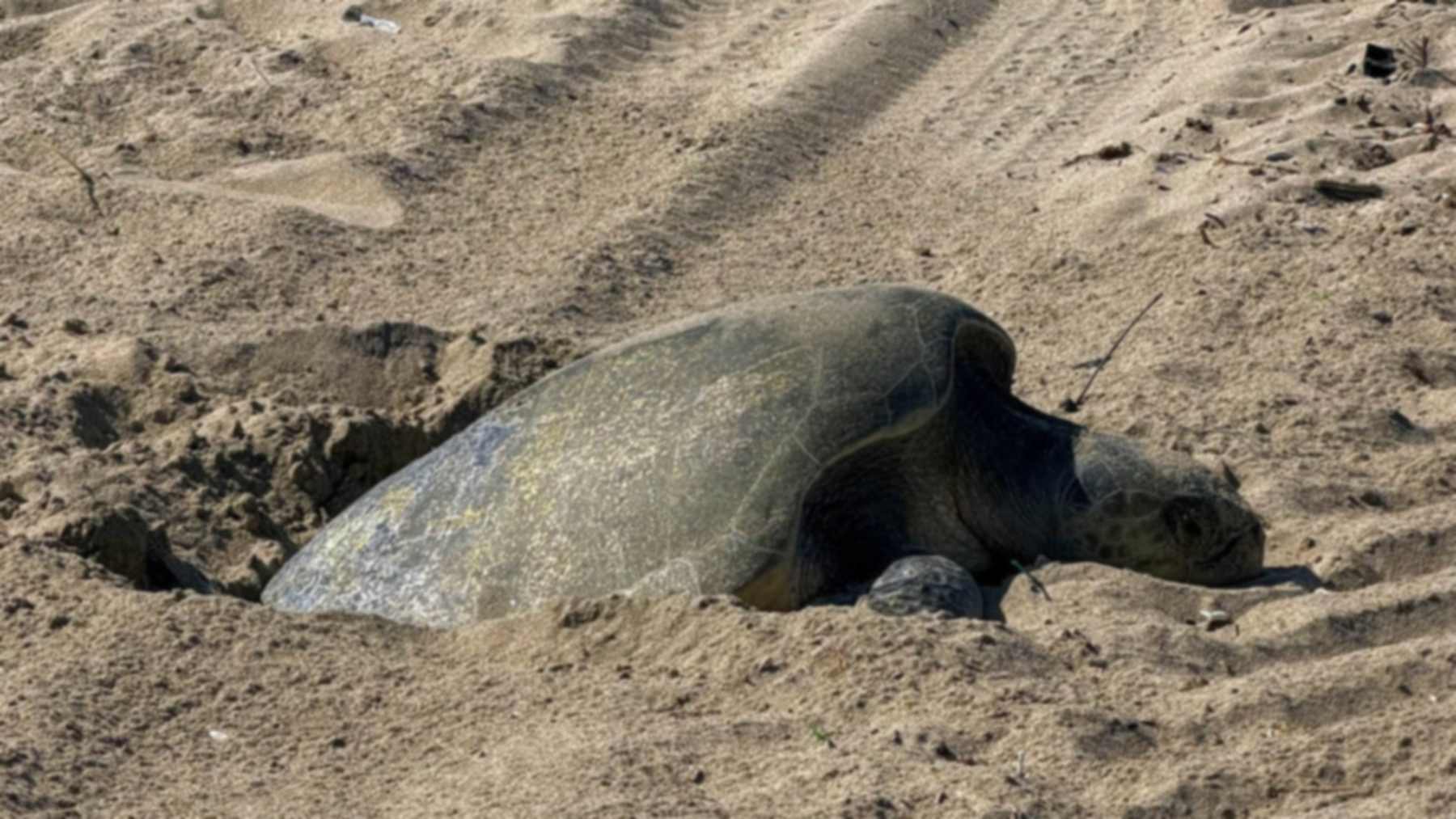
Two olive ridley sea turtles laid the first nests recorded for any sea turtle species on the West Coast of the United States in September 2026, on two beaches in Orange County, California: one near Seal Beach on September 16 and another beside the Huntington Beach Pier on September 19. Their 204 eggs are currently incubating at the Aquarium of the Pacific in Long Beach, and could hatch in November.
NOAA Fisheries, the federal agency for fisheries and marine species, confirmed this in a note dated September 25. That day, biologists from several agencies unearthed the eggs—100 from Huntington Beach and 104 from Seal Beach—to shield them from the surf of Hurricane Polo.
Two Nests in Three Days
The first nest was seen by beachgoers near the Seal Beach National Wildlife Refuge, according to the United States Fish and Wildlife Service (USFWS). The second turtle surfaced about 13 kilometers further south. Both nests were fenced off and signposted, and NOAA Fisheries continues to monitor for new nests, because each olive ridley typically lays two to three nests per season.
To determine whether this involved one turtle or two, Cali Turner Tomaszewicz, a biologist with NOAA’s Southwest Fisheries Science Center, compared photos of the two females. She looked at body shape, barnacles—small crustaceans that cling to the shell—and the pattern of the scutes on each turtle, which NOAA likens to a human fingerprint.
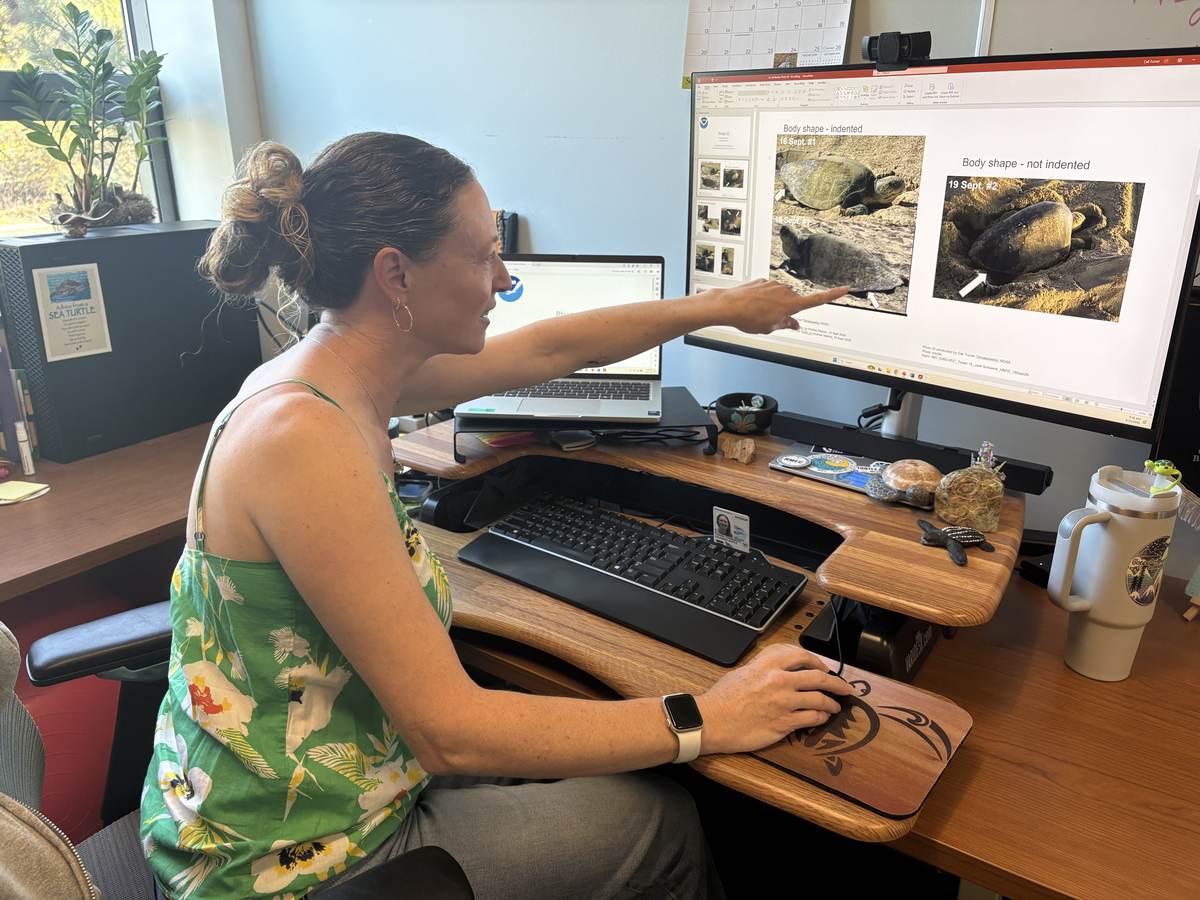
The conclusion was that the nests were laid by two distinct olive ridley turtles. The USFWS announced on October 13 that this was the first natural nesting on the West Coast of the United States confirmed.
The Eggs, Safe from Hurricane Polo
By late September, Hurricane Polo was approaching with dangerous surf and high tides, and the team faced a decision about whether to relocate the eggs or leave them where they were, according to USFWS. “Within 24 to 48 hours we had to move quickly,” recalled Jonathan Snyder, acting field supervisor with the Carlsbad Office of Fisheries and Wildlife.
The Aquarium of the Pacific note details the risk of erosion and flooding capable of destroying or washing away nests. Federal biologists concluded that incubating them under human care offered greater survival chances.
Boxes with Sand in Long Beach
The eggs wait in sand-filled containers at the aquarium’s Molina Animal Care Center, where staff monitor temperature and humidity. The incubation period for this species typically lasts 45 to 60 days, which gives a window from October 31 to November 18.
“This is an unprecedented situation, and we’re proud to provide a temporary home for these eggs while they incubate,” said Lance Adams, the aquarium’s veterinarian. Temperature control matters: for this species, hatchling sex depends on sand temperature during the second third of incubation, according to NOAA Fisheries’ turtle fact sheet.
If the eggs are viable, USFWS anticipates hatchlings by mid-November, and the young will be released near the beaches where they were laid.
Why They’ve Moved So Far North
Until now, the closest known nesting site was at the southern tip of the Baja California Peninsula in Mexico, near Todos Santos.
NOAA Fisheries acknowledges that the exact reasons are uncertain, though likely factors include the warm sea from marine heatwaves and the approaching El Niño of 2027, in addition to the species’ nomadic nature and perhaps some navigation error. The agency is monitoring this autumn for an El Niño with record-breaking odds.
The aquarium also notes a possible expansion of the species’ distribution and reminds readers that many believe olive ridleys, which are omnivorous, may be among the sea turtles most resilient to a changing climate. Across the Atlantic, the loggerhead turtle is also nesting more frequently in Spain.
A Migratory Species with Endangered Populations
The olive ridley derives its English name from the olive-green color of its shell and is among the smallest sea turtles in the world: adults measure about 60 to 75 centimeters in length and weigh up to 45 kilograms.
Females lay each year between one and three nests of roughly 100 eggs, and the two in California average 102 eggs. Some do so in arribadas, mass nesting events in which more than a thousand turtles nest on the beach at once, such as on the Pacific coast of Mexico, where sea turtles have enjoyed one of their best conservation seasons.
U.S. Endangered Species Act lists the breeding colonies along the Pacific coast of Mexico as endangered and all other populations as threatened, and the IUCN Red List estimates a global population decline of 30% to 36% over the last century. Major threats include bycatch and the harvesting of turtles and eggs, which is why every hatchling counts, as in Nicaragua, where more than 443,000 hatchlings have been released into the Pacific.
About 15 years after hatching, some juveniles return as adults to nest on their beach of origin, according to NOAA. For Jeff Flocken, president and CEO of the aquarium, that offers “an extraordinary opportunity to help a species expand its range and thrive.”
What Is Still Unknown
No one yet knows whether the eggs will hatch. NOAA Fisheries admits that this is a first-of-its-kind event and that there is much that remains unknown about them, including whether they were fertilized or viable.
Nor is it clear whether the two females signal a broader trend. The aquarium believes more turtles may have nested or might nest in Southern California, and USFWS is preparing a provisional conservation strategy in case nesting continues in the state.
Agencies urge not to disturb the turtles or nests, report any sighting to the West Coast stranding hotline at (562) 506-4315, and reduce artificial light near the beach.
Information comes from NOAA Fisheries’ note on the first nesting of olive ridley turtles in California, published September 25, 2026 and updated October 3, and from USFWS’ account dated October 13.
Foto: Huntington Beach Fire Department
