
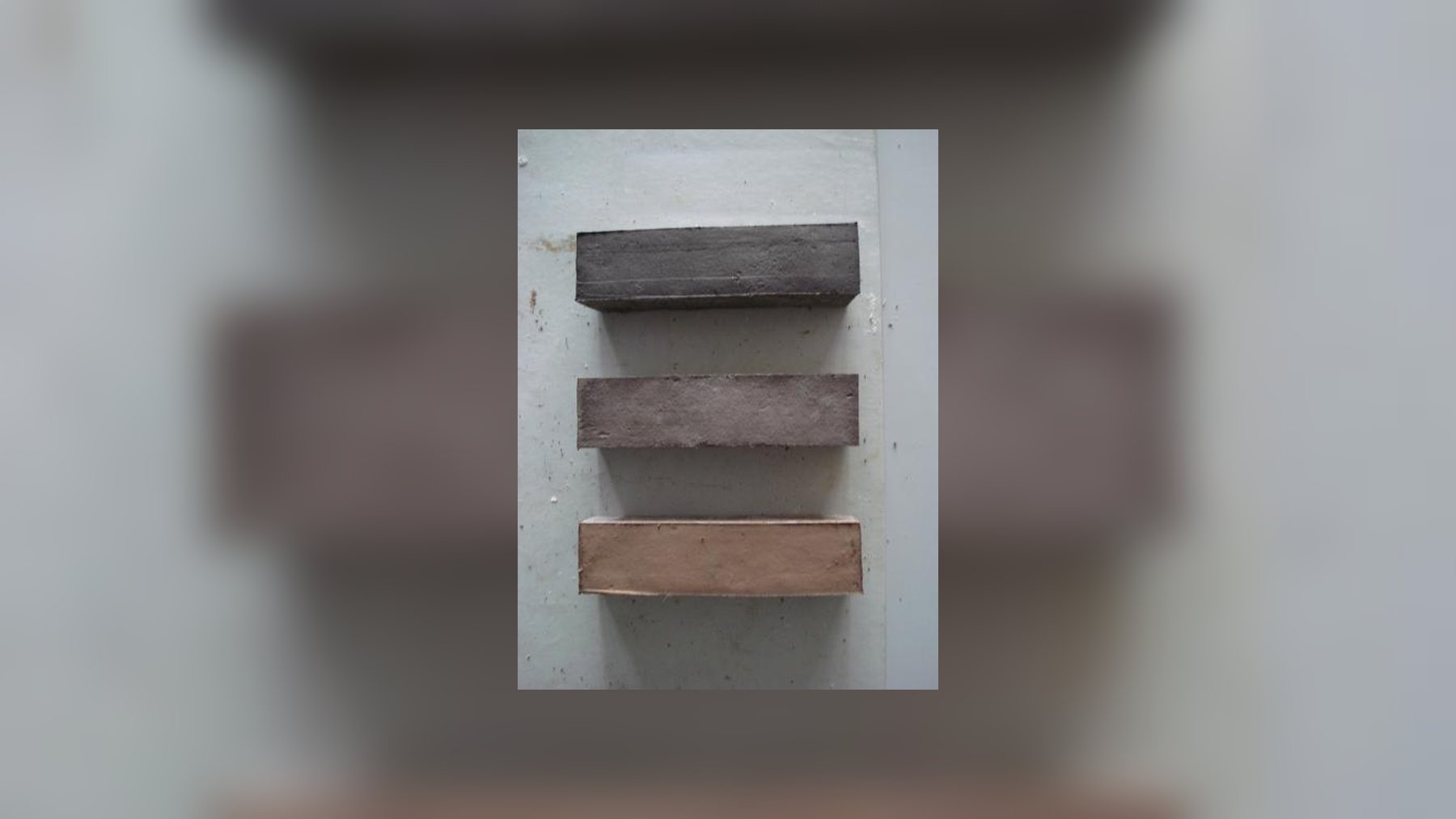
A study conducted by the University of Seville and the University of Strathclyde, published in 2010, mixed unwashed sheep wool and seaweed alginate with Scottish clay and doubled the strength of unfired earth, going from 2.23 to 4.44 MPa without firing in a ceramic brick kiln. Sixteen years later, water remains its weak point.
The work was authored by Carmen Galán-Marín and Carlos Rivera-Gómez, from the School of Architecture of the University of Seville, and Jelena Petric, from the University of Strathclyde in Glasgow. The wool came directly from Scottish sheep and was cut into 10-millimeter strands. Alginate is a natural polymer derived from the cell walls of brown seaweeds.
Unwashed Wool and Perth Clay
The Spanish Foundation for Science and Technology (FECYT) presented the study in a note dated October 5, 2010. Galán and Rivera explained that they sought a compound “more sustainable, non-toxic,” made with locally abundant materials and capable of withstanding adverse climate conditions, such as those in the United Kingdom.
The clay was supplied by ERROL Brick Company, a Perth brick producer, and the alginate came from FMC Biopolymer in Girvan. According to the authors, Scotland harbors abundant wool fiber that the textile industry no longer puts to widespread use. That surplus wool is today finding other destinations, such as the blankets Switzerland used to cover a glacier to slow its melting.
Five Mixes in the Press
The team prepared five mixtures: soil alone, soil with alginate, soil with 0.25% wool, and two combinations of alginate with 0.25% and 0.5% wool. The specimens spent 24 hours in an oven at 50 °C. A ceramic brick is fired at between 1000 and 1200 °C, according to a later study by the same group.
Compressive strength measures the pressure the material can withstand before crushing. Alginate alone raised it by 69%, reaching 3.77 MPa, and wool alone increased it by 37%, up to 3.05 MPa.
“The mode of failure of the natural dirt specimen was very rapid and almost without warning,” the authors note. With wool, the pieces continued to deform after reaching the maximum load, and fine cracks appeared on the surface before breaking.
Less Wool Worked Better
The mix with alginate and 0.25% wool reached 4.44 MPa, and the one with 0.5% wool stayed at 4.37 MPa. The best results, therefore, came from the smaller amount of wool.
The 4.44 MPa is comparable to those of soil stabilized with 10% Portland cement, according to Spanish standards for rammed-earth construction published in 1992 by the former Ministry of Public Works and Transport. It also surpasses the 3.6 MPa indicated for a high lime dosage in that document.
The authors concluded that soils stabilized with alginate could substitute soils stabilized with cement. A 2013 study by the same group found that producing adobe requires about 5 kWh per cubic meter, versus around 1000 kWh for fired brick. Other waste-derived materials, such as coffee grounds that are already reinforcing concrete in Melbourne, pursue the same savings.
2013 and 2016: Wool and Alginate, Separately
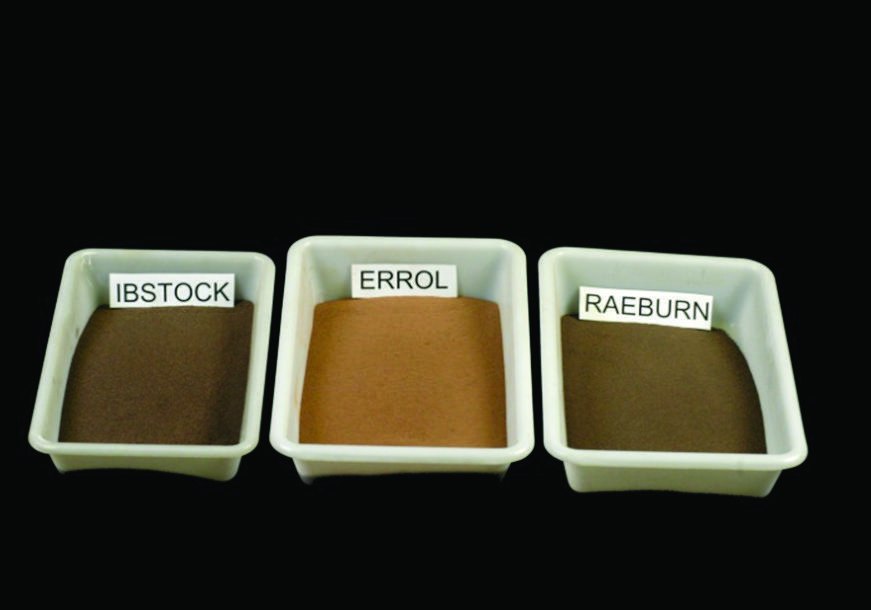
In 2013, Galán-Marín, Rivera-Gómez and Fiona Bradley repeated the recipe with three Scottish clays—Errol, Ibstock, and Raeburn—in 210 compression tests. Wool alone helped only in the Errol clay, the most plastic one. In Ibstock clay the strength fell from 2.06 to 1.89 MPa, and in Raeburn from 2.44 to 1.88 MPa. With alginate and 0.25% wool, all three clays improved.
In 2016, Cassandra Dove of the University of Strathclyde and her colleagues from Glasgow and Sheffield tested five alginates with three soils, without wool. The best alginate, derived from the stalk of the brown seaweed Laminaria hyperborea, yielded more than twice the compression strength of the control specimen. With most of the others, the values were similar to or below the control.
2018: A Facade with 54% Emissions Reduction
In 2018, the Seville team extended the mix to a non-structural exterior panel, using 3% alginate and 0.25% wool. Two earth blocks enclose 45 millimeters of polyurethane foam as insulation. The study, published in Sustainability, compared it with three typical Spanish façades with equivalent insulation.
The earth panel emitted 54% less than the double-leaf ceramic brick façade and 40% less than a brick façade with gypsum board. It cost 52.43 euros per square meter, versus 67.20 for the cheapest conventional option, a 22% saving. That figure includes the polyurethane insulation and the joint mortar, so the benefit reflects the entire façade. Wool has also been tested as a natural insulator for houses.
What Is Still Unknown
As early as 2010, Galán-Marín and her colleagues noted that the main drawback of raw earth is its affinity for water. Those tests were mechanical and left for a future assessment the moisture absorption property.
The 2016 work measured soaking 5 millimeters of each sample in water for 60 seconds. “Overall durability remains a concern, since all samples suffered considerable disintegration upon contact with water,” Dove and colleagues wrote. For this reason, the material remains limited to interior and protected applications.
A Strathclyde University review published in February 2026 in Buildings reports that clays treated with alginate lost around 40% of their strength after at least five wetting–drying cycles. Its authors, Abdulaziz Alawadhi, Matteo Pedrotti and Enrico Tubaldi, also remind that industrial alginate is considerably more expensive per kilogram than Portland cement, although used in small doses.
According to them, fully harnessing the potential of alginate in civil engineering requires continued research and standardization. Other groups are exploring similar paths, such as biologically produced bricks made with soil.
The full study has been published in Construction and Building Materials.
Photo: Galán-Marín et al. / FECYT
