
The lands of El Leoncito National Park, located in Argentina’s San Juan province, were once the domain of a ranch spanning nearly 80,000 hectares. There cattle were raised and cheeses and sweets were produced. A study published on July 1, 2026 gathers fifteen interviews with its former inhabitants.
The author is Josefina Galuchi, an anthropologist from the University of Buenos Aires and CONICET. Between 2014 and 2022 she worked as a technician in the National Parks Administration (APN), the agency that manages the park.
An Agro-Livestock Estate at the Foot of the Andes
El Leoncito estate was located in the Calingasta department, in the southwest of San Juan. It operated from the eighteenth century until the late twentieth century, according to the article.
In the 1930s, the period of cattle-ranching splendor in the area, it employed between 25 and 50 permanent workers. Their families lived with them. In peak seasons, seasonal workers arrived for specific tasks.
The fields were used for grazing, vegetables, and the production of sweets, cheeses, and other dairy products. The laborers also brought their own animals to graze and cultivated small plots for their own nourishment.
The APN adds another detail on its cultural heritage page. The estate was part of a network of ranches near the Chilean border. Goods moved in both directions along these routes.
From Expropriation to the National Park
The State formally expropriated the lands in 1979. Nevertheless, production continued until 1994, when Decree 46/94 created the El Leoncito Strict Natural Reserve.
That designation prohibited settlements, public access, new constructions, and vehicular traffic. Only surveillance and scientific research were allowed.
In 1996, San Juan ceded the reserve’s jurisdiction to the Nation with Law 6764. Congress accepted the transfer with Law 25,656, enacted on September 18, 2002. That statute declared the area a national park. According to the study, tourism has been gradually permitted since then.
Today the park covers 89,706 hectares. That figure corresponds to the current protected area, not to the old estate.
A Sky That Commanded the Land
The reason for the reserve lay in the sky. Decades earlier, the El Leoncito Astronomical Complex (CASLEO) and the Carlos U. Cesco Astronomical Station had been established there.
The park’s official fact sheet notes “more than 300 cloudless nights per year.” One of its goals is to keep the atmosphere unchanged to observe the sky. In this way it protects against light and dust, in a world where light pollution has grown by 16% in less than a decade.
The terrain may look like a desert, but it encompasses three ecoregions: High Andes, Puna, and the Montane Steppe and Bolsones. Guanacos, Andean foxes, pumas, and the suri cordillerano move across its plains. In the stream lives the Leoncito little catfish, a species found only there.
Galuchi describes in her work a clear separation between the observatories and the park. According to the author, this division between sky and land defined the management of the area.
Fifteen Interviews with the Former Inhabitants
Since 2014, the APN has been developing the El Leoncito Estate Conservation Project. Its social science team visited Barreal, the neighboring town, to talk with people who lived and worked on the ranch.
The study relies on fifteen interviews conducted between 2017 and 2022. Almost all respondents were men aged 70 to 90. They worked in cattle and in the fields in the mid-20th century.
Memories often revolve around objects: cattle brands, horseshoes, knives, saddles. In 2018, a former rancher showed a very old horse tack and said: «I take care of this as if it were gold.»
The accounts also reveal another side. A former female rancher recalled that bread and flour were scarce at home. A neighbor said that at 12 years old he already worked at another estate. Another said he could not attend school because he had to work.
The rural school on the estate operated until 2005. Its teachers remembered the lack of beds, heating, and meals for boarding students. “School cost me many tears,” one of them said in 2019.
Displacement and the Traces that Remain
The article describes the forced relocation of families and the rapid, cheap sale of their animals. Galuchi links this to a «people-free» conservation model that the APN had applied until recently.
Many former ranchers did not return. They remember the freedom to move about, raise cattle, and hunt guanacos—something now prohibited in the park. In other parts of the country, guanacos are rebounding and number close to two million in Santa Cruz.
Some also criticize the state of the site. “It’s ruined,” said a former neighbor in 2017, who asked for the irrigation ditch to be widened. In 2022, a local park ranger noted that a January flood had knocked over some railings that no one had repaired.
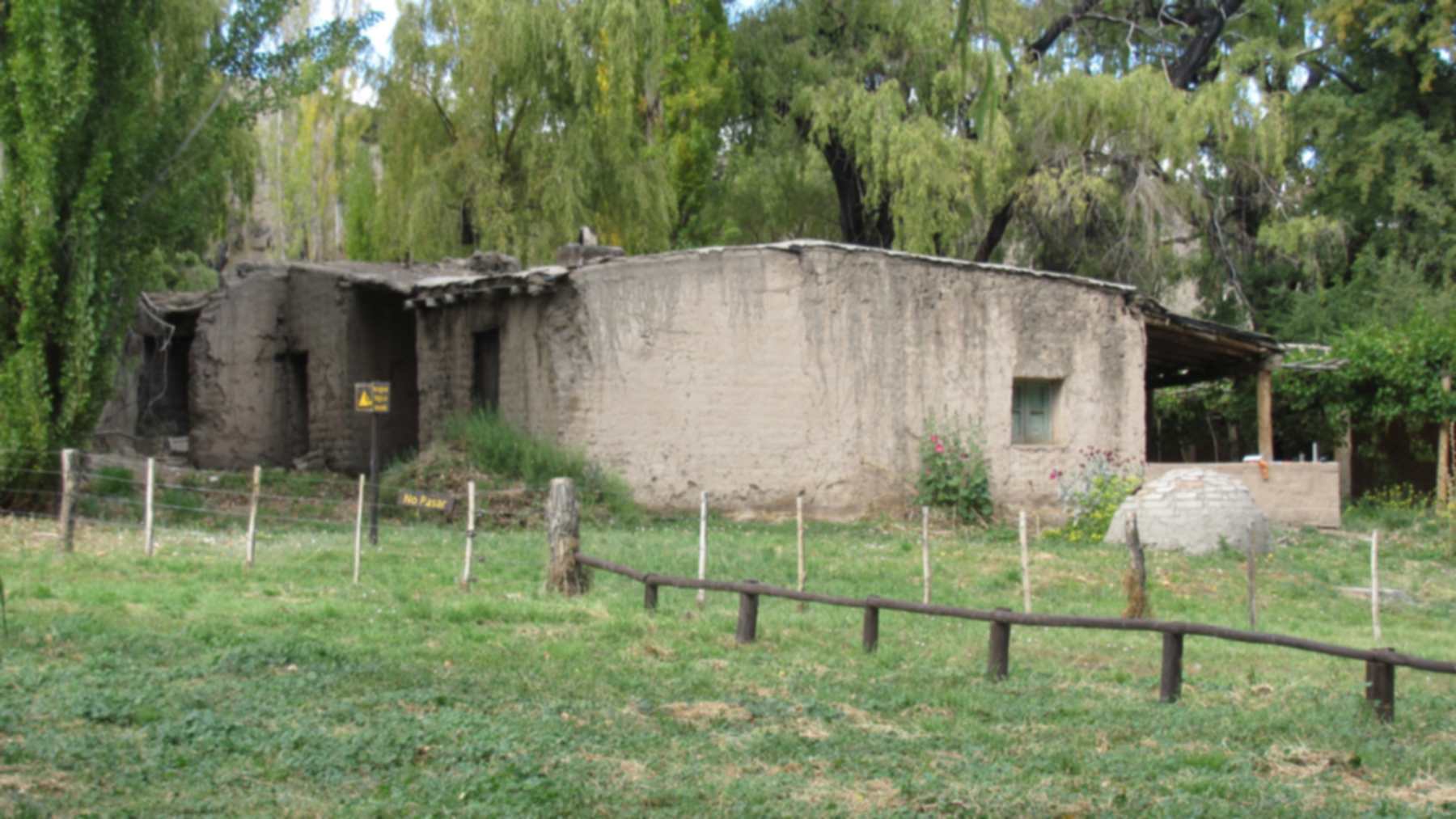
The traces of the estate remain. The adobe main building, the irrigation ditches, and the entrance’s apple orchard survive. The posts from the last section of the old telegraph line between San Juan and Calingasta are also preserved.
The APN regards these structures as cultural heritage, along with rock engravings dating between 8,000 and 8,500 years old. It also includes the knowledge of Barreal’s neighbors who worked at the estate, as is the case in other areas such as La Payunia.
What Still Remains Unknown
The study is based on fifteen interviews, almost all of them with older men. The author herself notes that this provides a limited view of the women’s work on the estate.
Galuchi worked for the APN while carrying out fieldwork. In the interviews she was accompanied by a local park ranger. She reflects on that double role and also admits that some sectors resisted participation, which limited what is known.
The article also does not provide a figure for the number of displaced families. Neither the APN nor the study detail what arrangements have been made since the 2022 flood.
The complete study has been published in Contemporary Ethnographies.
Argentina has continued to add protected areas in recent decades, and in 2018 the country’s largest national park was created.
Photo: National Parks of Argentina
