
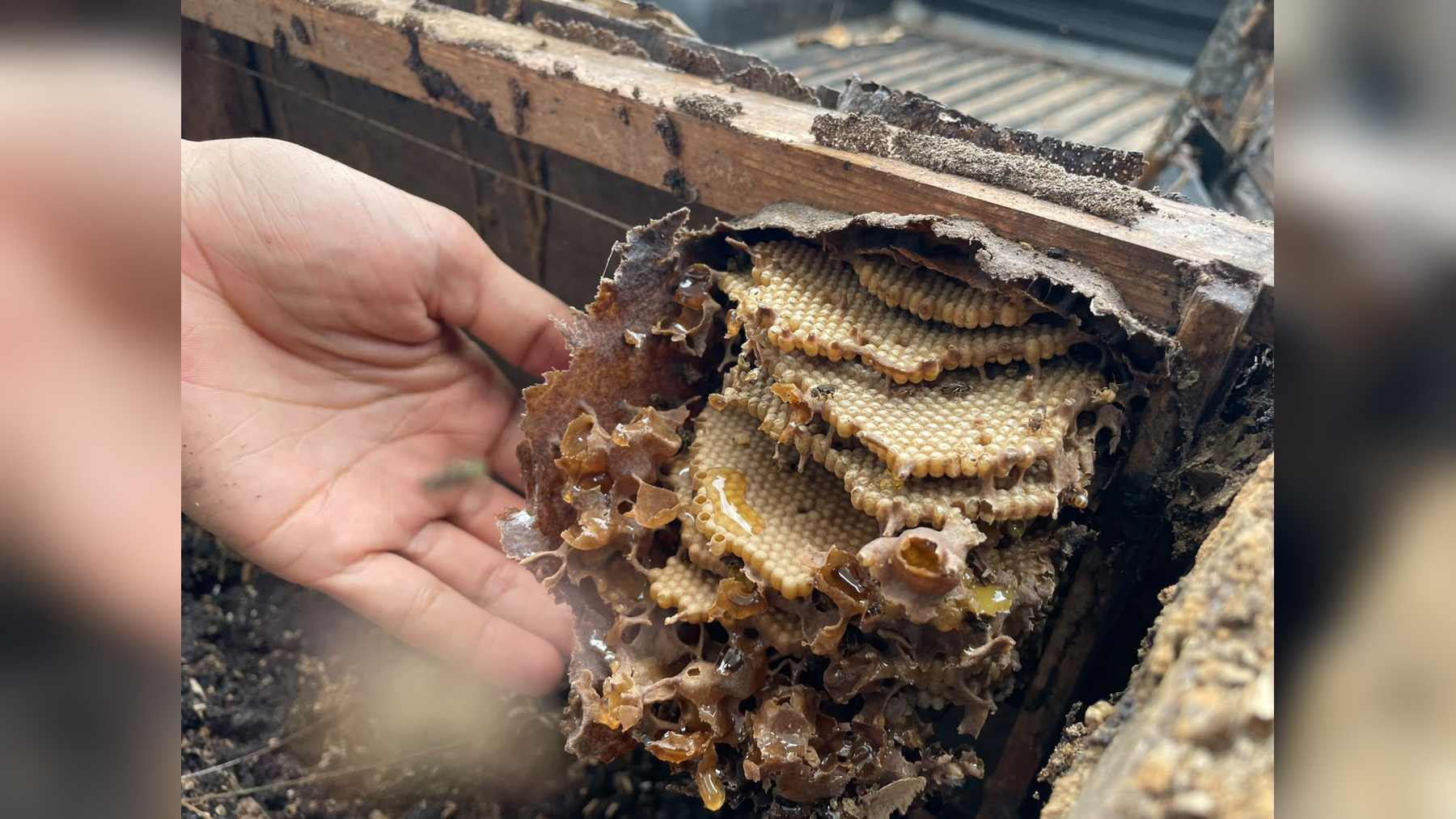
Panama’s Ministry of Agricultural Development (MIDA) trained eleven beekeepers in the breeding of stingless bees, native bees that do not sting. The session took place in Chilibre, in the Panamá District, and the ministry announced it on September 22, 2026. Attendees saw how a nest is moved and learned how to care for the colonies.
The MIDA presents this practice, meliponiculture, as a sustainable way to earn money in rural areas. A study from the University of Panama helps measure what is at stake, because in a single community in Colón it found 19 nests from nine different species.
Two Nests Relocated in Chilibre
The training was conducted by the Program for the Improvement of the Production Systems of Minor Species in the Colón regional office of MIDA, together with the Faculty of Agricultural Sciences at the University of Panama.
According to MIDA’s official note, technicians spoke about hive management and the breeding of these bees and then conducted a demonstration with two nests. They moved the nests from one place to another, a task beekeepers call transso, and explained how to care for them afterward.
The ministry sees these bees as “a sustainable productive alternative,” and maintains that good hive and nest management promotes pollination and biodiversity protection. With these sessions, it says, it aims to “generate new economic opportunities for rural communities.”
Bites Instead of a Sting
Stingless bees form the tribe Meliponinae and have a stinger that is atrophied, though that does not leave them defenseless. The National Commission for Knowledge and Use of Biodiversity (CONABIO) of Mexico explains that they defend themselves with bites or by releasing caustic substances, and yet it describes them as “very docile” bees and excellent pollinators of native flora and crops, a task that benefits wildlife vegetation and agriculture, as with other insects that improve crops when protected.
Nineteen Nests in Gandona
Junior Cedeño, Yaisury Luna and Vielka Murillo, from the Colón Regional Center of the University of Panama, searched for nests in Gandona, in Colón Province. Between August 2022 and May 2023 they sampled two areas transformed by human activity, a cattle pasture and an agricultural area.
In total they found 19 nests belonging to nine species and seven genera, 13 in the pasture and six in the cultivation area. The most frequently encountered species was Tetragonisca angustula, with eight nests, and it was also the only one that appeared in both zones.
Living trees were the most-used refuge, ahead of the ground, with five nests, termite mounds with four, and concrete with two. Almost all species stuck to a single type of site, and from this the authors conclude: “If the forest is fragmented, the stingless bees that depend entirely on trees to build their nests will disappear from the site.” Only those that adapt to human presence would remain.
The Beekeeping Advantage of Chiriquí
Panama’s 2025 Beekeeping Survey counted 652 beekeepers in the country, up 3.2% from 2024. They manage 15,529 hives, which produced 67,621 gallons of honey, about 256,000 liters, at a rate of 4.56 gallons per hive, roughly 17 liters.
With 101 producers and 9,030 hives, Chiriquí yielded 40,875 gallons, six-tenths of the country’s total. Colón, the province of the regional office that organized the Chilibre session, stood at 58 producers, 573 hives and 3,018 gallons.
MIDA attributes part of the problems to “off-season irregular rainfall,” which disrupts the flowering on which bees feed, and climate weighs heavily on the mutual dependence between plants and pollinators. In 2025 the ministry organized 21 courses and demonstrations for 180 beekeepers, and Sara Feliu, the National Director of Livestock, plans to reinforce the technical teams this year.
No Species Names or Census of Meliponiculturists
The MIDA note does not name the species of the two nests in Chilibre nor say how much honey the eleven participants expect to harvest. The Beekeeping Survey likewise does not record how many Panamanians currently raise stingless bees.
The Gandona work, published in Centros: University Scientific Journal, which is edited by the University of Panama itself, covers a pasture and a crop of a single community, so it does not serve as a census nor does it indicate whether populations are rising or falling. Its authors also point out that fragmentation of the forests in the Chagres district in recent years could leave these bees with fewer nesting sites. CONABIO also cites deforestation as a threat, and in the Amazon this same problem has led to designating stingless bees as protected species.
Photo: MIDA
