
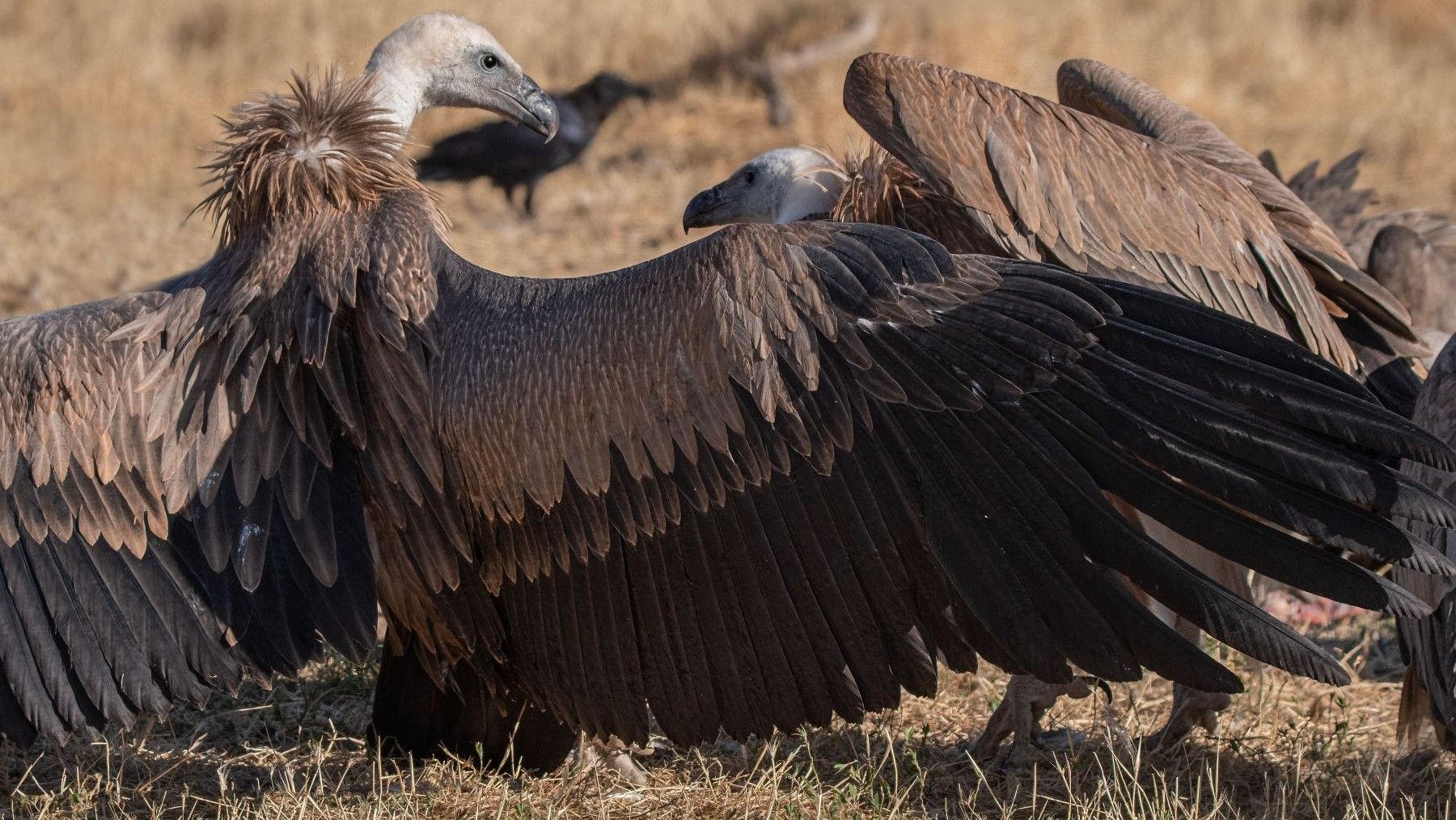
Avian flu in vultures is worsening the threats surrounding a group that includes 16 of the 23 species currently considered of concern. This new danger jeopardizes their vital role in removing carrion from ecosystems.
Vultures remove carcasses, thereby helping to reduce the spread of pathogens, but their habits can expose them to infection with H5N1. Avian influenza in vultures could accelerate the decline that several populations, already listed as vulnerable, are experiencing.
Vultures are part of a vicious circle that entails many dangers, since if they contract the disease and die, fewer birds will fulfill their role in the trophic chain. The danger of avian influenza in vultures is even greater, because this is one of the bird groups facing the most threats in the world.
The authors outline five lines of action: monitor populations, assess vaccination when risk and logistics justify it, manage carrion, strengthen handling protocols, and develop local plans. In the Basque Country, the status of the griffon vulture is not worrisome, but the bearded vulture and migratory species are of concern.
Avian influenza in vultures: a panzootic threatening thousands of birds worldwide
The avian influenza virus, the cause of the panzootic—the animal equivalent of a pandemic, is highly contagious and can trigger the collapse of vulture populations worldwide, which are already in decline.
According to the conclusions of a study in which Jon Morant, a researcher at the University of the Basque Country (EHU), participated, it has been shown that the virus has spread widely in key parts of the world essential for vultures, with serious consequences.
The researchers have emphasized the importance of conserving vultures and have proposed measures to strengthen their protection in a letter published in the journal Conservation Biology, as reported by the EHU.
To address this situation of avian influenza in vultures, they propose monitoring populations, organizing vaccination campaigns, managing carrion, establishing handling protocols for vultures, and promoting local action plans.
Vultures are one of the most threatened groups of birds in the world, since at least sixteen of their twenty-three species are in a concerning conservation status, largely due to poisoning and other threats caused by human activity.
These animals “provide one of the most important ecosystem services for human well-being: they consume carrion, which contains pathogens. It has been shown that scavenging animals help prevent or reduce the spread of pathogens. In other words, they prevent the continued spread of microorganisms that cause diseases,” according to researcher Jon Morant.
Avian influenza in other animals
Avian influenza does not affect only birds, as it has been documented that more than 48 mammal species have become infected worldwide. According to Morant, “The more infected carrion there is, the greater the risk of transmission of avian influenza in vultures, and as more vultures die, the capacity to remove carrion diminishes, pathogens spread, and infections increase.”
Thousands of American black vultures and aura vultures have died in the United States and South America, and griffon bearded vultures in Europe and California and Andean condors have also suffered serious damage.
In the Basque Country, the population of the griffon vulture is in good condition, but the bearded vulture is a more sensitive species, and special attention must be paid to migratory species, Morant added.
What happened to the California condor?
The California condor demonstrates how quickly an outbreak can compromise years of conservation: according to information released by the EHU, the avian influenza in vultures caused the loss of about 6% of its wild population in six weeks.
The fact about avian influenza in vultures, or in this case the California condor, reinforces the importance of preparing a response before mass mortality: in small populations, early case detection and coordinated protocols can be decisive in preserving their recovery.
