
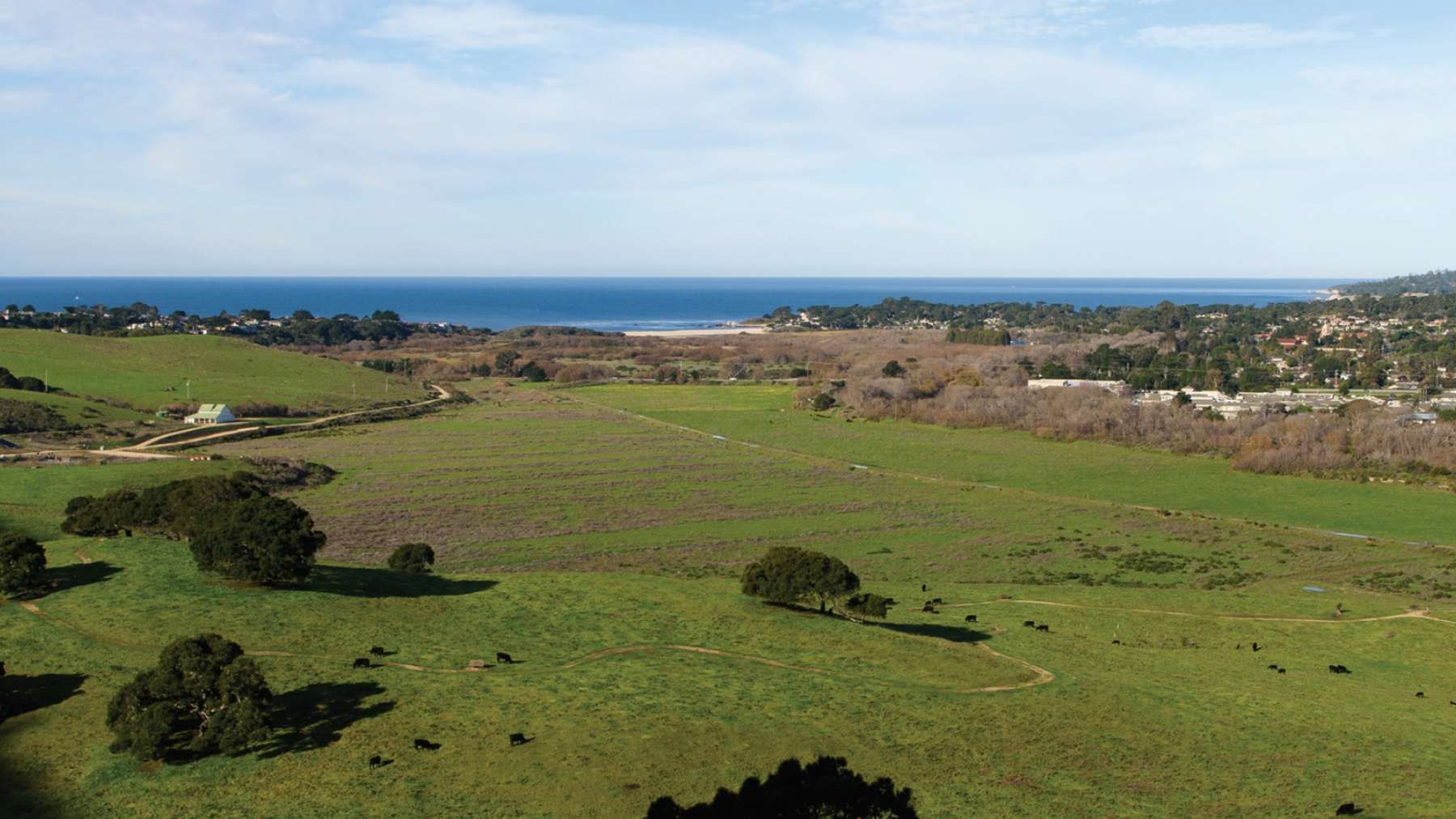
The former Odello East fields, along the Carmel River in California, form the backbone of a $57 million flood-control project. The Eastwoods purchased the land in 1995 and donated 128 acres, nearly 52 hectares, to Big Sur Land Trust. By October 2026, Monterey County was still awaiting $27 million from FEMA.
The county is steering the plan, named Carmel River FREE, with Big Sur Land Trust, a Monterey-based conservation organization, as co-sponsor. The entity presents it as one of the most extensive and significant flood-protection efforts on the Central Coast.
Donations of 1997 and 2016
In 1995, brothers John and Michael Odello sold Coast Ranch to the Eastwood trust. The land had been farmed for decades, according to a 2015 resolution by the California State Water Resources Control Board.
In 1997, Clint and Margaret Eastwood renounced plans to develop 82 housing parcels and donated about 49 acres (20 hectares) to Big Sur Land Trust, according to a report from the Monterey Peninsula Water Management District. The other 79 acres (32 hectares) arrived in 2016.
Dikes, Road and Floods
In the early 1930s, earthen dikes appeared on both sides of the lower Carmel, built to protect the crops in the south and the homes in the north. The river was confined to a narrow channel. Then came State Route 1, which separated the lagoon from the plain.
David J. Stoldt, the district’s general manager, wrote in 2015 that these bottlenecks had contributed to significant floods.
The 1995 flood swept away the State Route 1 bridge. According to the project’s 2020 data sheet, the road was closed for six months, and Big Sur was cut off from the north.
448 Meters of Levee Removed
Crews will remove about 448 meters of the earthen levee along the southern shore. As the Carmel rises, water will flow out there toward the old fields rather than pushing against the northern neighborhoods.
From the fields, two new channels will carry that water westward. To cross Route 1, a viaduct of about 110 meters will be needed, south of the current bridge, allowing the floodwaters to pass beneath it into the lagoon’s southern arm.
The county estimates that the 100-year flood level, with a 1% annual probability, will drop by about 60 centimeters at Rio Road, Crossroads, The Barnyard, and Mission Fields.
Steelhead Trout and Willows
Big Sur Land Trust envisions willows, cottonwoods, meadows, and wetlands. According to the organization, the plains act as water-sponge areas and recharge the aquifer. The lagoon will gain habitat for steelhead trout and for birds. Part of the area will remain farmland, because the project raises 23 acres (9.3 hectares) of cultivation above that 100-year flood level.
In January 2025, five entities signed an agreement to keep the site in long-term stewardship.
FEMA Holds Back $27 Million
The county aims to fund the project with grants and already has money from state agencies, NOAA, and Caltrans. According to its June summary, $33.7 million has been awarded, with the largest portion coming from the California State Coastal Conservancy, amounting to $9.25 million.
The $27 million from FEMA, the federal emergency agency, accounts for 47% of the budget and has not yet arrived.
FEMA gave environmental clearance in fall 2025. But between November and January, the county learned that the agency would be denying extensions of funds. The funds from this grant expire in January 2027. Moreover, the report noted that any commitment over $100,000 required the personal signature of the Homeland Security Secretary.
The county sought help from state Senator John Laird and Congressman Jimmy Panetta. On October 7, the federal report received by the county’s legislative committee stated that Panetta was personally handling the case. It also warned that, if the money does not arrive soon, millions will be lost.
Start of Construction, Still No Date
In June, the county anticipated bidding by late 2026 and starting in 2027 if FEMA money arrives, though there is no firm start date. If construction does not commence that year, it estimates losing about $5.3 million in other grants. The works would last three years and monitoring for another three to five years.
In 2016, Big Sur Land Trust hoped to finish by early 2020. The 60-centimeter figure is also a design estimate, and only a real flood will indicate how much the plain protects.
Monterey County published its latest technical report on the project on June 8, 2026 in its official docket.
Giving rivers space is also advancing in Europe, as shown by the EU’s nature-based solutions, the pending restoration of rivers and wetlands after the DANA event, and World Rivers Day 2026.
Photo: Big Sur Land Trust
