
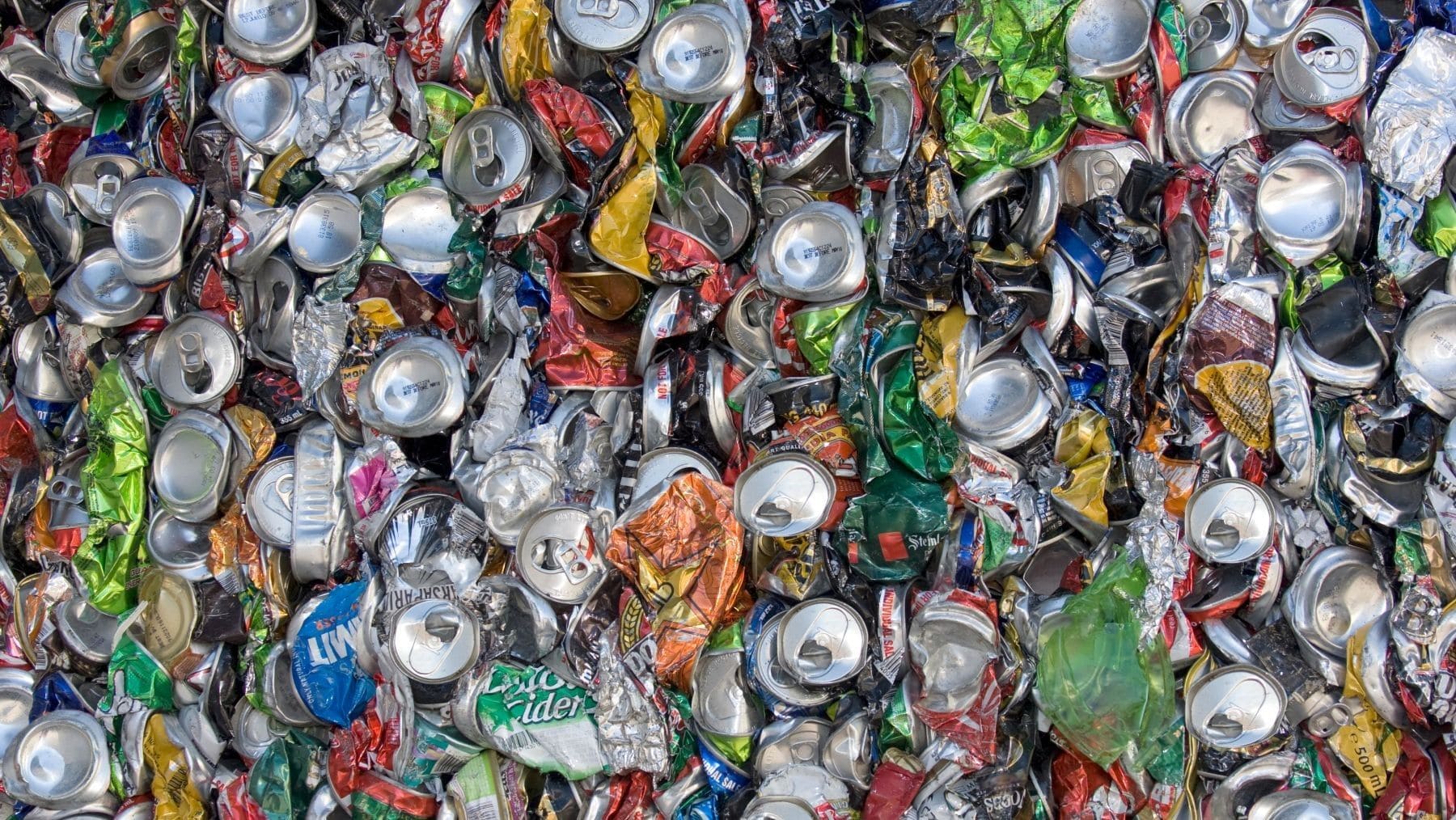
This is a chemical recycling approach that integrates used aluminum, copper powder, molybdenite, and plastic through an in situ double redox catalysis. Its promoters claim it can yield feedstocks and reduce waste.
Giving a new use to used aluminum and PET plastic within a single process is the objective of an innovative chemical recycling proposal that also incorporates copper powder and molybdenite. The approach aims to produce feedstocks usable by industry and to merge the processing of different materials in one operation.
Its promoters employ the mechanism “in situ double redox catalysis” and explain that they have worked both on the theoretical foundation of the reactions and on their experimental implementation. Among their objectives are reducing liquid and solid waste, limiting resource consumption, and obtaining products with industrial and technological applications.
One of the avenues proposed by this chemical recycling project consists in transforming used aluminum into what they term a “green bauxite”, a step that requires specifying its composition and potential uses: in conventional manufacturing, the Bayer process yields alumina from bauxite, while the metallic aluminum is produced afterward by electrolysis.
A Chemical Recycling Method That Will Turn Heads
Through chemical recycling, it centers on the quartet green aluminum (green bauxite) – copper powder – molybdenite – plastic recovery, all within a single process, which makes it unique. On one hand, it transforms a non-renewable natural resource into a renewable one, embracing a circular economy, waste valorization, and the generation of value-added raw materials for products with industrial and technological impact; it represents a paradigm shift, a highly promising frontier, packaging regulation, a reduction of associated environmental risks, a decrease in greenhouse gas emissions and carbon footprint, lower operating costs, a reduction in deforestation, and the production of products with broad industrial and technological applications.
Why is It Unique?
Today, the production of aluminum is sourced from clay-rich forested areas that yield a mineral ore called bauxite, and through a process known as the Bayer process, alumina is obtained, with aluminum metal subsequently produced by electrolysis. However, the process drives deforestation, making it highly polluting and energy-intensive.
The future of aluminum lies in producing green bauxite and avoiding the conventional processes, in line with European community expectations. A worldwide search for any process that meets these conditions revealed that none exists to date.
Hence, Blisteral ([email protected]) has launched a process to transform used aluminum into green bauxite, grounded in the principles of chemical recycling, fundamental chemistry, and the circular economy. It builds on the quartet green aluminum (green bauxite) – copper powder – molybdenite – plastic or polymers, all interconnected in a single recycling operation.
But during the development of the process, products emerged as feedstocks, making the approach unique, with low environmental impact and easy implementation at a low operating cost. Through a process we have termed “in situ double redox catalysis,” it provides answers to the major challenges present in chemical recycling.
The developed process was advanced through theoretical aspects of chemical reactions as well as their experimental implementation.
The foundation lies in the chemical reactions:
Cu2 + Al0 = Cu0 + Al+3
This work represents a major contribution, as it aligns with the green economy, chemical recycling, and the production of products with significant industrial and technological applications. Its development incorporates new systems and concepts for recovering products, including purification.
Summary of Some Applications of this chemical recycling
Figure 1 – Bottle caps, wine, and champagne
The coating on wine and champagne bottle caps is recycled 100%, enabling the complete recovery of the packaging as green bauxite.
Figure 2 – Drinks cans, beers, juices
These containers feature multiple components, all recovered 100%. The sealing cap, recovery of the tinplate through a circular economy. The aluminum body is transformed into bauxite. The polymer is recovered and sent for final disposal. The paint is separated and disposed of. The process consumes little energy.
Figure 3 – Recovery of coffee capsules
Coffee capsules are composed of three elements: PVC, coffee, and aluminum. Currently, there are recycling systems for PVC and coffee. However, there is no system for recovering aluminum.
The inventive process manages to separate the three components, and the resulting aluminum lids are of interest and recovered as bauxite.
Figure 4 – Aluminum trays for food transport
In this new process, aluminum trays are recycled after washing and saponification to remove food residues, fats, and oils. They are recycled 100%, and for the lids, aluminum is separated from cardboard to recycle both elements.
Figure 5 – Membranes
The jars of coffee, yogurt caps, powdered milk, and prepared jellies carry a seal known as a “membrane,” which is made of 100% aluminum and is recycled completely into green bauxite.
Figure 6 – Aerosol packaging
Today, aerosol deodorant packaging is not accepted at recycling centers, so it is not recycled. It is possible to separate all its components in the chemical recycling process. The PVC caps, aerosol mechanism, and 100% of the aluminum are separated, with the aluminum becoming green aluminum.
Figure 7 – Wrapping paper
Wrapping paper composed of paper and aluminum, widely used in the food industry. 100% of the packaging is recovered: the paper is recycled in the paper industry, while the aluminum is recovered as green aluminum.
Figure 8 – Aluminum container
Used in the pharmaceutical, nutritional supplement, and food industries. They are mainly composed of aluminum with a plastic lid. In the recycling process, both elements can be recovered 100%. Aluminum is obtained from green bauxite and the plastic is recycled in the standard way.
Figure 9 – Pharmaceutical blister or medicine container
It is estimated that 60% of the world’s population uses some medication, generating billions of packages that are currently sent to landfills for disposal. In the process, different types of blisters can be recovered, and their components are used as feedstock in other processes, avoiding environmental contamination. The recovery yields bauxite, PVC plastic, and PET plastic.
The various blister types include mixed, single-material with a photosensitive filter; both industrial and household waste are recycled.
Figure 10 – Aluminum foil
Aluminum foil, widely used by the population in numerous applications, is rarely recycled due to the presence of oil, grease, and food residues. In the recycling process, it is pre-cleaned by saponification and fully recovered. The recovered aluminum is transformed into green bauxite.
Figure 11 – Tetrapak packaging
One of the most utilized packaging formats in the food industry is Tetrapak, comprised of 75% cardboard, 20% plastic, and 5% aluminum.
One of the major challenges is how to separate the aluminum from the polymer; in the process, it is possible to separate the two components. The aluminum becomes bauxite; however, in the case of the polymer, the aluminum is replaced with copper. This material could be used in bacteriological-grade materials for the food packaging industry. As for the cardboard, its recovery is already implemented.
In the process it is also possible to recover aluminum in other materials and transform it into bauxite—for example, cooking utensils.
Strengths of the Process
- Being a selective system, it can recover all forms of aluminum, from household packaging to industrial scrap.
- Transformation of a hazardous resource into a non-hazardous one
- Application to copper recovery in the molybdenum industry: the new process shows roughly 90% lower cost for copper recovery, transforming aluminum into green bauxite.
- Unique process for transforming a non-renewable natural resource into a renewable one (production of green bauxite).
- Reduces deforestation effects, since recycled aluminum is converted into green bauxite, mitigating the environmental harms of bauxite extraction.
- Contributes to the recycling of pharmaceutical packaging, minimizing environmental impact.
- Tetrapak packaging recycling: all three components can be recovered.
- Production of three high-impact products in a single process (copper powder, green bauxite, and plastic).
- The process reduces the generation of associated risks by about 95% compared to current processes.
- Reduces the carbon footprint.
- Generation of higher value-added products.
- Minimizes the formation of greenhouse gases.
- The production of copper powder is 3–4 times more cost-effective than cementing copper.
- The waste generated is directed into a new circular process.
- Contributes to a new trend of green aluminum.
- Shifts the paradigm of current methods for copper recovery and aluminum transformation.
- Protects biodiversity.
- 90% reduction in energy consumption for aluminum production
- Replaces copper cement with copper powders.
- Generation of products of great industrial and technological interest.
- Advancement of green chemistry
- Currently the process has been applied to molybdenite recovery without adding chemical agents or Sx separation processes, which is a major contribution to hydrometallurgy.
The Essential Recovery of Aluminum
The energy threshold for any new route to recover aluminum is very demanding. According to the International Aluminium Institute, conventional recycling of this material saves approximately 95% of the energy required to produce primary aluminum.
That figure serves as a benchmark for evaluating the proposal, since energy and reagents consumed, the quantity and purity of recovered materials, and the waste generated must be measured. Integrating multiple transformations into a single operation can be very advantageous.
Contribution to ECOticias.com by Luis Araya Hunt – Chemist, Founding Partner of Blisteral SpAmr
