
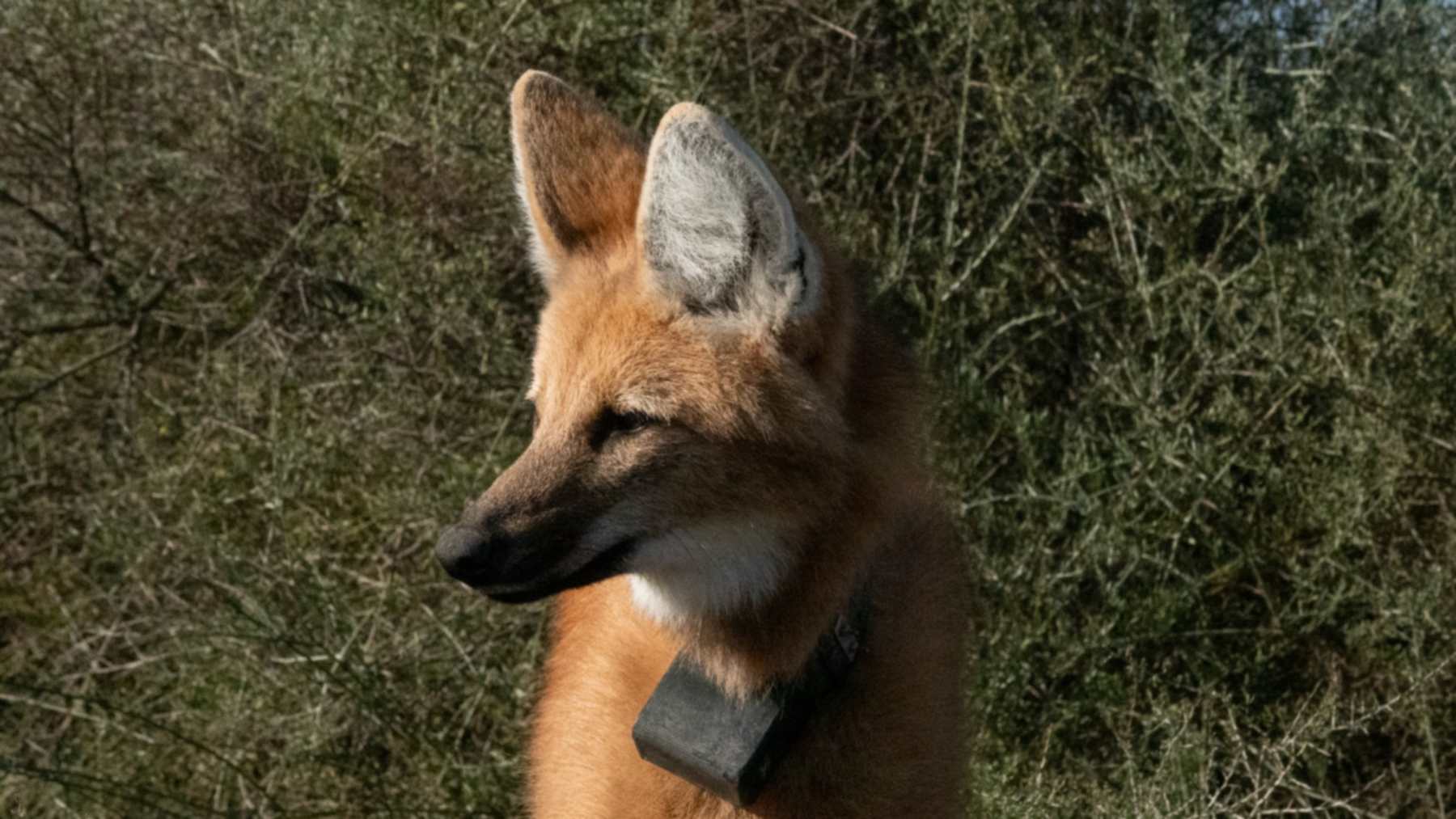
Argentina’s National Parks and the organization Aves Argentinas have opened a vote to choose the names for a pair of aguará guazú at Ansenuza National Park, in Córdoba. Anyone from anywhere in the country can vote. The two animals wear satellite collars and, according to the camera traps, they are raising four cubs together.
The aguará guazú (Chrysocyon brachyurus), which in Spain is commonly called the crested wolf, is the largest canid in South America. The Administration of National Parks (APN) defines it as an “emblematic and threatened” species in Córdoba and across the country. The winning names will be announced on Thursday, November 5.
Four cubs on camera
Throughout this year, the park team placed camera traps at the spots most frequented by the species. Thus it discovered that the pair now lives in a “shared parenting of four cubs,” according to the October 28 note. For a threatened species, that’s no small thing.
The APN hopes that those cubs bolster the population of the protected area and the entire Ansenuza region. The statement, however, does not say how many aguáras live today inside the park, nor how many cubs typically survive.
Mistol, Mampa or Chúcaro
The three options were proposed by the park, Aves Argentinas, and the students of the José Martí School of Los Pozos. This town is very close to where the animals live. Before proposing anything, the kids held a workshop to learn more about the species.
In the first option, Mistol and Luna, the male is named after a native fruit that the aguará also eats. Luna points to the female spending much of her life active at night. The second, Mampa and Navira, comes from the language of the Sanavirones, where mampa means “running water.”
With the third option comes the surprise. Chúcaro refers to the male’s prickly and fierce temperament. Cucusa, on the other hand, refers to the female’s small head, which has the smallest measurements recorded in the area.
A satellite collar since April
The tracking of the pair began well before the contest. At the end of April, the APN reported that it had captured the female, about 3 years old, using humane traps designed not to cause her harm. After confirming she was healthy, they released her at the same site with her collar.
Now the two animals wear one collar. With those data, technicians want to know how the pair moves, what they eat, and which corners they use to raise their young, without disturbing them. It is a method similar to the satellite collars that Costa Rica uses on its jaguars.
According to the APN, it was the first time that such tracking had been done on an aguará in this region. All of this is part of the Aguará Project, shared by Aves Argentinas, the park, and the Province of Córdoba. In the end, what they seek is to turn those maps into protection measures.
A male rescued in October
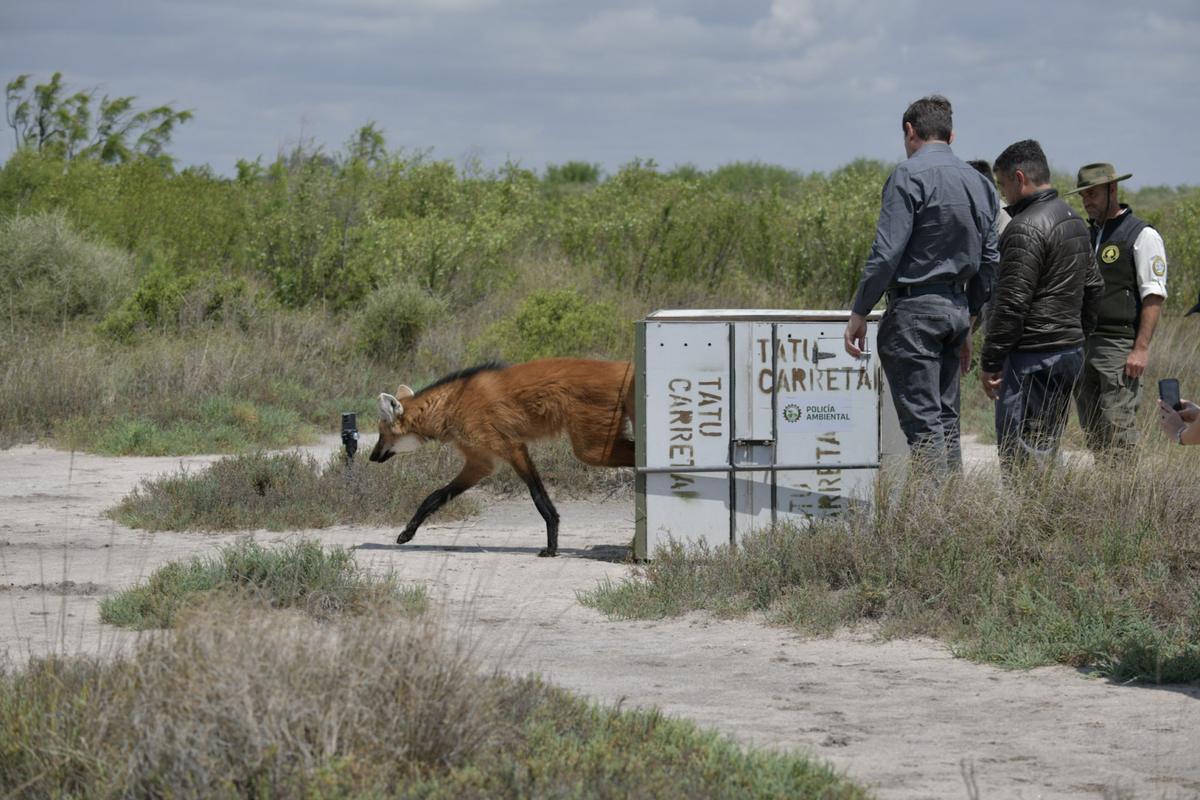
The pair is not the only aguará to have made headlines this month in Ansenuza. On October 19, the APN announced the release of a male in the park. He was about three or four years old, weighed around 25 kilograms, and had been rescued earlier in Villa Santa Rosa.
The animal went through the Tatú Carreta Rescue Center, where they stabilized him and checked his health. Before releasing him they implanted a microchip to identify him in the future. Present at the release were also the Córdoba Environmental Police and national and provincial park rangers.
South America’s largest salt lake
Ansenuza National Park was created in 2022 to protect the Mar de Ansenuza, the former Laguna Mar Chiquita that was to become a national park. According to its official profile, it preserves more than 661,000 hectares of the Dry Chaco and Espinal. The entire wetland area hovers around one million hectares and houses the largest saltwater lake in South America.
That lake is, in addition, the fifth largest in the world. Along with the Bañados del Río Dulce, the area hosts 66% of migratory and shorebird species seen in Argentina. For that reason it is a Ramsar site.
The aguará fits into that landscape like a glove. It lives in grasslands, wetlands, and marshes—environments that are shrinking worldwide. According to the APN, its appearance there usually indicates that the surroundings are well preserved.
The couple’s routes, not published
What matters most, for now, remains unknown. The official notes do not say how many kilometers the pair travels or whether the four cubs are thriving. There is not yet a census of the species in Ansenuza.
Argentina already knows what a long-term bet yields, as demonstrated by the return of jaguars to Esteros del Iberá. Will a naming contest make more people notice the crested wolf? At least, now it has a face and a collar.
The call to choose the names has been published by Argentina’s Administración de Parques Nacionales.
Foto: Augusto Distel / Administración de Parques Nacionales
