
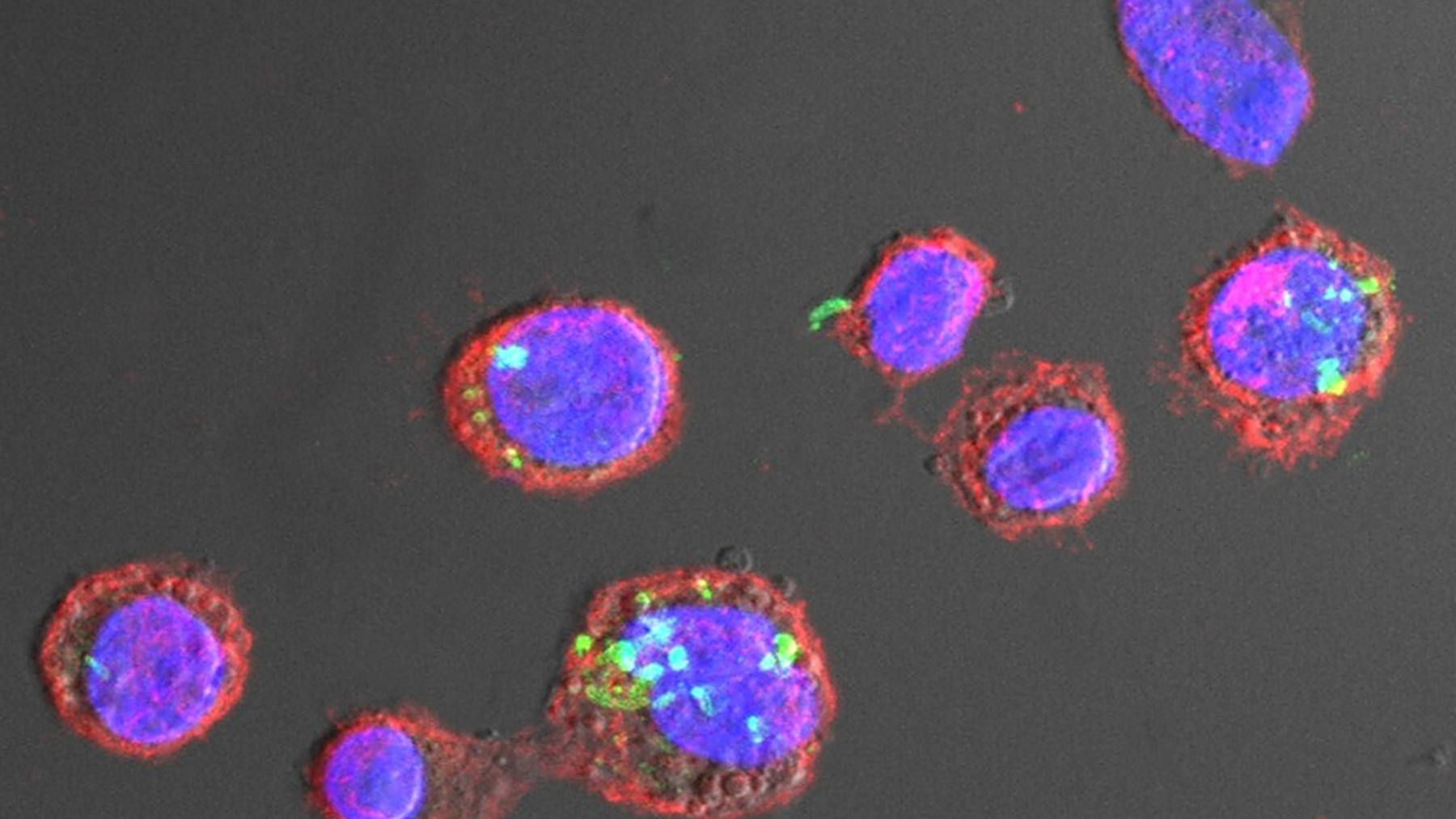
A state-managed residential building in Spain has coexisted with the Legionella bacteria in its water network for about two decades. Neither hyperchlorination, thermal shocks, nor several renovations managed to eradicate it. This has been documented by a team from the Carlos III Health Institute (ISCIII) and I2SysBio, a CSIC–University of Valencia joint center.
What stands out isn’t only the bacterium’s endurance. In those pipes, a new variant emerged, a blend of others already present, that came to account for more than 80% of the detected bacterial population and was the only one found in patients linked to the building. The study has been published in the journal Water Research.
Born with the Building
To reconstruct its history, the team combined genomic surveillance, cell-based infection models, and a three-dimensional study of the biofilm. That is the viscous layer of microbes that coats the inside of the pipes.
According to phylogenetic analysis, which dates lineages by their genetic changes, the variant formed when the building began operation. It did not come from outside already formed. It was selected and settled within the building’s own water network.
Fernando González Camacho, from ISCIII’s National Center for Microbiology, explains that it is a strain exclusive to that installation. When recombined, it gained new capabilities. One of them is to redesign the biofilm into “a continuous shuttle of bacteria that contaminate the water and can put people at risk.”
More Mobile and More Infectious
What makes it so different? Mireia Coscolla, a researcher at I2SysBio and coauthor, notes that it disperses more widely and adheres less to surfaces than the original strains, which had been confined to minority niches. In the laboratory, moreover, the new variant infected cells and reproduced more efficiently.
For Coscolla, this combination of traits “could explain its predominance among clinical isolates linked to the facility.” In other words, it would help account for why it kept turning up in patients again and again.
Chlorine and Heat Weren’t Enough
The measures that failed are the hallmarks of any control plan. Hyperchlorination increases the chlorine dose, and thermal shocks heat the system to kill the bacterium. They were applied systematically, and yet it remained.
The Royal Decree 487/2022 on legionellosis reminds that Legionella multiplies between 20 and 50 °C. It grows best between 35 and 37 °C. That is why it requires more than 50 °C at hot-water taps and 60 °C in stored water.
With cold water, it demands the opposite—below 20 °C “where climate conditions permit.” With summers like the latest ones, that nuance isn’t a minor detail.
2,164 Cases in Spain
Legionellosis is an infection that presents as pneumonia and can be fatal in severe cases. Most cases are caused by Legionella pneumophila, the species examined in this study. It is transmitted when people inhale airborne water droplets, such as those released by showers, cooling towers, or decorative fountains.
According to the European Centre for Disease Prevention and Control (ECDC) annual report, Spain reported 2,164 cases in 2024. That amounts to about 4.5 per 100,000 inhabitants, up from 1,336 cases in 2020. Along with France, Germany, and Italy, it accounts for 71% of European cases, despite comprising only about half of the population.
Across Europe, 57% of the 2024 cases occurred between June and October. The ECDC points to warm temperatures, among other factors, and this weighs heavily as the climate crisis drives heat waves across Europe. Men aged 65 and older are the most affected.
Looking at the Bacteria’s DNA
The authors call for long-term genomic surveillance of building water networks. They also want to complement it with tests that reveal how each strain behaves. In essence, it’s about detecting a new variant before it undermines the management of the facility.
The study fits the One Health approach, which considers the environment, people, and infrastructure together. In that spirit, antibiotic-resistant bacteria had already been found in recycled water used for irrigation in the Canary Islands.
Water-related scares are not rare either. This summer, Tordera declared its tap water unfit for consumption due to contaminants. It is a different problem, but it underscores how fragile a water network can be.
No Location or Patient Count
The ISCIII note does not specify where the building is located or how many people live there. It also does not state how many cases are attributed to it, though the article’s title mentions recurring outbreaks.
No one yet knows whether something like this could occur in other buildings or how frequently. The study describes an exceptional and well-documented case. It is not a portrait of all the country’s water networks.
The Carlos III Health Institute press release about the study was published on October 23, 2026.
Photo: Instituto de Salud Carlos III
