
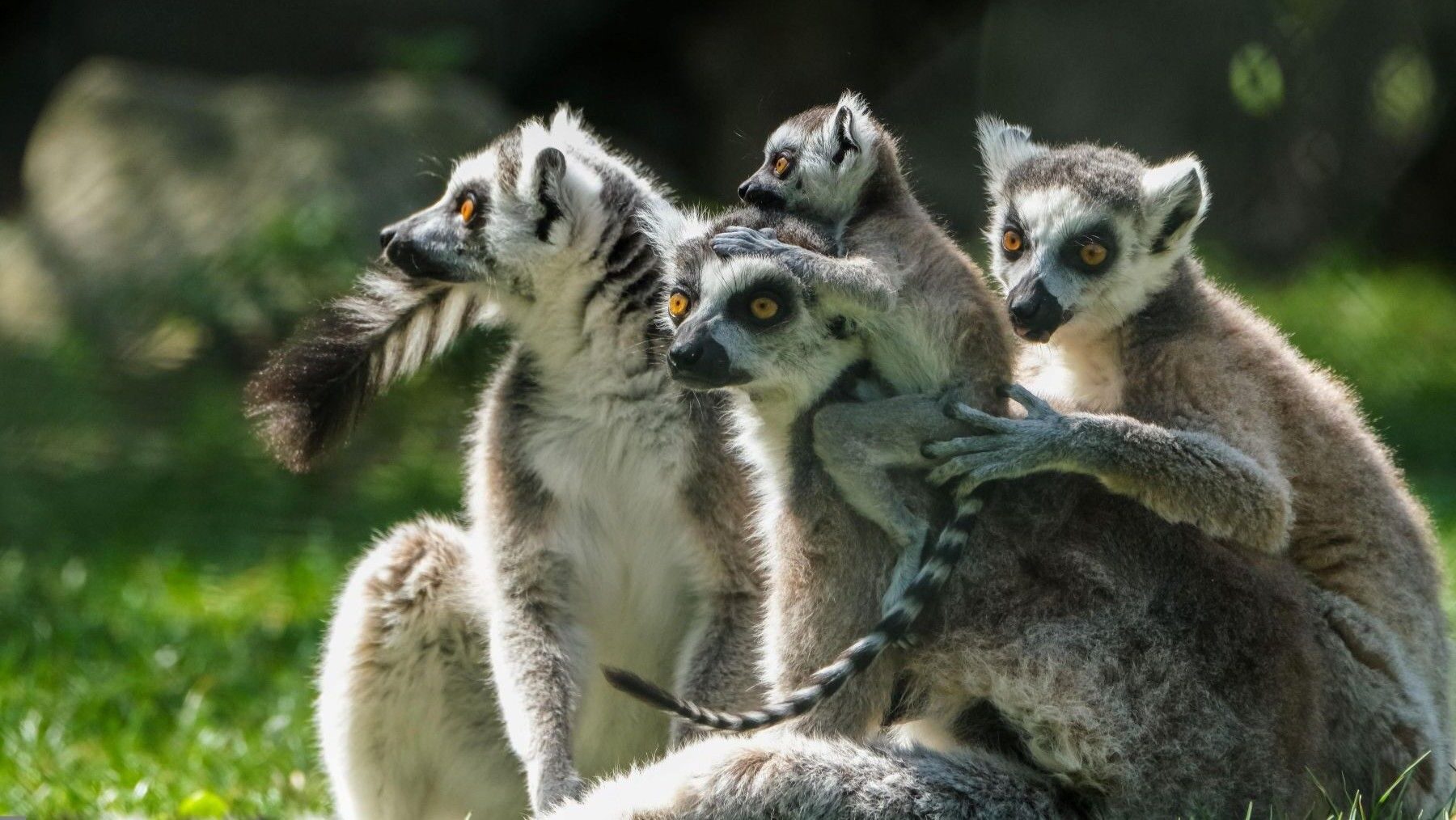
World Lemur Day 2026 focuses on deforestation, hunting, and wildlife trafficking that threaten these primates, essential for the regeneration of Madagascar’s forests.
The extinction of lemurs would also imply weakening the tropical forests in which they live and help regenerate. World Lemur Day 2026 is celebrated on October 30 with the aim of boosting the conservation of these Madagascar-endemic primates and their spectacular habitats.
The day of World Lemur Day 2026 promotes each year, on the last Friday of October, a series of educational activities and awareness and information campaigns. The idea is that people understand that lemur survival is directly linked to the protection of the forests in which they live.
Deforestation, legal and illegal hunting, and illegal trade continue to corral lemurs. Knowing how they live, what threats they face, and what is being done to protect them helps to understand why conserving lemurs requires action also on the land they depend on.
World Lemur Day 2026: a lot to do to protect them
On the last Friday of October we celebrate World Lemur Day to raise awareness about one of the world’s most endangered animals: lemurs, also known as the “jewel of Madagascar.”
The ancestors of lemurs arrived in Madagascar from the African continent on natural floatation rafts around 65 million years ago. These creatures evolved and adapted to a variety of ecosystems, giving rise to a wide range of lemurs that inhabit a broad spectrum of habitats.
Lemurs such as the silky sifaka or simpona (Propithecus candidus) live exclusively in the high-altitude tropical rainforest of northern Madagascar. The maki and the ring-tailed lemur Lemur catta mainly inhabit the spiny forests of southwestern Madagascar, and the Alaotra gentle lemur Hapalemur alaotrensis lives in the marshes and bamboos of that lake.
Lemurs are essential for maintaining the balance of Madagascar’s ecosystems and for the growth of plants and trees. They are considered the “forest creators,” as they drive vegetation growth in Malagasy forests, and that is something to remember on World Lemur Day 2026.
Although they love fruit, they cannot digest the seeds; as they move through the forests, they disperse them through their droppings, which act as natural fertilizers. These seeds give rise to new trees that provide shelter and food to a wide variety of animals, such as snakes, chameleons, and the lemurs themselves.
The planet’s most threatened mammals
World Lemur Day 2026 exists because these primates are in danger of extinction, with 31% of all lemur species classified as critically endangered on the IUCN Red List of Threatened Species.
Around 2000 years ago, the exploitation of nature in Madagascar began with the arrival of humans. Coal mining, illegal logging, and slash-and-burn agriculture have caused deforestation and a substantial loss of habitat for lemurs.
Thinking about World Lemur Day 2026, since the 1950s, Madagascar has lost 44% of its natural forests and, between 2001 and 2019, the country lost 3.89 million hectares of forest, representing a 23% decrease since 2000, according to Global Forest Watch.
The lemur population continues to decline due to poaching for meat and private and institutional owners keeping them illegally as pets. There are strict laws to protect lemurs, and any crime is punished with prison sentences ranging from six months to twenty years.
Lemurs are also affected by the climate crisis. The species face the risk of extinction as they are forced to abandon their natural habitat due to climate change. A study published in 2019 revealed that 95% of lemur habitats could be destroyed by global warming by 2070, as some areas would become too hot to inhabit. A WWF report also showed that populations of 57 lemur species would decline by 60% if the global temperature rises by 2 to 4 °C by 2100.
SOS Lemurs by IUCN
On World Lemur Day 2026 we must not forget that much is being done to recover these primates. According to IUCN, the first phase of the SOS Lemurs program, developed between 2017 and 2023, helped protect 63 species through 49 projects.
The initiative combines habitat conservation and support for local communities: a second phase, announced with substantial funding and a horizon in 2029, aims to sustain on-the-ground protection. If these initiatives prove effective, perhaps World Lemur Day 2026 will be one of the last to be celebrated, once the species have recovered.
