
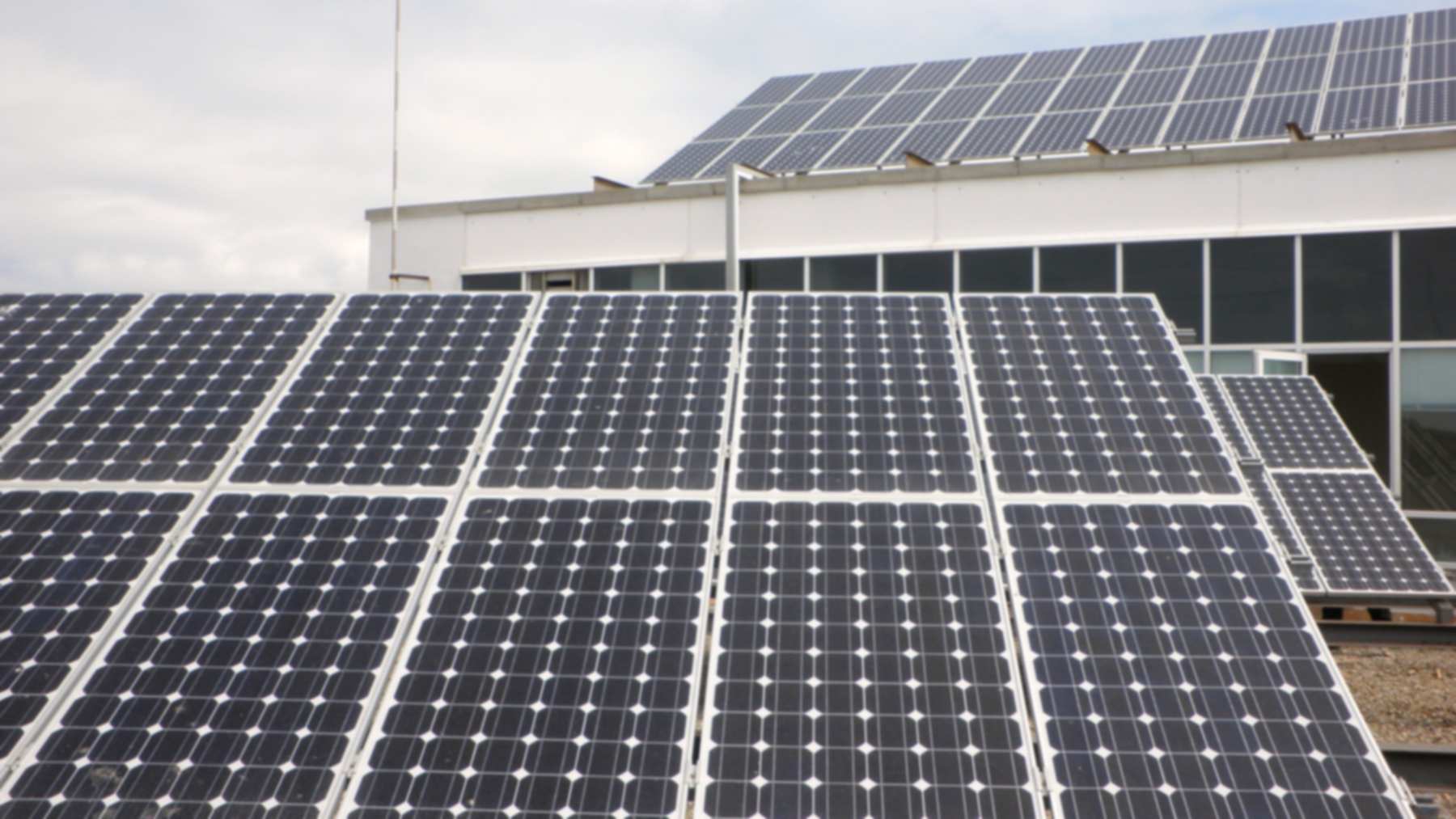
The aid line for installing solar panels with a battery in Andalusian homes was open for only one day. The Andalusian Energy Agency began accepting applications on October 22, 2026. The following day, the Official Bulletin of the Andalusian Government (BOJA) published the suspension of new requests after the budget had been exhausted.
The program of which it is a part, endowed with €20.77 million in ERDF funds, has not been closed in full. The portion aimed at improving the efficiency of homes and private residential buildings continues to accept applications, with 50% for individuals that can rise to 65%. There is a deadline until September 30, 2027 or until funds run out.
400 projects in a day
According to the note published by the Agency on October 23, the call attracted “a high number of applications.” They were submitted mainly by individuals, though also by companies and municipalities. Between the solar line and the non-residential public buildings line, the other one that has been suspended, more than 400 projects have been submitted.
The official catalog of the program reserved for the solar line €3,750,500 destined for individuals and €2,019,500 for the self-employed and companies. That amounts to about €5.77 million in a region where shared self-consumption in Andalusia has already surpassed the target capacity planned for 2026.
The Agency will now process the files “in strict order of entry,” because the program is managed on a non-competitive basis. Projects are not compared against each other, and each concession depends on remaining budget.
The battery was no longer optional
According to the call, every photovoltaic installation for self-consumption had to include a battery. Its capacity could not exceed 5 kWh per kW of incentivized power, and 75% of the energy stored in a year had to come from those panels. This is the trend that explains why more and more households are installing batteries alongside their panels.
Households without any economic activity could not be paid for the surplus electricity that goes to the grid. In essence, the aim is to use at home the energy from the rooftops, even at night.
With a minimum aid of €6,000 at 55%, the investment should be around €10,900 at least. The Agency itself acknowledges that it wanted to reward the “most energy-ambitious actions.”
Up to 10 additional points of aid
For individuals, self-employed, micro-enterprises and small businesses, the solar aid was 55%. Medium-sized enterprises started at 45% and large ones at 35%.
All could accumulate up to 10 more points, for example if an Andalusian energy community joined, if self-consumption was collective, or if the project was carried out by an energy services company. The same applied in towns facing demographic decline (the areas losing population), thus reaching 65%.
Additionally, an energy audit was required beforehand, performed by a supplier on the official IDAE list. It was not enough to just call the installer from the neighborhood.
Insulating the house remains subsidized
The efficiency line for private homes and residential buildings remains open and, according to the Agency, with “a great reception.” It funds facade insulation, roof coverings, or new windows, awnings or blinds. It also covers heating, hot water, or electricity, exactly what that sticky Andalusian summer heat demands.
The work must raise the energy rating by at least one letter and cut non-renewable energy consumption and CO2 emissions. An energy certificate registered within the previous three months is required. If renewables such as aerothermal energy in homes or biomass are added, they cannot exceed 50% of the investment.
According to the catalog, this portion has €7,151,656 for individuals and €3,850,891 for businesses and the self-employed. In the notice opening the deadline, the Agency sets a minimum incentive of €10,000 for these works.
Works already started and advances
Private individuals with no economic activity can apply for aid for works started after May 1, 2025. However, the work cannot be finished when applying. The rest of the beneficiaries must not have spent anything before applying.
When the aid exceeds €15,000, an advance of 15% without a guarantee or 40% with a bank guarantee can be collected. There is also a partial payment of up to 50% after justifying half the investment. And for many families, that upfront is as burdensome as the percentage.
The 400 waiting for a response
The Agency has not detailed how many applications are in each closed line or how much money they are requesting in total. It has not said whether there will be more funds for household batteries, which many Andalusians will be waiting for.
It is also unknown how much remains in the efficiency line. What is clear is that, in these calls, arriving early matters almost as much as having a good project.
The official note on the closure of the solar line has been published on the website of the Andalusian Energy Agency.
Photo: Emilio J. Rodríguez Posada / Wikimedia Commons, CC BY-SA 3.0
