
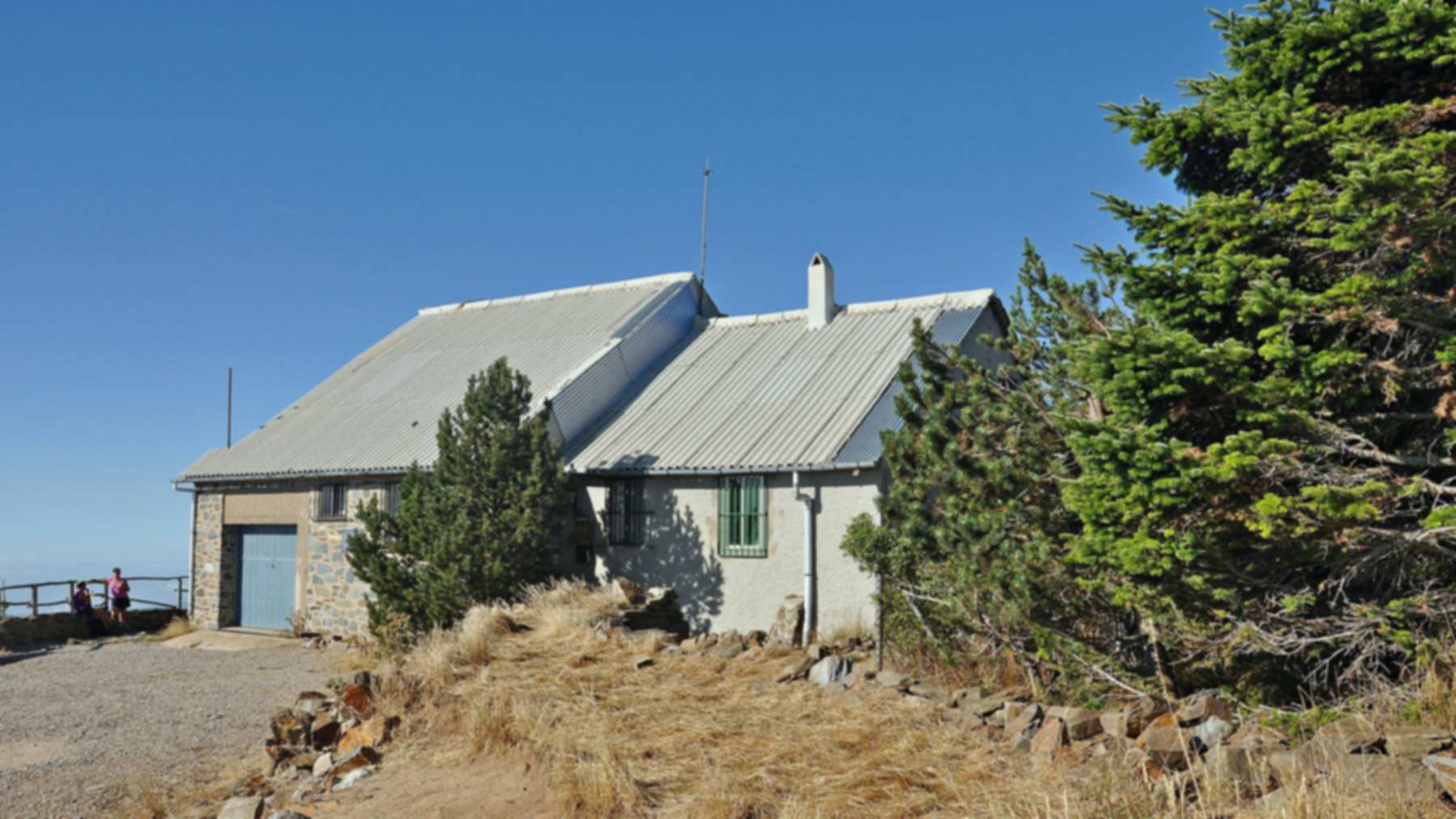
The Montseny summit, in Barcelona, recorded only 57 frost days in 2023. Between 1951 and 1980 they hovered around 112 per year, nearly double. This is detailed by a study from the State Meteorological Agency (AEMET) and the Catalan Meteorological Service (SMC) with 76 years of daily data.
Its authors, José Luis Camacho and Marc Prohom, have seen since 2022 “a break in the behavior of temperature series.” Exaggerated? They write that we can already speak of “a new climate, noticeably different from that of the 20th century.”
A wooden cabin in 1932
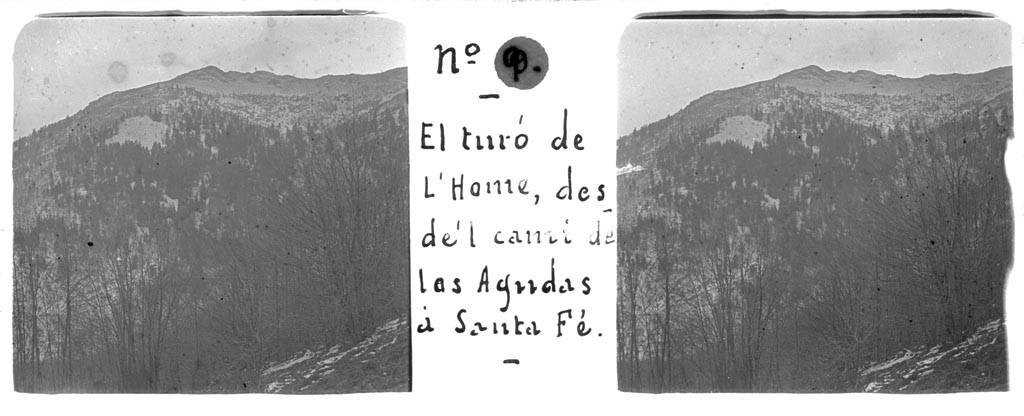
The idea of measuring the weather at Turó de l’Home, at 1,707 meters, dates back to 1881. But the true observatory arrived in 1932, led by the meteorologist Eduard Fontserè, founder of the SMC. It was a wooden shelter with a double wall, and firewood was hauled up on donkeys.
From the 1950s, the observer Fernando García de Castro’s family lived there until its closure in 2004. Since September 2010, an automated SMC station at Puig Sesolles, at 1,668 meters, has been measuring. It is about 300 meters from the Turó.
Three years above 9 degrees
The authors have combined the data from the two points from 1950 to 2025. With that series, the warmest years are 2022, with an average of 9.8°C, 2023 with 9.5°C, and 2024 with 9.1°C. No other year has exceeded 9.0°C.
The average of the daily maximum temperatures rose by 1.3 degrees between 1951-1980 and 1991-2020. The coldest year remains 1972, with 5.4 degrees. All cold records by stations are older than 1986.
According to the study, with the current evolution “it will be practically impossible” for those records to be repeated soon. This is no small matter on a summit that in March 1984 reached 287 centimeters of snow.
August, the month that changes the most
Throughout the year the maximums rise by 0.33 degrees per decade. In summer the pace reaches 0.51, and in August 0.57. Not even the nights are spared, and in 2023 there were five nights with minimums of 20°C or higher.
Days above 25 degrees used to be 1.8 per year between 1951 and 1980, and 4.9 in 1991-2020. In 2022 there were 28. That sticky heat we know downstairs remains rare up there, but it is becoming less rare.
From 112 frosts to 57
The study’s summary points to frosts as one of the clearest signs of warming. The average dropped from 112.6 days per year in 1951-1980 to 93.7 in 1991-2020. The days of ice, not exceeding 0°C for the entire day, fell from 24.4 to 17.6.
That does not mean that cold is gone. The absolute minimum remains -19.5°C, on February 2, 1956, and in 2012 it dropped to -13.6. The authors warn that, as they become rarer, strong cold spells can catch people off guard.
Days too cold for the grass to grow exceeded 180 in 1972, and in 2024 there were 94. The beech forests of the massif stay dormant from November to April. In other areas, climate change and fires are already a concern.
Rains that come and go
As for rainfall, the study does not find a clear trend. The average is 1,005.4 liters per square meter, but 2020 left 1,679.7 and 2023 only 610.4. And on October 3, 2026, outside the study, 202.4 liters fell in a single day, a record since 1950.
Those year-to-year swings are very noticeable in the natural park. The torrential rains of 2020 washed away materials and damaged infrastructures, and the drought from 2021 to 2023 killed many trees. It was the same drought that Catalonia ended up closing as the worst in over a century.
A technical note under review
What has been published is a preview. The full study is a technical note from AEMET and the SMC that remains under review, and does not include the summer of 2026. Moreover, the current station is about 40 meters lower, so the data have been adjusted to enable comparisons.
The two agencies want to extend the series into the 1930s and reach a century of data. Catalunya’s Climate Atlas from the SMC already places this summit in a very rainy band. And the massif, home to the Montseny newt, has a lot to lose.
The advance of the study has been published by the State Meteorological Agency on its blog, in the article Climate and history of meteorological observations at the Montseny summit. Series 1950-2025.
Photo: Alberto-g-rovi / Wikimedia Commons, CC BY 3.0
