
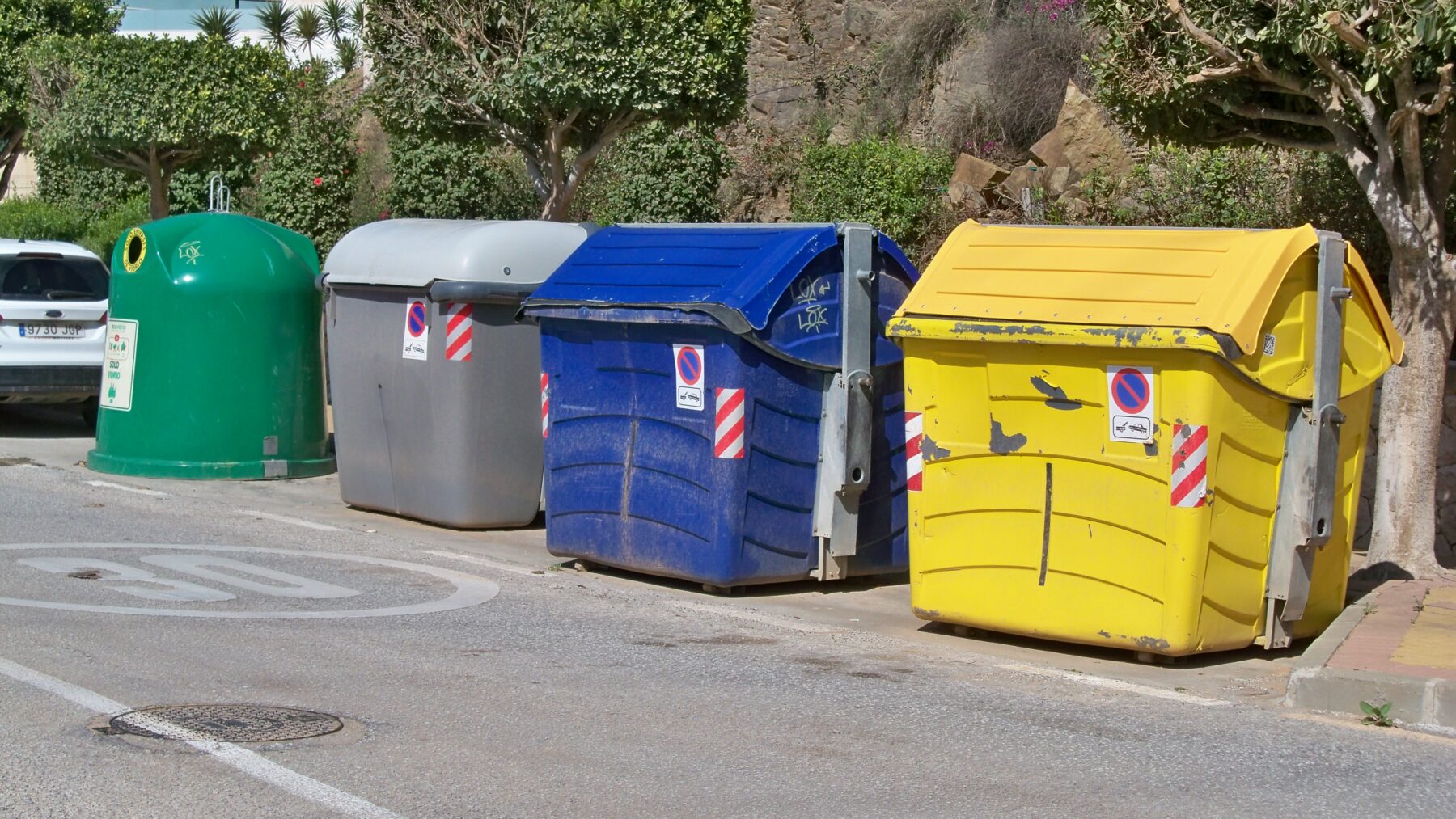
Yellow for plastic packaging, cans, and briks (brick cartons). Blue for paper and cardboard packaging. Green only for glass containers. Brown for organic waste. Grey for everything else. This is the basic distribution in Spain, and the law also requires all local authorities to separately collect used clothing and cooking oil by December 31, 2024, according to Article 25 of Law 7/2022 on waste.
The distribution seems straightforward. Mistakes arise with items that don’t fit: a plastic toy, a broken mirror, a face mask. Let’s go container by container.
El amarillo no es el contenedor del plástico
That is the most common mistake. The yellow bin accepts containers: plastic bottles, soda cans, briks, white foam trays, aerosols such as deodorant, and yogurt pots. What determines if something goes there isn’t the material, but whether it was used to wrap or contain a product.
That’s why a plastic toy doesn’t go in the yellow. In a Kantar study, more than 50% of respondents associated plastic toys with this container, according to Ecoembes itself. Toys, inflatables, and old mats go to grey or to the recycling center, depending on what your municipality indicates.
Wooden fruit boxes, if for domestic use, also go to the yellow. Wooden furniture, on the other hand, goes to the recycling center.
And there’s no need to wash the containers. Just empty them well. Washing them wastes water without improving recycling.
Azul: papel y cartón
Blue is for paper and cardboard packaging: cereal boxes, shoe boxes, and the packaging that arrives at your door. It’s wise to flatten the boxes before discarding them, because they take up less space and the container won’t fill after the third one.
Very dirty paper or paper stained with grease causes problems in recycling. When in doubt with used napkins or with the grocery receipt, check your municipality’s guide.
Verde: vidrio, no cristal
Green is for jars, bottles, and small bottles. Nothing more. Ecovidrio excludes windows, mirrors, drinking glasses, bulbs, ceramics, ceramic glass-ceramic plates, caps and closures, and containers with medicine residues.
The reason is that the glass of a bottle and the crystal of a glass or a mirror have different compositions, and that’s why they must go to separate containers. Mixing them hinders the production of new packaging.
The good news is that green is the container that is used best: only 2% of what goes into it is non-proper, according to Ecovidrio.
Marrón: orgánico, y ya obligatorio en todo el país
The brown container collects bio-waste: food scraps, fruit peels, coffee grounds, and small amounts of garden waste. It is the most recent and the one whose timetable is most dependent on the legal calendar.
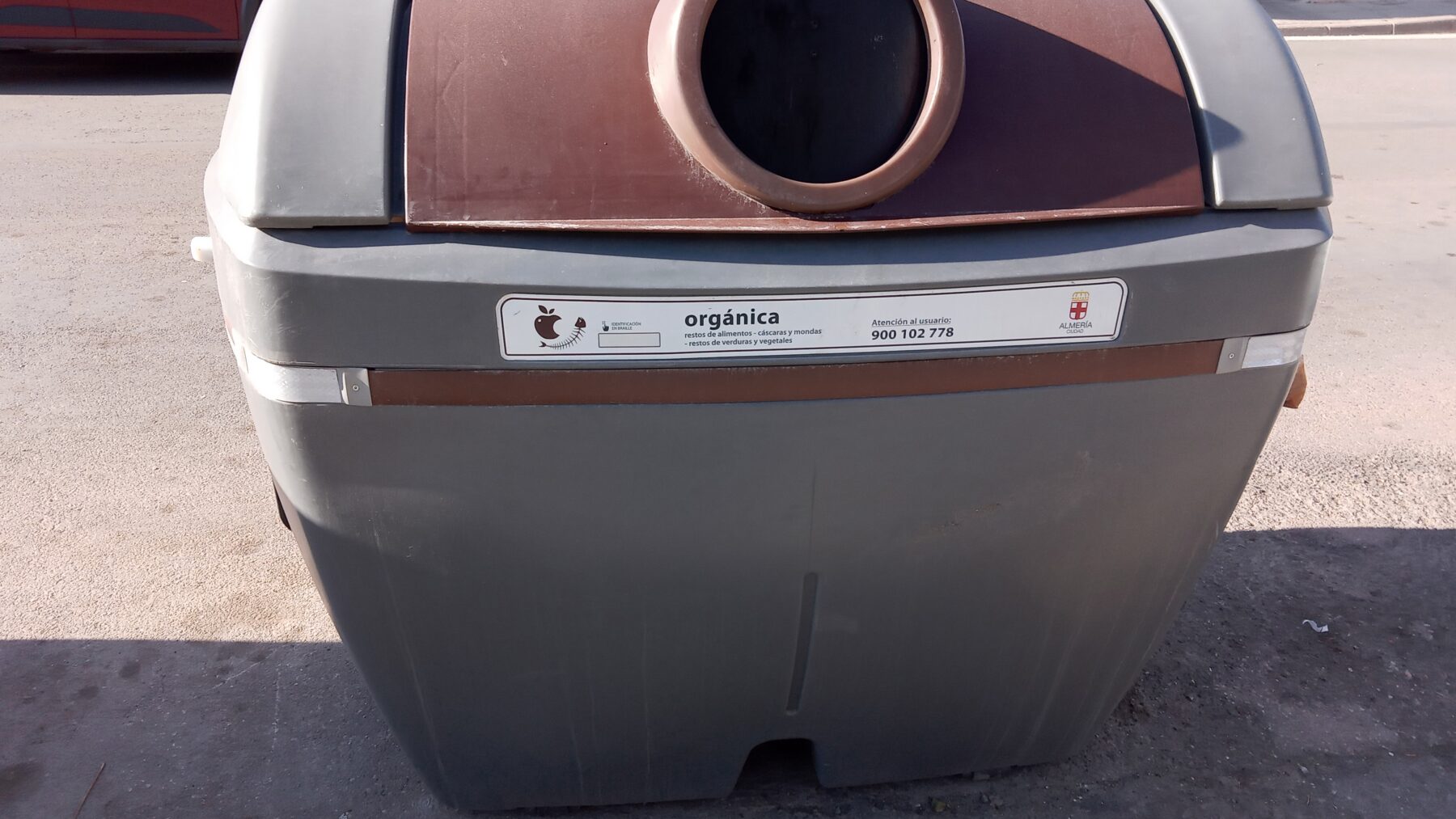
Law 7/2022 obliged its deployment by June 30, 2022 in municipalities with more than 5,000 inhabitants and by December 31, 2023 in the rest. The Ministry for Ecological Transition summarizes the calendar in the same way.
The law also sets how much stray waste the brown container can tolerate: up to 20% improper from 2022 and 15% from 2027. A normal plastic bag inside the organic bin counts as improper. And the best for this container is to throw away less: there are tips to avoid wasting food and to make use of leftovers over several days.
Gris: el contenedor de resto
Grey receives what doesn’t fit in the others and isn’t dangerous. Masks, for example, always go to grey, according to Ecoembes’s help desk. Many broken toys and plastic objects that aren’t packaging also end up there, if your municipality doesn’t indicate otherwise.
What goes to grey is not recycled. The law sets that by 2035 at least half of the weight of municipal waste must be collected separately.
Ropa y aceite: obligatorios antes del 31 de diciembre de 2024
Here there is confusion. The distinction by municipality size only affects the organic. For clothing, used cooking oil, household hazardous waste, and bulky waste, Article 25 of Law 7/2022 set a single date for all local entities: by December 31, 2024.
Just because it is mandatory does not mean it is the same everywhere. Implementation progresses at different speeds and the model changes: street containers, collection points at markets, door-to-door collection, or recycling centers. There is no national census of coverage. If you don’t see the container in your neighborhood, contact the city hall directly.
For oil, the step-by-step is in our guide on where to throw used oil. Never down the sink.
In clothing there is also a national rule in the works. The Ministry opened a public consultation on a clothing and footwear decree from July 1 to September 4, 2025, and as of October 30, 2026 there is no record of it being approved.
The items that generate the most doubts
A short list of cases confirmed by Ecoembes and Ecovidrio:
- White foam trays, aerosols, yogurt containers: yellow.
- Wooden fruit boxes: yellow.
- Reusable metal bottle that no longer serves: recycling center.
- Mirror, glass, light bulb, ceramic, window: never in green. For each, check with your municipality.
- Caps and lids for jars: outside the green.
- Masks: grey.
- Toys, inflatables, mats: grey or recycling center, depending on the municipality.
Coffe capsules have different criteria among organizations. The prudent course is to follow the local ordinance or use the manufacturer’s collection point.
Three common myths
«In the end they mix everything on the truck.» No. The trucks have compartments or run routes by day, according to Ecoembes.
«The yellow bin is good for nothing.» What goes into it passes through 97 sorting plants that separate seven types of material: PET, HDPE, film, mixed plastic, brik, steel, and aluminum.
«I pay twice to recycle packaging.» Packaging is funded by the companies that place it on the market through the Green Dot, not by the waste tax.
A waste item that escapes the system can take centuries to disappear, as we explained when discussing how long each material takes to degrade. Some plastic ends up in the sea, and the posidonia balls that appear on beaches trap a small fraction: this is how posidonia balls trap plastic.
If your municipality doesn’t have any of these containers or the local guide says something else, send the municipal ordinance. It is the one that fixes the collection system and, where applicable, sanctions.
