
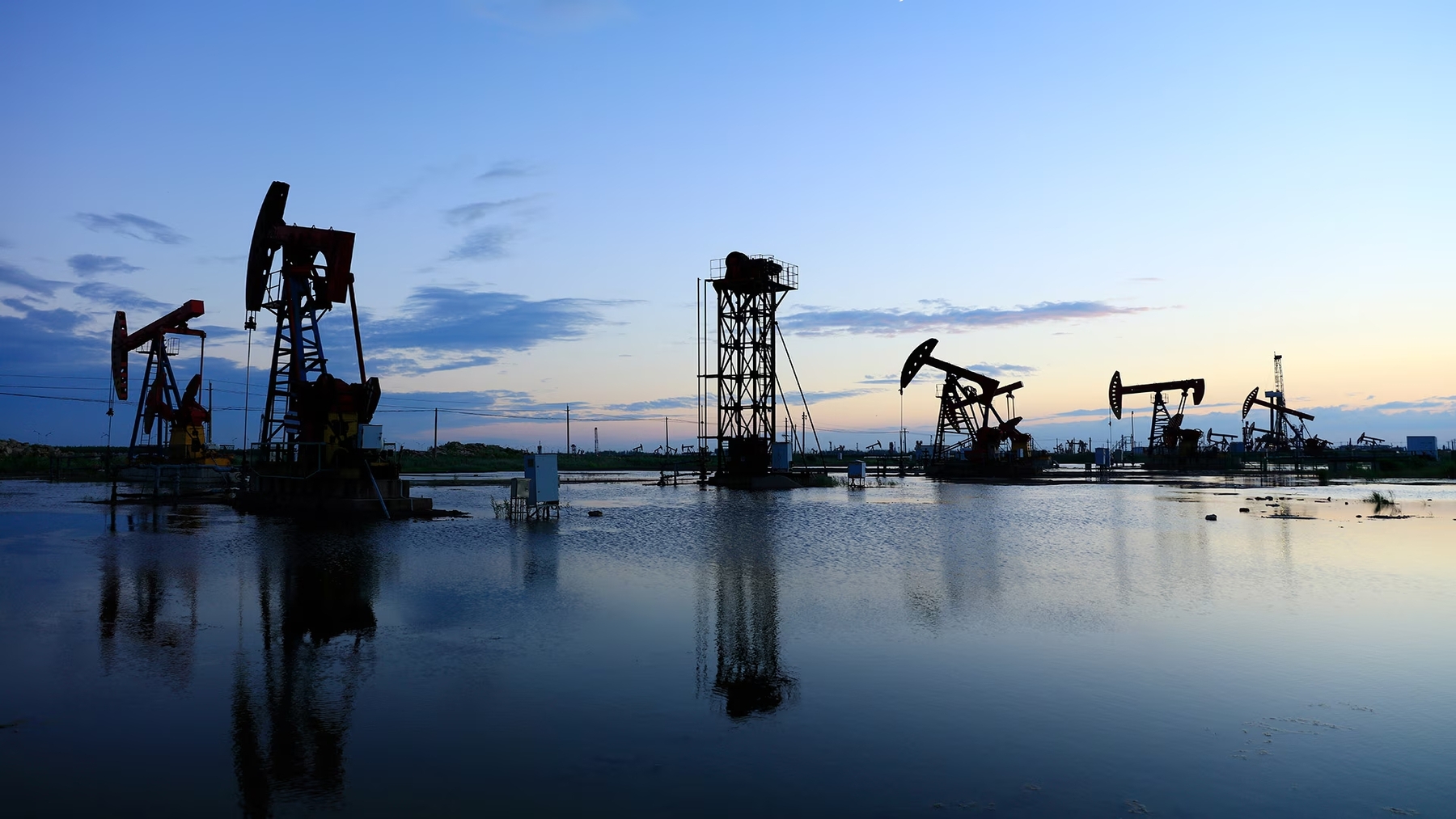
The European Union is demanding concrete commitments to abandon oil and end dependence on fossil fuels; but facing it are countries like Saudi Arabia and other producers who do not want to kill the goose that lays the golden eggs.
The battle for the future of oil and gas continues to be waged, unfortunately for many and fortunately for a few who get rich, and it has a new rendezvous in Antalya, Turkey. COP31, which will run from November 9 to 20, arrives with a confrontation that threatens to become one of the major flashpoints in climate negotiations: the European Union wants fossil fuel-producing countries to stop dodging the debate and specify when and how they plan to end their dependence on hydrocarbons. Is that something utopian to achieve?
But this demand clashes head-on with the so-called petro-states, led by Saudi Arabia, which, as could be expected, do not want to even hear about timetables or ending their business and all that would imply putting their billion-dollar economies at risk and ending the goose that lays the golden eggs that sustains them.
Pledge to End Oil, but No Real Actions Yet
The problem is that the international commitment (which does not fully translate into real actions) to move toward abandoning fossil fuels, reached at COP28 in Dubai, still has not been turned into a sufficiently concrete road map.
One wonders whether the latest summits are worth anything, since progress has not been unlocked and the debate returns to where it started and continually collides with the same obstacles: who should cut production first, who pays for the energy transition, and what economic alternatives will oil and gas-dependent countries have. Meanwhile the planet and a large portion of humanity continue to bear the consequences.
The resistance of some producing countries is one of the main hurdles. Saudi Arabia does not even dare to consider enforcing a rigid road map that would require halting new investments in exploration and production without first having sufficient energy and economic alternatives in place.
Other countries, such as Iraq, also argue that current oil revenues are necessary, as they themselves justify, to fund infrastructure, to guarantee electricity supply, and to diversify their economies.
However, from CAN Europe – Climate Action Network Europethey argue that economic dependence cannot continue to be used as a justification to indefinitely delay decisions.
Its climate lead, Sven Harmeling, has denounced that a small group of countries is blocking progress and calls for electrification to develop without again resorting to fossil fuels. Moreover, the organization Kick Big Polluters Out puts the number of fossil fuel industry lobbyists who have attended climate negotiations in the last four years at more than 5,350.
Electrification Is Useless if Electricity Still Depends on Oil and Gas
The resistance of some producing countries is one of the main obstacles. Saudi Arabia deems it unviable to impose a rigid road map that would force halting new investments in exploration and production without first having sufficient energy and economic alternatives in place.
Another major Antalya debate will be precisely how electricity is produced. Turkey and Australia advocate placing this issue at the center of the discussion with the idea of convincing the rest of the states to aim for a 35% increase by 2035. Naive is the word for them, because there is a problem that prevents progress: replacing combustion engines with electricity or electrifying industry will not by itself solve the climate problem if we continue to depend on gas, coal, or oil.
Greenpeace’s Middle East and North Africa director, Ghiwa Nakat, believes that Gulf countries have an opportunity to leverage their energy expertise and lead a transformation that also protects workers and communities. Will they seize it or continue looking only at their multibillion-dollar revenues?
Investment figures reveal the scale of this contradiction. The International Energy Agency projects that global energy investment will reach $3.4 trillion in 2026. Of that amount, about $2.2 trillion will go to renewables, nuclear energy, grids, storage, and energy efficiency. However, another $1.2 trillion will continue to be directed toward oil, gas, and coal.
The transition is advancing; no one doubts that, but the sad reality is that fossil fuels still claim substantial financial resources. And that is precisely one of the big questions COP31 must answer: how can we talk about abandoning oil and gas while continuing to invest in prolonging their prominence?
Financing will be decisive. Producer countries demand funds to develop industrial alternatives, create jobs, and guarantee their energy security. The European Union, for its part, wants the transition commitment to stop being a mere statement of intent.
Antalya will have to show whether the international community is ready to move from words to deeds. Because the planet does not need another summit full of promises (of which there are already many each year), but decisions capable of setting a date for the beginning of the end of fossil fuels.
