
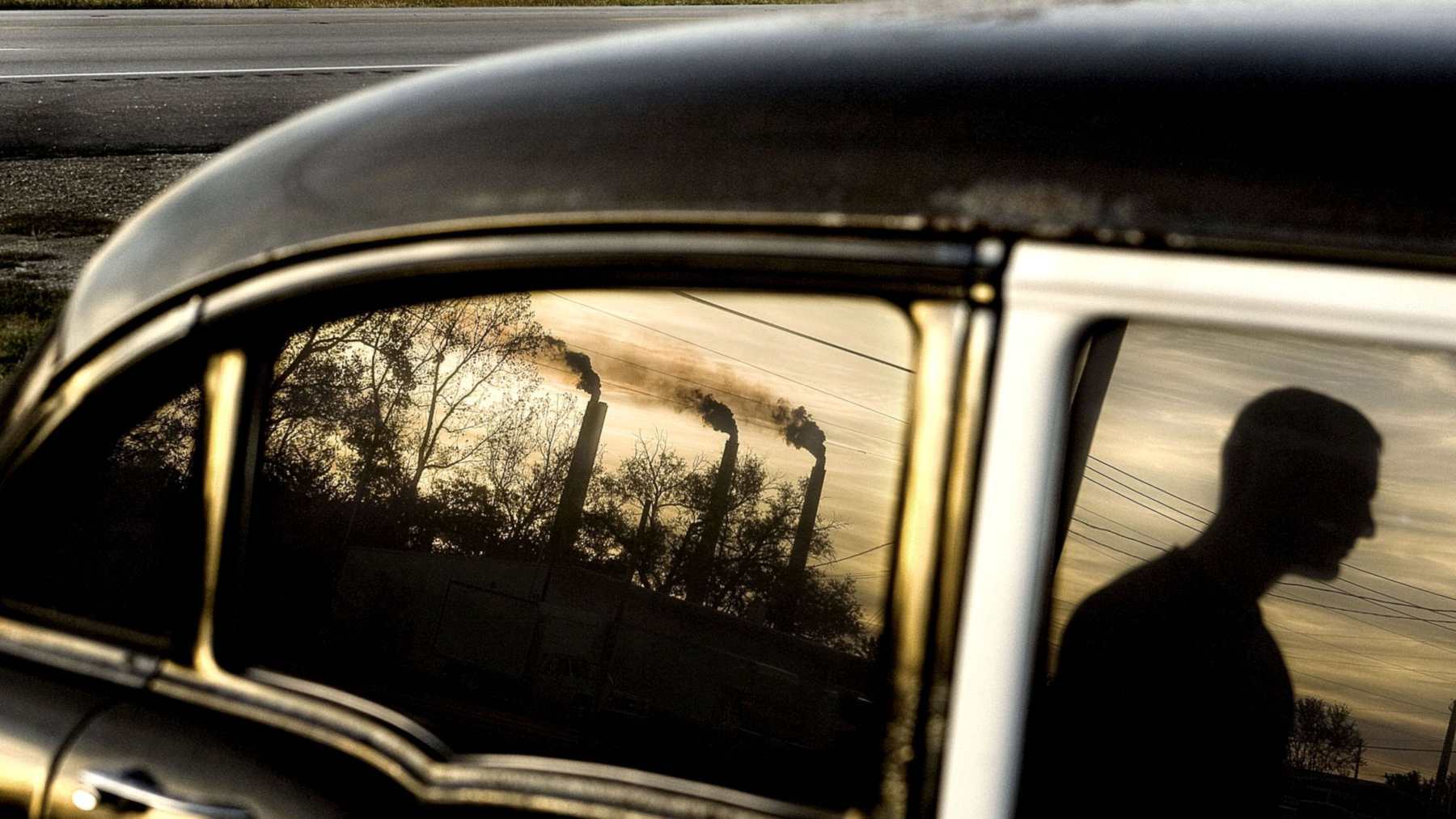
The European industry today pollutes far less than fifteen years ago, but the hardest part remains ahead. This is the conclusion of report 14/2026 by the European Environment Agency (EEA), published on October 20. It estimates a funding gap of between €30 billion and €60 billion per year to transform the continent’s factories.
Where is the problem, if the technology already exists? According to the agency, «the challenge is no longer technology, but deploying it at scale.» Grids, money, materials, and skilled workers are lacking, and the sectors that emit the most, such as cement and steel, have barely changed their production methods.
Pollutants in Free Fall, Up to 80%
Over the last 10 to 15 years, European factories have cut sulfur oxides emissions by 80%. Heavy metals have fallen by another 80%, particulates by 76%, and nitrogen oxides by 58%. For someone living near an industrial zone, that is no small matter.
Nevertheless, the industry continues to weigh heavily on the EU’s environmental balance. It accounts for 20% of greenhouse gas emissions (excluding power plants) and 54% of hazardous waste. Its water withdrawal has risen by 3%, and the circular economy in Europe has hardly advanced since 2010.
Cement and Steel, Stagnating
The figure most alarming to the EEA lies in the smokestacks. In cement and steel, CO2 per ton produced has barely fallen in 15 years. In aluminum and basic chemicals, by contrast, the decline has been clearer.
Then, why have total industry emissions fallen? According to the report, largely because the economy has shifted toward higher-value activities. The factories, at heart, have not changed that much.
A Funding Gap of Up to €60 Billion
To speed up the transition, the EEA calls for closing that gap by attracting private capital. The press release talks about closing it by 2030. The report summary, however, extends it to 2040.
An internal analysis by the European Commission gives an idea of the scale. It calculates investment needs of €30 billion per year until 2030 and €58 billion per year between 2031 and 2040. The agency itself believes this is too low, because it leaves out electricity grids and hydrogen pipelines.
In the short term, the EEA acknowledges, the industry «may face competitiveness problems.» Upfront costs will be high. Neither tougher regulation nor an ambitious carbon price would be enough alone, and that is true even though the European emissions market has already been reformed.
Grids, Hydrogen and Technicians
For the agency, the real bottleneck is the «system readiness.» Electricity, hydrogen, and CO2 storage networks are progressing slowly. Moreover, access to materials is unreliable and there is a shortage of skilled personnel.
The share of electricity in the energy used by industry grew by less than 1% between 2010 and 2024. Only five countries, including Spain, expect to surpass 32% electrification by 2030. Here, grid access remains a bottleneck for many factories.
Asturias, on the Steel Map
The report reviews the plans for the EU’s top emitters. Among them is ArcelorMittal in Avilés and Gijón, with electric arc furnaces. Their direct-reduced iron project, however, has been postponed.
Several similar projects in France, Germany or Belgium also appear postponed or delayed. It is the portrait of a sector that wants to change but does not clearly see who will pay. In Spain, in fact, the peninsula’s first clean steel plant has already been announced.
To break the deadlock, the EEA proposes mixing three distinct approaches. Protect the industry during the transition, create markets for clean solutions, and reorganize the industrial model around them.
No Country-by-Country Allocation
The agency does not detail how much of that gap corresponds to each state. Therefore, it is not known what share would touch Spain. The Commission’s estimate on which it relies, moreover, is not public.
Meanwhile, Brussels has already opened proceedings against the 27 for delaying industrial emissions rules. The full report and the press release have been published on the European Environment Agency’s website.
Photo: Javier Arcenillas, ImaginAIR / EEA
