
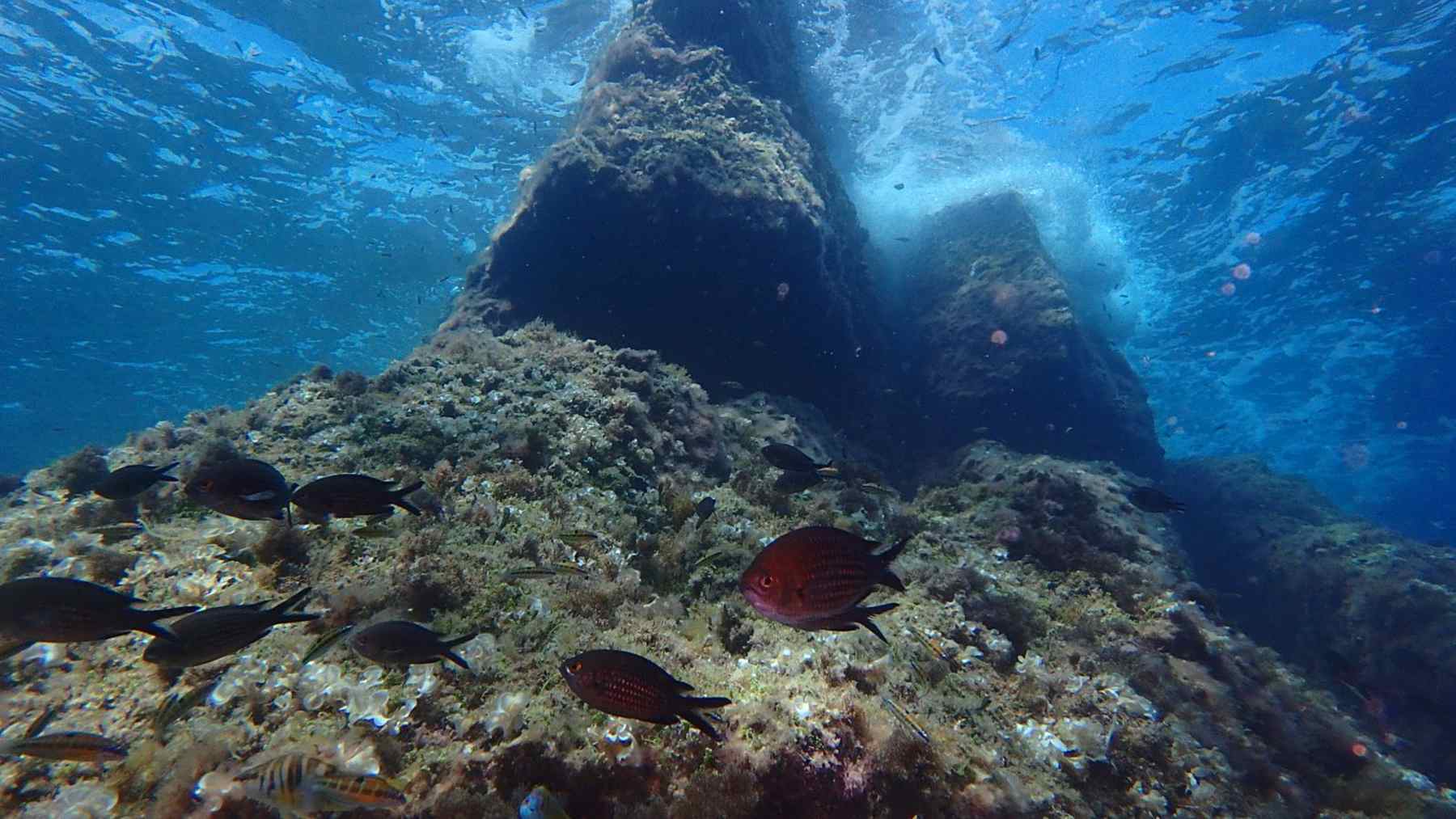
Marine organisms that move through the ocean, from larvae swept along by currents to migratory fish, uphold five fundamental functions of the sea. This conclusion comes from an international study led by the Spanish Institute of Oceanography (IEO-CSIC). It involved the IEO’s Santander and Balearic centers, and the organization unveiled it on October 21, 2026.
Those five functions are biological productivity, energy transfer, nutrient recycling, export and carbon sequestration, and the formation of habitats. And the finding challenges a bit the usual approach to protecting the ocean. Isolated spaces depend on incoming material from outside, sometimes from far away.
Eggs, Larvae, and Moving Banks
Among scientists, this phenomenon is called marine functional connectivity. It includes passive transport, such as eggs and larvae that travel with the currents. It also encompasses the active movements of animals when they migrate, seek food, or shift habitats.
According to the IEO briefing, in every journey material, energy, and genes are moved. Distances range from a few meters to thousands of kilometers. In the institute’s own words, “life in the ocean does not operate in isolated compartments.”
The study, signed by 24 authors and led by researcher Lucía López-López, was published in the journal Aquatic Conservation. It does not present a new experiment. It gathers examples from several disciplines and consults experts about its implications for ocean management.
The Zooplankton’s Nocturnal Elevator
The most striking example occurs every day, unseen from the shore. Large quantities of zooplankton, whose balance is already altered by climate change, and fish rise at night to feed near the surface and descend again after sunrise.
In that rise-and-fall, they transport carbon toward deeper layers. They do so by breathing and excreting, within what is called the biological carbon pump. The carbon captured at the surface can remain stored in the seabed for long periods.
Plainly put, a multitude of animals, many of them tiny, act as messengers between the surface and the bottom. It is no small matter in a planet where the ocean is beginning to lose its capacity to absorb CO2.
Nutrients Traveling in Feces
The dispersal of larvae is another such route, because it links separated populations and enables the colonization of new habitats. Migrations and the bioturbation of the seabed by animals also count. As does the transport of feces, gametes, and remains, which distributes nutrients and energy among the water, the sediments, and different ecosystems.
Something similar was already known about the great cetaceans, with whales playing a role in carbon uptake. What this study does is to view the whole system—from plankton to fish—as a single network.
Today’s Fish, Tomorrow’s Reserves
What do people gain from all this? The findings indicate that connectivity is most influential in food provision and habitat formation, but also in preserving options and resources for future generations. In other words, the fish that reaches the market and what future grandchildren will inherit.
A local disturbance, therefore, can have far-reaching effects. Changes in currents, migratory routes, or dispersal can have consequences tens, hundreds, or even thousands of kilometers away. Climate change, increased water stratification, and other human pressures can already alter these connections.
Marine Reserves with Fluid Boundaries
On a more practical note, the study reminds us that marine protected areas are part of larger systems. They may depend on processes occurring outside their borders, such as larval arrivals, the passage of species, or fluxes of nutrients and organic matter.
An otherwise well‑monitored reserve can still be devoid of larvae arriving from another region. The authors urge that sea planning incorporate these connections at all scales. The discussion intensifies when many protected marine areas still lack effective protection.
For researchers, understanding how oceanic components connect allows moving from viewing spaces as isolated to seeing the sea as “a dynamic network of habitats, organisms and interdependent processes.”
A Map of Connections Yet to Be Measured
It is worth reading the study with its limitations, since it is a synthesis that gathers cases and expert opinions. The note does not provide figures on how much carbon these journeys move or which reserves fail due to a lack of connectivity. The authors themselves acknowledge that large-scale connectivity is still little studied.
This study continues a previous line. At the beginning of 2026, another review in Biological Reviews proposed a common framework for studying these connections. The research received funding from the EuroMarine European network and the Spanish State Research Agency, among others.
The press release about the study has been published on the IEO’s website.
Photo: David Díaz / Balearic Oceanographic Centre, IEO-CSIC
