
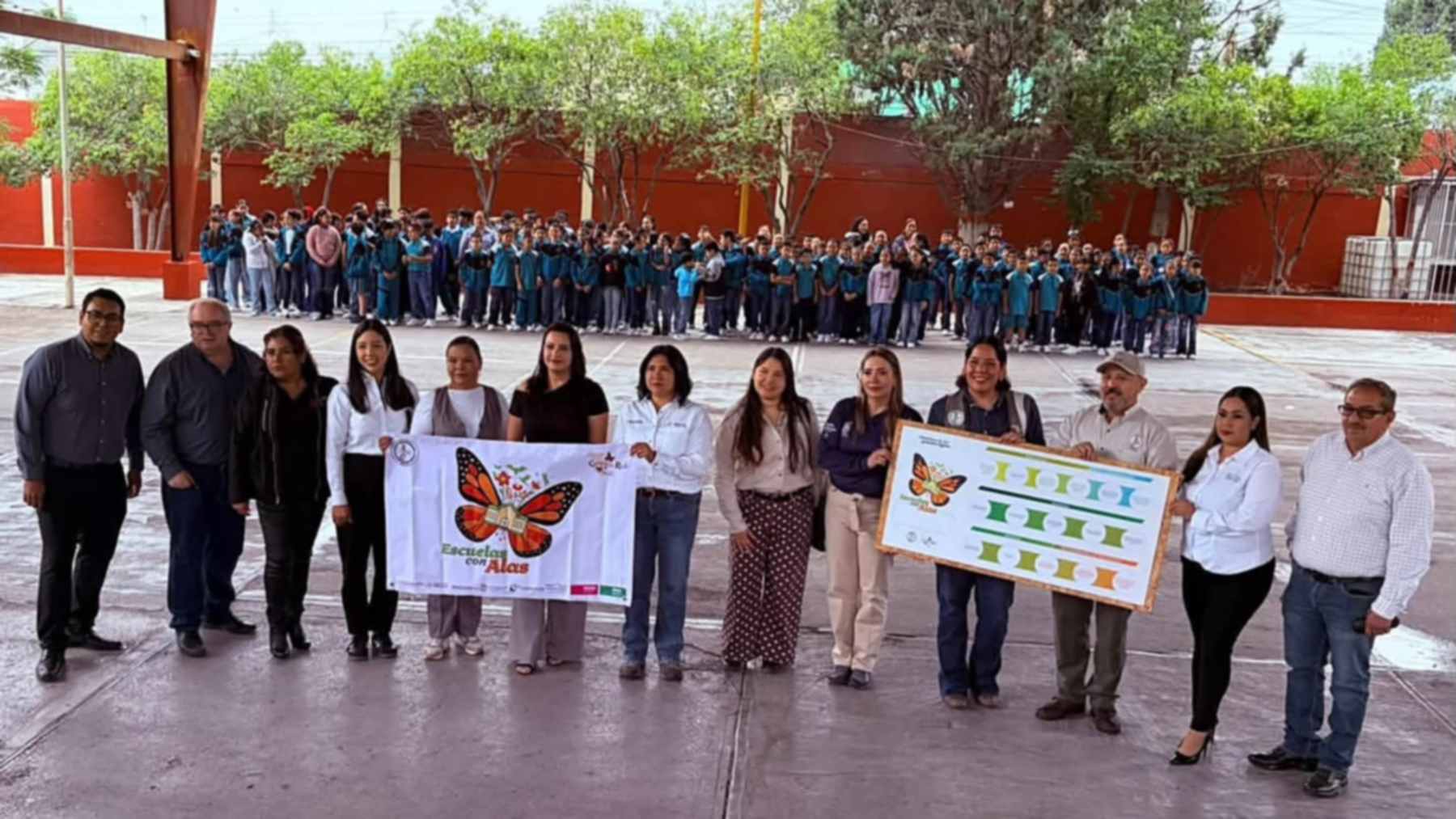
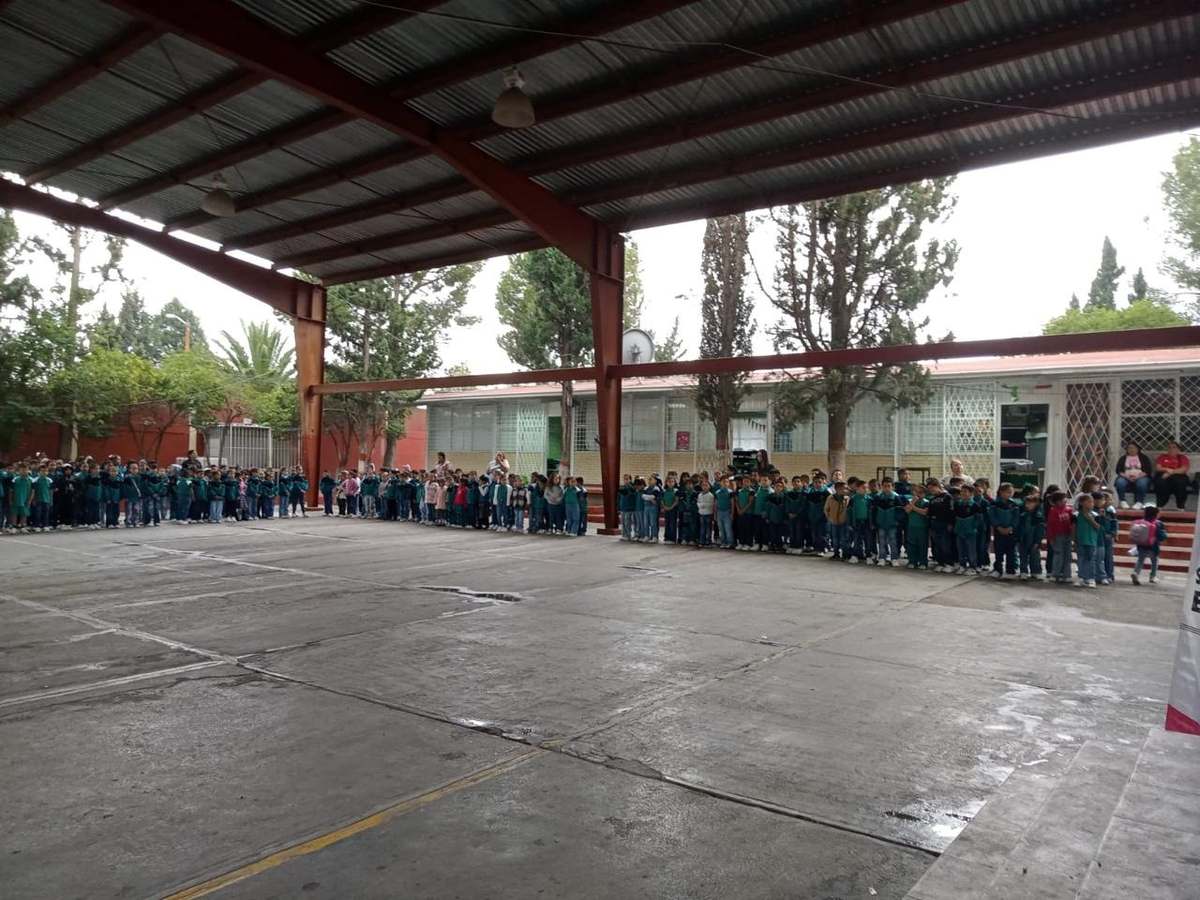
The monarch butterfly has a new stop in northern Mexico, and it’s not in a forest. It is the courtyard of Narciso Mendoza Federal Primary School, in Saltillo (Coahuila), which has become the first school in the state to join Wings with Wings. This pilot program aims to transform schools into refuges for pollinating insects.
The National Commission for Protected Natural Areas (Conanp) announced it on October 13. According to the release, its students will record in real time the monarch’s passage through their garden. Those notes will feed the migration databases.
A School with a Green Medal Board
Wings with Wings is part of the Royal Mail Program, run by the civil organization PROFAUNA. Narciso Mendoza will be the first school in the pilot program backed directly by Conanp, through its Northeast Regional Office and the Sierra Madre Oriental. Beside it sits the SEP-Semarnat committee, which brings Education and the Environment together.
The plan goes well beyond planting flowers. It includes designing habitats and school gardens, separating and managing the center’s own waste, and engaging in artistic activities. Each achievement is rewarded with environmental compliance medals.
Those medals will be hung on a special tally, visible to students, families, and teachers. A bit like a class points board, but with bees and butterflies in the mix. And that, in a school, is motivating.
Children Who Track Every Butterfly
Another idea of the project is to bring nature into the standard curriculum. According to Conanp, students will record in real time the monarch’s passage through their garden. With that they will feed the databases that track the migration.
Can a primary school child help science? In practice, yes, because citizen science works exactly like that, with thousands of eyes spread across the map that count what they see. No team of biologists reaches so many places at once.
From the Protected Forest to the Asphalt
For Conanp, this step represents both an important and strategic achievement. The idea is to bring the knowledge and the know-how from the protected natural areas of the northeast and the Sierra Madre Oriental to the city. In other words, to transplant conservation from the mountains into the streets between cars and apartment blocks.
Behind it is a local committee formed by Semarnat, Conanp, Conafor, Profepa, the Secretariat of Environment of Coahuila, and the SEP. It was launched after renewing the framework agreement between the SEP and the Semarnat, which is led by Secretary Alicia Bárcena. That committee formally asked PROFAUNA to provide technical support and official recognition to the project, without taking away the civil society’s authorship.
On the day of the declaration, authorities used a motto that sums up the idea well. “Hands to the ground, wings to the wind, cultivating respect for every living being from the school.”
Gas Stations for 4,000 Kilometers of Travel
To understand the gesture you have to look at the map. Conanp coordinates monarch protection with a national strategy spanning more than 4,000 kilometers. It covers the hibernation sanctuaries and also the migratory route that crosses the entire country.
As it passes through the arid and mountainous regions of the north, Conanp considers that the monarch’s survival depends critically on urban refuges like this one. They call them “biological gas stations,” stops for the butterfly to continue its journey.
In protected areas, that work is carried out by community brigades that reforest and care for the forests. Gardens for pollinators are added in Mexico and networks of neighbors alert about each sighting. The Saltillo school brings that work into the city.
2.93 Hectares of Forest Occupied
The context helps measure the news. In the 2025-2026 winter season, monarch colonies occupied 2.93 hectares of forest in Mexico, 64% more than the previous year. Bárcena explained this on March 17, during the presentation of the wintering results, with nine colonies, three in Michoacán and six in the State of Mexico.
It is good news, but with caveats. In its best season, 1996-1997, the species occupied 18.19 hectares, and Bárcena warned that 2.55 hectares within the reserve were severely damaged by fires, illegal logging, and drought. That rebound, already told along the monarchs’ journey toward Mexico, remains fragile.
Moreover, the climate also tightens. There are studies indicating that climate change will displace the monarch butterfly’s habitat. Every safe stop along the route counts.
No Figures on Student Participation or Plantings
The Conanp release leaves several important questions in the air. It does not say how many students participate, what plants the garden will include, or how much money is behind it. It also does not clarify whether other schools in Coahuila will follow Narciso Mendoza’s lead.
We will have to wait for the next migrations to know how many monarchs stop in that courtyard. In the meantime, the project fits with other environmental education initiatives featuring school gardens, where children learn with their hands in the soil. It is no small thing.
The announcement has been published in Conanp’s official bulletin.
Photo: Conanp
