
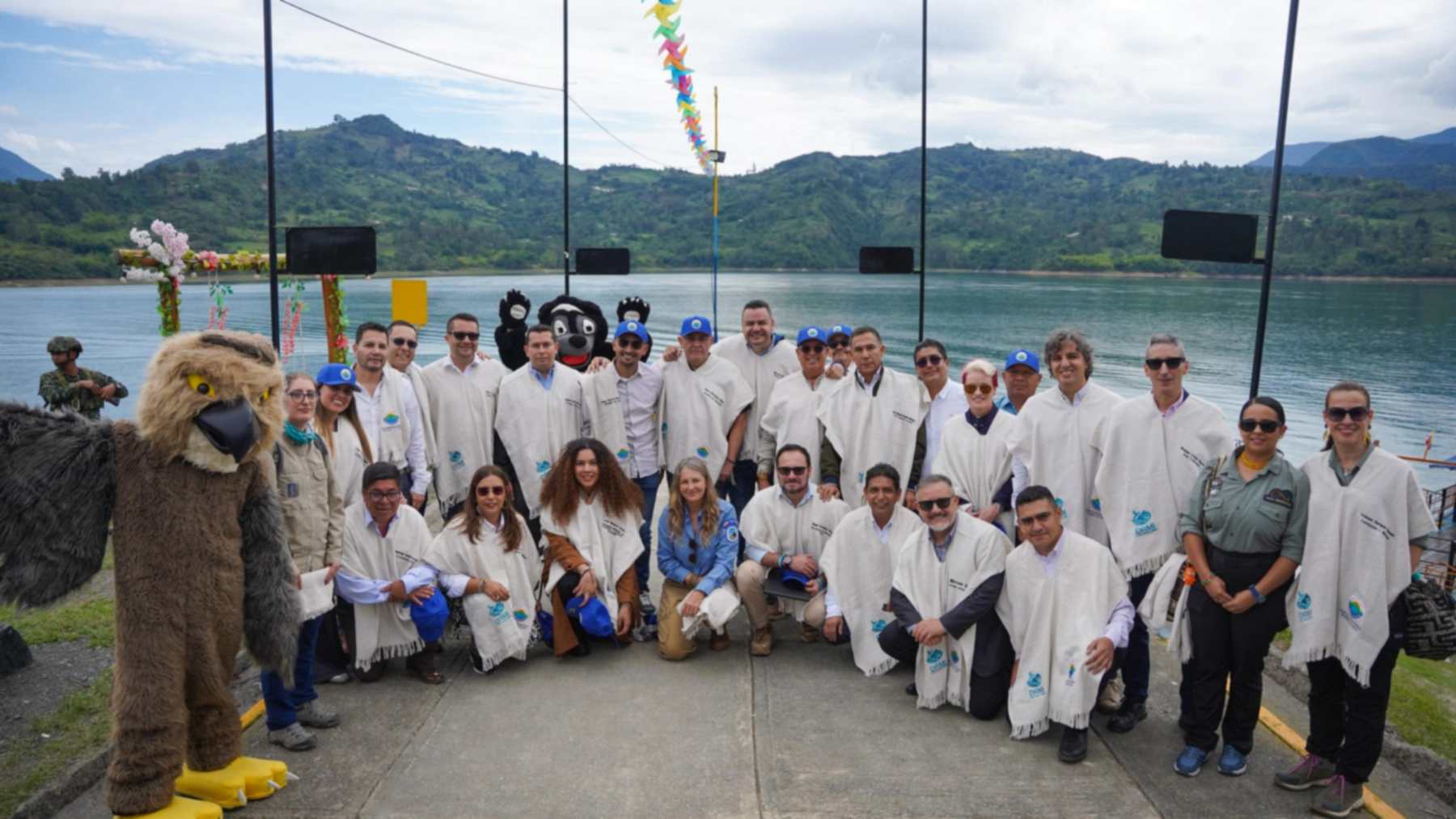
Colombia has declared a new protected area spanning 23,776 hectares of Andean and highland forest in the eastern part of Cundinamarca. It is named the Integrated Regional Management District (DRMI) Los Farallones and covers lands in Gachalá, Medina, and Ubalá. The Ministry of Environment announced the designation on October 30, 2026, after approval by the Board of Directors of Corpoguavio, the environmental authority for the area.
What makes this stretch of mountain special? According to the Ministry, it is home to 39 endemic species and another 45 that appear on the CITES lists. From its forests, water also flows to three rivers in the Orinoco basin, thus protecting both a wildlife refuge and a natural spring.
A New Neighbor for Chingaza
The district lies adjacent to the Chingaza National Natural Park, in the Eastern Cordillera. The Environment Minister, Fabio Arjona, offered a straightforward analogy. “It’s as if we added this amount of area to Chingaza,” he said.
Beyond its size, Los Farallones links that park with another protected area, the DRMI Cuchillas Negra y Guanaque. With the corridor opened, ecosystems are not left as isolated islands. And ongoing processes that sustain wildlife continue to operate.
78% of Dense Forest
Technical studies of the declaration indicate that about 78% of the area is tall, dense upland forest. Nearly eight of every ten hectares preserve a thick forest cover. That fact matters in a country where cattle ranching expansion continues to eat into forests in the Amazon.
Within that mass of forest, 39 endemic species have been identified. These are species with a naturally limited distribution, not found freely outside of it. They are complemented by 45 species listed by CITES, the treaty that monitors trade in threatened fauna and flora.
In fact, the forests of the Andes still hold surprises, as shown by the discovery of eleven new plant species in Andean forests. Protecting these slopes also leaves room for what has not yet been described.
Three Rivers on the Way to the Orinoco
From these mountains descend the Guavio, Humea, and Guacavía rivers, which form part of the Orinoco watershed. According to the Ministry, they supply water to more than 1,340 people in Cundinamarca.
There is a detail that tends to go unnoticed, and Arjona highlighted it. “The three protected rivers discharge their waters into the reservoir,” he recalled, and that “could mean an improvement in electricity generation.”
In practice, a healthy forest acts like a sponge, releasing water gradually. For the minister, this makes the pairing of the “gray infrastructure” (dams and pipes) with the green—the forest itself—fit together more effectively. In a region that depends on its basins, this is evident.
Conserve Without Evicting Anyone
Unlike a park sealed off to all, a DRMI coordinates the use of land to conserve its ecosystems. At the same time, it promotes sustainable productive practices and neighborhood participation. It also values cultural heritage and traditional knowledge.
Before the declaration, Corpoguavio organized meetings in the hamlets of the three municipalities. There it explained what the measure entails and gathered residents’ questions. Its director, Marcos Manuel Urquijo, emphasized that “conservation has to be done with the people, listening to them and understanding their needs.”
As economic outcomes, the Ministry mentions planned tourism, research, green businesses, and payments for ecosystem services. The latter compensate those who take care of the forest and the water.
Years of Work at Corpoguavio
For years, Corpoguavio pushed the process forward. According to the corporation, the Andes Amazon Fund provided the funding and the Más Biomas Foundation carried out the work. They supported Parques Nacionales Naturales, the Government of Cundinamarca, the municipalities, and the electric utility Enel.
In March, the corporation already linked the project to Colombia’s Biodiversity Action Plan for 2030, adopted at COP16. The country also seeks support abroad, as demonstrated by German funding for Colombia’s biodiversity.
The Management Plan Is Yet to Be Defined
The finest work remains to be done. The permitted uses will depend on zoning and the Management Plan, which still must be defined. Until then, it will not be clear what can be done in each corner of the district.
The notice does not also provide the names of the 39 endemic species nor of the 45 listed in CITES. That inventory will serve as the measure in a few years. Will they still be there when the plan is revised?
The official statement about the declaration of DRMI Los Farallones has been published on the website of the Ministry of Environment and Sustainable Development of Colombia.
Photo: Ministry of Environment and Sustainable Development of Colombia
