
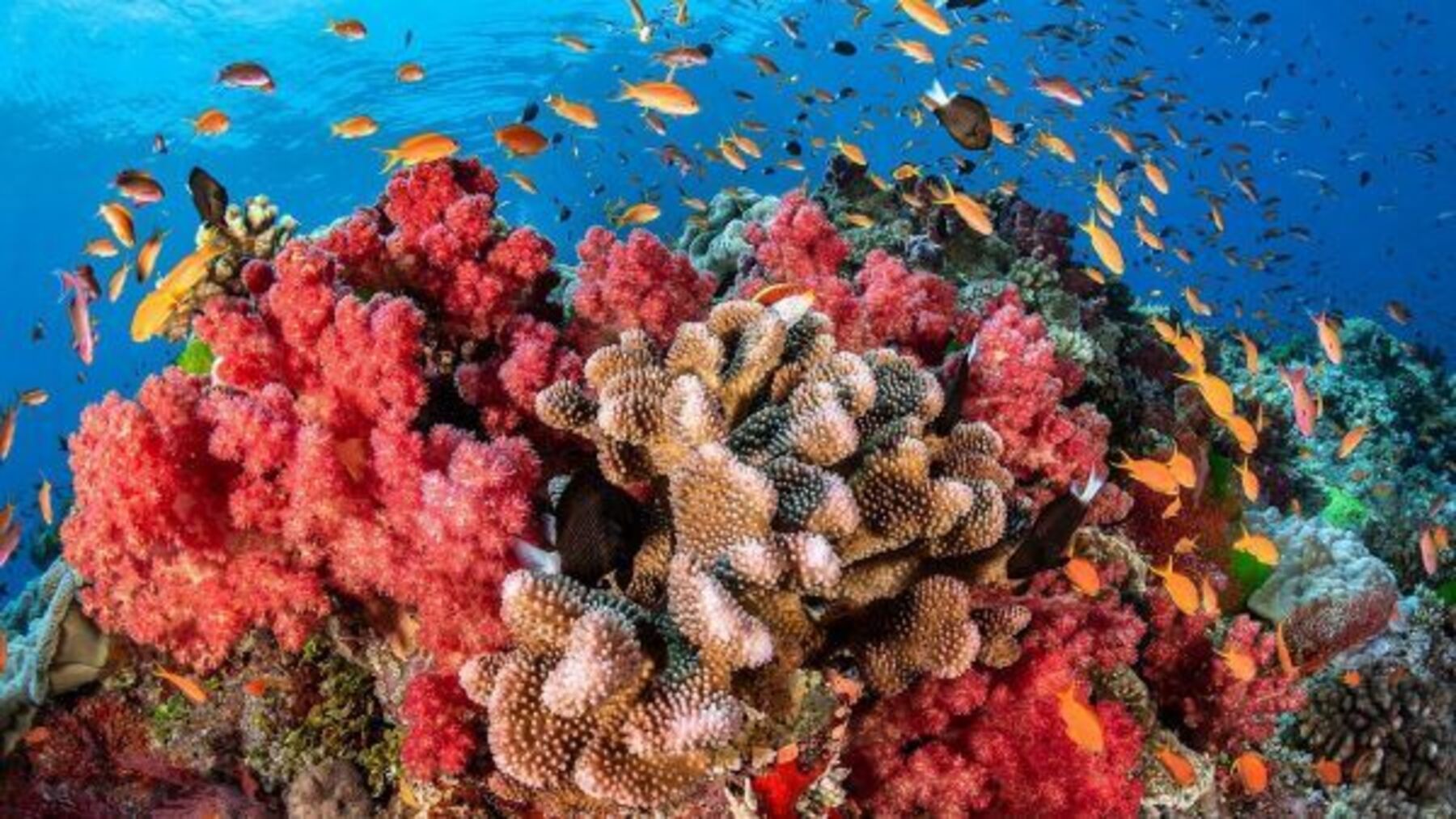
Small island states have used COP31’s showcase to sound the alarm that a two-degree increase could wipe out these ecosystems that are essential for protecting their shores and maintaining the biodiversity of these regions.
The Pacific Ocean is sending an alarm signal, and it seems few are noticing it given how pollution continues and the effects of climate change intensify. The warming of its waters threatens to destroy the coral reefs that sustain biodiversity, defend coastlines, and allow the survival of numerous archipelagos in Oceania.
The warning has been prominent at COP31, where these Pacific island states have sought to convey their concerns directly. “The Pacific covers almost a third of the Earth’s surface. There cannot be a healthy planet without a healthy ocean,” warned Inia Seruiratu, COP31’s oceans delegate.
A claim that contrasts with the limited capacity of these territories to fend off a crisis that originates far beyond their borders. Not new, however.
A Temperature Increase in the Pacific with Deadly Consequences
The problem is especially grave because corals are extremely sensitive to temperature variations, and when they experience stress they expel the microscopic algae that live in their tissues and provide nutrients through photosynthesis. This is the well-known coral bleaching.
Without those algae, the corals lose much of their ability to feed and may end up dying. It is not merely about losing a spectacular underwater landscape in the Pacific waters; they are a natural barrier against swells, protect the coasts, and are essential for numerous marine species and human communities.
“Every tenth of a degree of temperature matters,” warned Senivasa Waqairamasi, Fiji’s climate change director. The data back the urgency: with a warming of 1.5°C, between 70% and 90% of reefs could disappear. If warming reaches 2°C, the loss could climb to 99%, according to figures released by the Pacific Regional Environment Programme (SPREP).
The scenario is devastating: almost an entire ecosystem could vanish due to a crisis that governments have spent decades trying to contain without success.
They spoke of a 1.5°C rise and now we are heading toward 2.8°C
“The Pacific covers almost a third of the Earth’s surface. There cannot be a healthy planet without a healthy ocean,” warned Inia Seruiratu, COP31’s oceans delegate.
The contradiction is hard to disguise. The 1.5°C limit set in the Paris Agreement is increasingly seen as difficult to meet, while projections point to warming of approximately 2.8°C by the end of the century.
SPREP insists that the 1.5°C goal is non-negotiable. Yet political statements do not cool the ocean or halt emissions. The responsibility falls especially on major emitters and governments that continue delaying decisive moves to phase out fossil fuels.
Small island states have limited space to maneuver in the face of a global problem, though they can mitigate other pressures on their ecosystems: marine pollution, overfishing, and mass tourism.
Shiva Gounden, Greenpeace’s Pacific and Australia head, recalls that the ocean can also help combat warming by protecting ecosystems that absorb carbon. “Among them stand seagrass meadows and mangroves, which can also shield coastlines from storms and hurricanes.”
He also calls for accelerating marine renewable energy and transforming maritime transport to move toward zero-emission activity.
But none of these measures will be enough if the major emitters keep delaying the energy transition.
The tragedy of the Pacific is also a warning for the rest of the planet. When reefs disappear, not only do the nearby islands vanish, humanity loses. And while some governments continue debating targets, corals have no time to wait for the next summit.
