
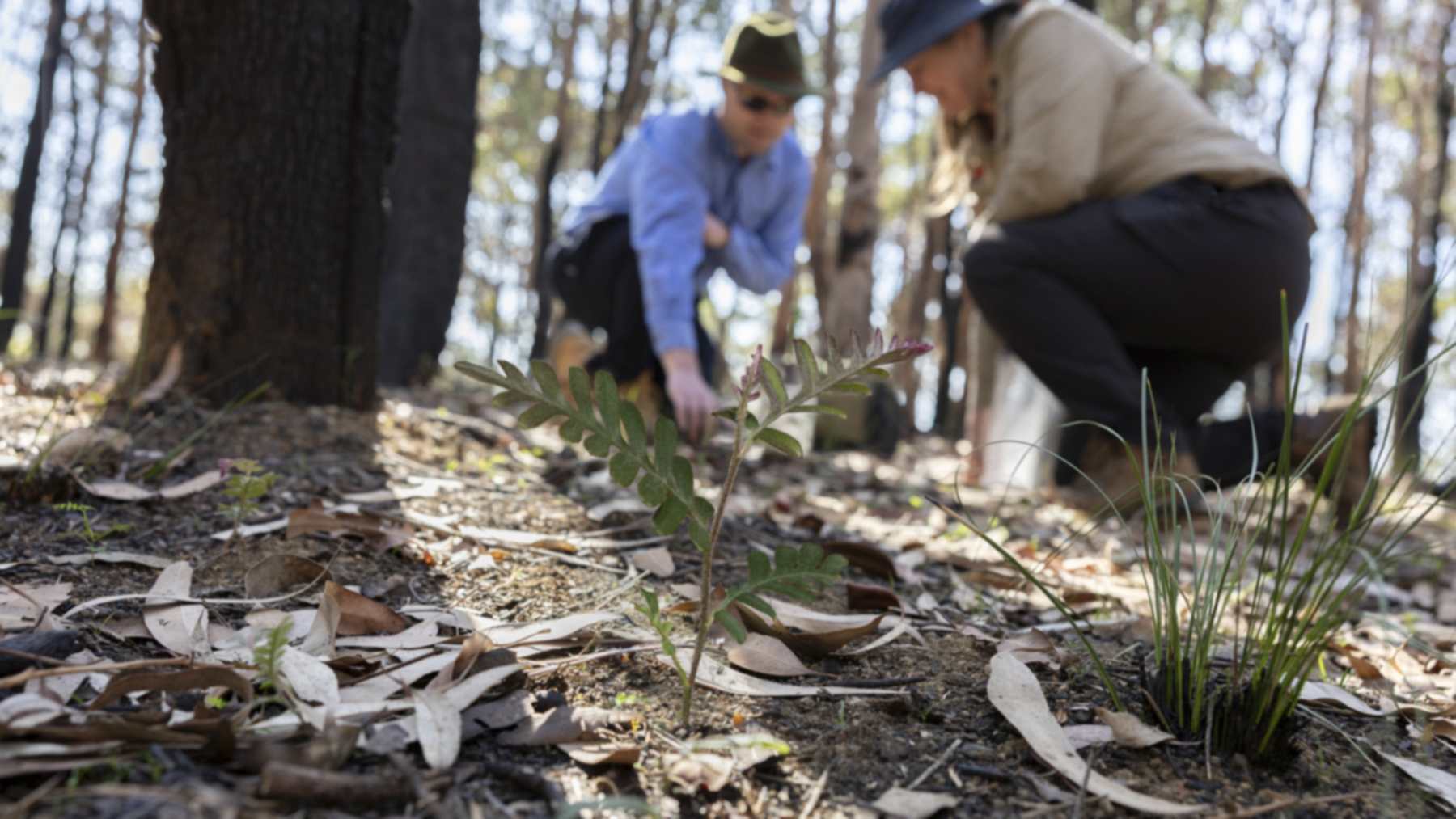
A rare plant that grows only in the northern part of Sydney has appeared in a rather unromantic place—a power substation. The Australian company Transgrid announced on November 4, 2026, that its environmental team had found there the Caley grevillea (Grevillea caleyi). The discovery occurred in Belrose, at the Sydney East substation, after a burn conducted to reduce fire risk, which the company says created the conditions for latent seeds to germinate.
According to the company, this is the first sighting of this species in more than a decade. Only about 20 wild populations of this critically endangered shrub are known, and it needs what is most feared in summer. Fire as a lifeline?
Burning to Protect the Light
Transgrid runs the New South Wales electricity transmission network, and that includes monitoring what can burn around it. Until now, routine. The striking development came after one of those burns, when its local team located the species beside the substation.
Monika Moutos, head of environmental strategy at the company, explains it bluntly. «We are delighted that our risk-reduction burns around this important substation, which supplies electricity to homes and businesses in Sydney, created the perfect conditions for latent seeds to germinate,» she states in Transgrid’s official note.
Moutos also argues that well-planned land management improves safety and supports biodiversity. It’s the same idea, in its own way, as fire grazing in Spain’s electrical corridors. There they graze herds to keep the area clear, without a single match.
Seeds Waiting for Smoke
The New South Wales Government’s official fact sheet describes a nearly kamikaze strategy. Fire kills the adult plant, so all the replacement depends on seeds stored in the soil. It is believed that smoke, and perhaps heat, help wake them up, but it isn’t entirely clear yet.
That is why land may appear empty of this species for years and, after a burn, recover it. But only about 3% of flowers produce seeds, and many are eaten. Seedlings, moreover, take 2 to 5 years to flower.
The flower, however, does not go unnoticed, with a dark burgundy red and a toothbrush-like brush shape. It emerges from late winter into spring, attracting native honeybees and other insects. The shrub reaches up to four meters in height and as wide.
Not Too Much Fire, Not Too Little
Attention: burning the mountainside is not a magic recipe for this species. The official sheet estimates 8 to 12 years to accumulate enough seeds to replenish a population. That is also the interval it recommends between fires.
If the flames return earlier, they can wipe out young plants before they have produced offspring. The state’s national parks conservation plan warns that very intense or excessively frequent fires can kill young plants and prevent population turnover. And in a year of major wildfires, we know well that fire does not ask for permission.
Caught Between Homes and Trails
Transgrid places the species in barely eight square kilometers around Belrose and Terrey Hills. That lies about 20 kilometers north of Sydney and would easily fit into many Spanish municipalities. It grows on the hilltops, between 170 and 240 meters in elevation, on lateritic soils.
Those hills are adjacent to a large city, and that is evident. The official sheet lists clearings, invasive weeds, pathogens, litter, and even bicycle trails that cross its habitat. In short, the usual problems of any hill near a neighborhood.
As a life insurance policy, the state plan foresees storing seeds in PlantBank, the Mount Annan seed bank. It echoes the logic of the Svalbard Seed Vault or the rescue of the last wild specimen of Dendroseris neriifolia.
The Genetics of the New Colony
After the find, Transgrid called on technicians from Saving Our Species, the state government’s threatened species program. They visited the site and assessed the group’s importance. The company hopes these specimens will help better understand the species’ genetic diversity and its resilience.
Erica Mahon, a conservation technician with the Department of Environment, shares the credit. «True conservation of threatened species is only possible through solid partnerships,» she notes in the same statement. From now on, the new population will join the company’s environmental monitoring program.
No Official Count of Sprouts Yet
What the note does not clarify also matters. Transgrid does not publish how many plants have emerged, the exact date of the burn, or the area they occupy. It also does not say whether that land will receive any additional protection beyond monitoring.
Sprouts, moreover, are not a settled population. According to the timelines in the official sheet, the first flowers will take 2 to 5 years. The full announcement has been published by Transgrid in its press room.
Photo: Transgrid
