
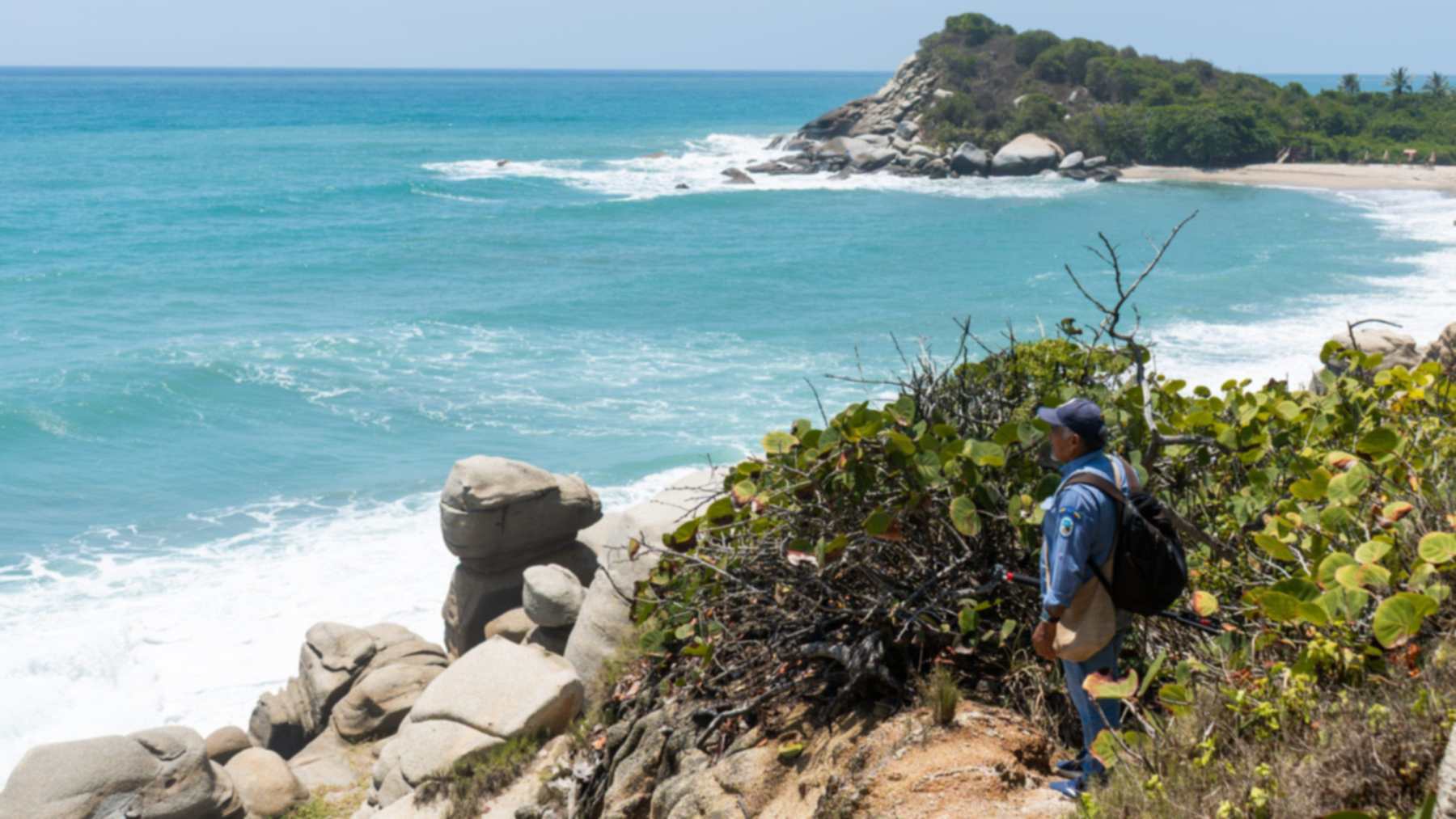
Tayrona National Park reopened on November 3 after 15 days without tourists. Colombia has used the reopening to count who lives in its forests. According to Parques Nacionales Naturales, years of camera traps and field surveys have documented jaguar and puma there. Also the ocelot, the margay, and the blue-billed curassow, an endangered bird.
Those records did not emerge all at once during the closure, because they are the result of long-running monitoring. And what is a jaguar doing near beaches where people camp and swim? Well, it helps to understand why this corner of the Colombian Caribbean locks down three times a year.
Fifteen Days Without Visitors
From October 19 to November 2, public entry and ecotourism services were suspended. The pause coincided with Nabbatashi, an Indigenous period linked to renewal and care of ancestral territory. During those dates, the peoples of the Sierra Nevada de Santa Marta carry out traditional practices and offerings at sacred sites.
The “Respira Tayrona” strategy, agreed with the Arhuaco, Kogi, Wiwa and Kankuamo peoples, sets three pauses per year. They occur in February, in June and between October and November. Inside the park there are also 54 sacred sites. And that quite changes the meaning of the word rest.
Anyone who has stepped onto a crowded beach in August understands the idea right away. Here, though, the calendar of those who consider this land part of their spiritual life also weighs in.
Six Felines by the Sea
The park’s official record contains a surprising fact. Six of the seven felines present in Latin America live here (jaguar, puma, ocelot, margay, jaguarundi, and tigrillo). And all that within just 12,692.2 hectares of land. There, the scrub gives way to dry forest, the moist forest, and the cloud forest almost without warning.
The monitoring doesn’t stop at the big cats. Cameras and rangers also record coatis, white-tailed deer and anteaters. According to the agency, these species “play fundamental roles for the balance of ecosystems.” In total, Tayrona hosts 26 species of medium and large mammals.
To survive, these animals need to move. That is why the official note stresses the natural corridors. Across much of the continent, cattle ranching threatens the jaguar corridors. Projects like the Jaguar Rivers alliance seek to sew that map back together.
A Blue-Billed Curassow in Trouble
The park records nearly 400 bird species. The official file highlights the blue-billed curassow (Crax alberti), exclusive to northern Colombia. If it disappears from that region, there is no other place to search for it in the wild.
So many animal photographs serve more than filling an album. Parques Nacionales explains that these records help to know the state of populations and to identify threats. They also guide surveillance and restoration. In practice, they tell the park team where to look.
Rains and Full Streams
The October closure also has a very earthly explanation, because it arrives with the heaviest rains. The priority is to recharge the park’s streams. They provide freshwater to nearby rural communities and to the park’s own tourism facilities. It may seem like a minor detail until the tap runs dry.
Además, el área protegida suma 19.309 hectáreas marinas y terrestres. Allí viven más de 1.200 especies de aves, mamíferos, peces y plantas. Una de sus joyas es el bosque seco tropical. Son 3.167 hectáreas, el 0,72 % de todo el que existe en Colombia. Poco, si se mira la cifra, pero el organismo lo sitúa entre los mejor conservados del país.
Esa riqueza no termina en la verja del parque. El Tayrona forma parte de la Línea Negra, el territorio ancestral de los cuatro pueblos. También comparte plan de manejo con la vecina Sierra Nevada, que este año quedó libre de petróleo y minería.
How Many Jaguars Remain?
The official note does not say how many jaguars live in Tayrona. It also does not specify in which years or sectors the images were taken, nor does it provide data on how fauna changes during these two weeks. As much as one would like to think so, none of this proves that the felines come closer when tourists leave.
Scientists already have a genetic map of the jaguar, but measuring its populations remains pending. Meanwhile, the park welcomes its visitors again. It asks for something simple: to traverse its ecosystems responsibly.
The information has been published by Parques Nacionales Naturales de Colombia in its official note about the Tayrona reopening.
Photo: Danilo Arenas / Parques Nacionales Naturales de Colombia
