
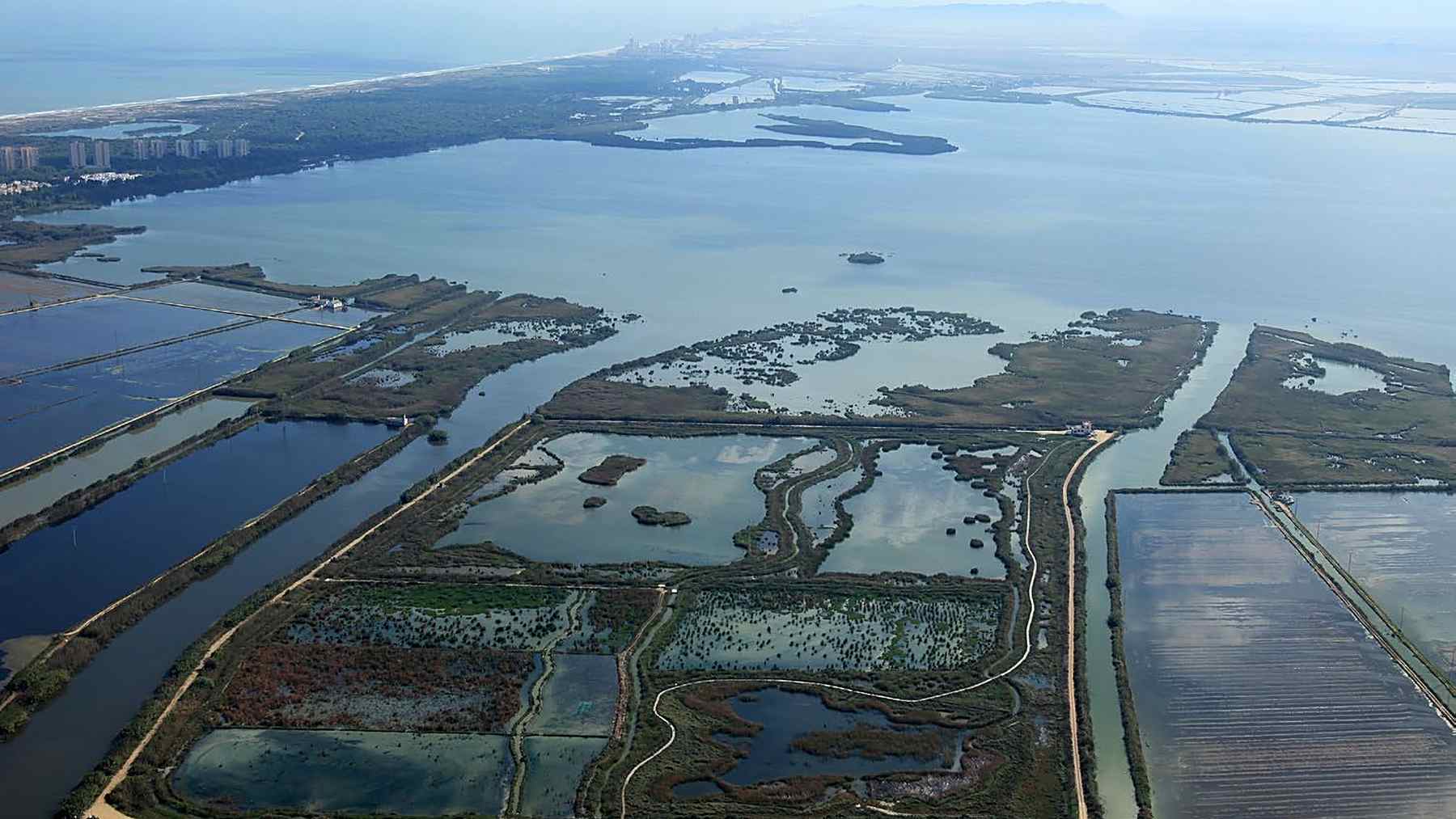
The water of L’Albufera after the Dana has improved a lot in less than a year. In November 2024 there were 13 parameters that exceeded the lake’s quality limit at some point. By October 2025 only 2 remained, an 85% reduction.
The figure comes from the first progress report of the plan by the Ministry for Ecological Transition on L’Albufera after the Dana. According to the MITECO note, the document reviews measures implemented up to October 2026. One of its objectives is to make the lake more resilient to future extreme climate episodes.
The lake withstood the blow
After the flood, technicians took samples at four points in the lake and in sixteen irrigation channels that bring water to it, initially weekly and from February 2025 monthly. They were mainly looking for wastewater that escaped when the sewerage system broke.
Ammonium spiked in the northern and western ditches in the first weeks. A few weeks later it had returned to its usual values, as had phosphorus. In the Barranco del Poyo ravine, ibuprofen was detected in elevated concentrations until discharges were contained.
Glyphosate, linked to farming, appeared spread through all the ditches in the early months. From March 2025 it fell to virtually imperceptible levels. Perfluorinated acids of industrial origin were also detected, higher in the first weeks.
What has not gone away
The report concludes that the lake did not suffer a significant deterioration due to the Dana in salts or in organic contamination. That diagnosis matches what scientists had already indicated, who observed L’Albufera’s microbial life recovering after the Dana.
The improvement does not mean the lake is healthy. Between November 2024 and October 2025, 231 parameters were analyzed, and 22 breached its environmental quality standard. Sulfates, dissolved magnesium, and total organic carbon exceeded it at some point on all dates, although others such as PFOS ceased to breach it.
The ministry itself notes that the problem is longstanding. Since the 1970s, flows rich in phosphorus and nitrogen have reached the lake, destroying submerged vegetation and thereby degrading its habitat. Without cutting those nutrients, it has already been warned that L’Albufera’s pollution no longer finds an outlet, even if more water arrives.
132 million euros in motion
The plan totals 132.5 million euros. More than 99 million are already in execution, almost three out of four euros. Of those, over 92 million are fully executed.
Most of it is aimed at restoring basins, channels and coastline, with 105.9 million and 87% already executed. Only emergency works in the Barranco del Poyo and the Magro River total 69.7 million. Another 4.4 million has been allocated to removing debris from the channels.
New springs and shorelines
Among forthcoming measures stands the restoration of ullals. They are freshwater springs that improve the water reaching the lagoon. The ministry is selecting 33 of them to restore, with works estimated at 2.45 million euros planned for 2027.
It also aims to widen the vegetation belt surrounding the lake, which acts as a green filter. The Generalitat has begun expropriating land in Racó de l’Olla and la Ratlla, which will later be restored by MITECO. The report highlights that area for its colonies of the black tern.
Tancat de la Pipa, an old rice field turned into a wetland, serves as an example. The report notes that its green filter has recovered after the Dana, and there 69 pairs of birds confirmed the revival of the refuge this summer.
Science and green jobs
A panel of 13 experts, created in April 2026, is already guiding the lake’s major hydrogeological study. That work will last about two and a half years, and its budget has risen from 1 million to about 3.5 million euros.
The plan also includes 5 million allocated to 9 projects across 16 entities. According to the report, they will create more than 100 jobs, train 1100 people, and restore more than 700 hectares. All this in a space that already aspires to UNESCO Biosphere Reserve status.
A new call for 10 million for farming and fishing will be issued between December and the first quarter of 2027. The report has been published on the Ministry for Ecological Transition’s website.
Photo: MITECO
