
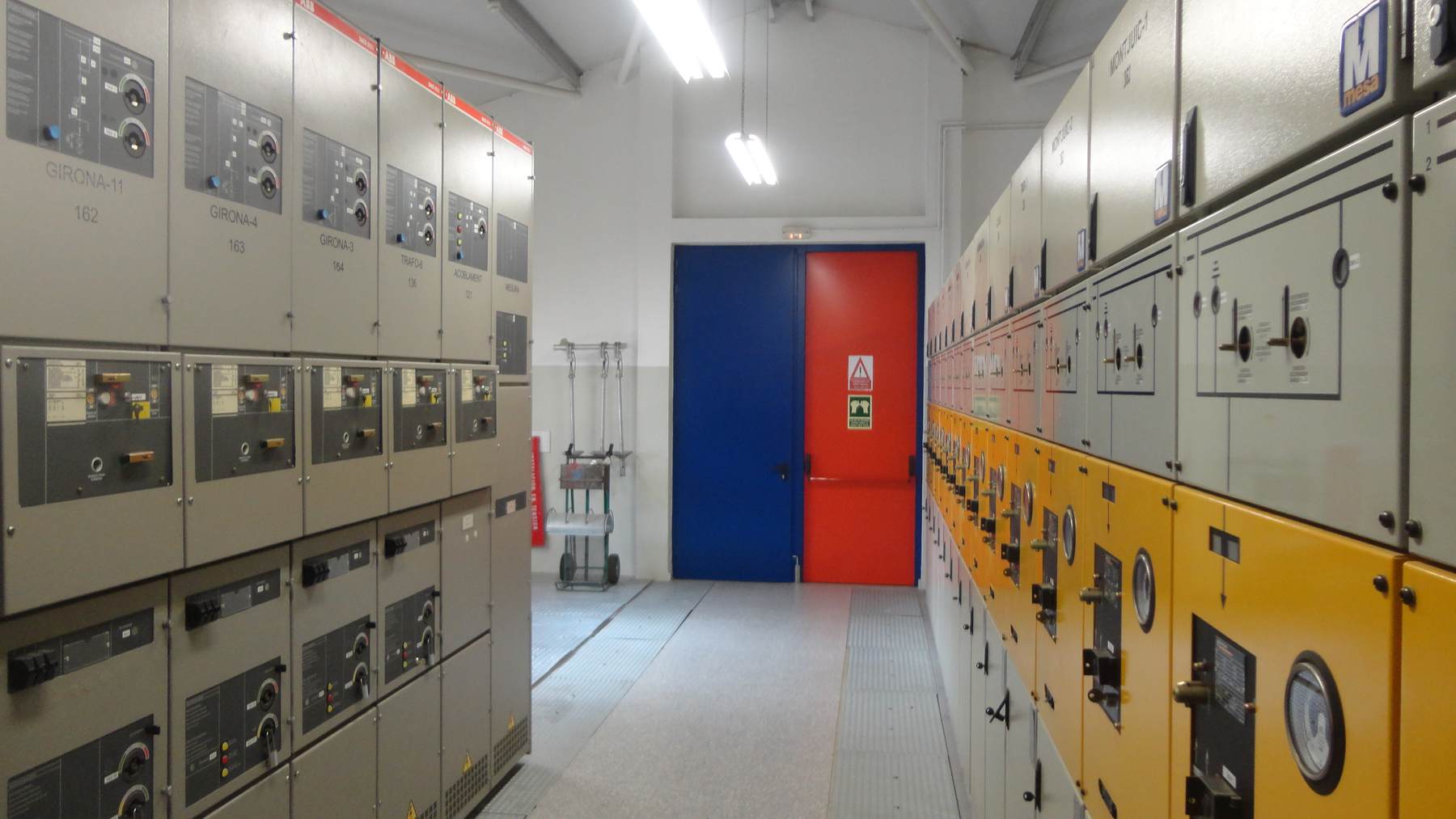
In the electricity grid that delivers power to homes and industries, there is a gas that almost no one knows about. It is SF6, or sulfur hexafluoride, and according to the European Commission it is used to insulate and prevent arcing in high-voltage switches and switchgear. It is also found in medium-voltage equipment, common in the networks that control and distribute electricity.
According to the Commission, no greenhouse gas has a worse climate impact, because it warms the atmosphere around 24,300 times more than CO2 over a 100-year horizon. For this reason the EU joined, on November 19 at COP31, the commitment led by Germany to curb it in electrical networks. It was announced by Commissioner Wopke Hoekstra, together with the German minister Carsten Schneider.
A Call to All Countries
In his remarks, Hoekstra urged all participants at the summit to sign the commitment. The objective, he said, is that SF6 emissions do not rise while more electrical equipment is being installed.
According to the commissioner, the initiative brings together governments, companies, and scientists. They will work on the strategy, funding for technology, monitoring, and the way emissions are reported. The EU, he assured, stands ready to help other countries to have modern, resilient networks that are free of SF6.
Hoekstra also recalled that there is an incentive for those who join. Countries can count reductions in SF6 in their national contributions, the Nationally Determined Contributions (NDCs) under the Paris Agreement.
The Grid Window
For the Commission, this is the pivotal moment to act on SF6. Long-term investment decisions in electrical infrastructure are being made now. And those decisions will shape the emissions trajectory for decades, according to Hoekstra.
Spain is currently living through that stage of large-scale investments in the grid. The Spanish network is preparing for 47 GW of new demand by 2030, according to the planning presented to the Congress.
Those works could accelerate, because the EU has agreed to speed up permits for networks and renewables. And each new stretch of grid needs switchgear, with SF6 or with an alternative.
In the EU, Goodbye by 2032
The European Union has already set a date for itself. According to Hoekstra, SF6 should be eliminated “in principle” from new switchgear across the 27 member states by 2032. Moreover, the EU has strict rules against leaks in equipment that is already in operation, also when it ends up as waste.
According to the commissioner, SF6-free alternatives are already entering the market. In medium voltage, the Commission notes that alternatives have been available for many years. In high voltage, research is ongoing and there are demonstrations with SF6-free gas mixtures.
Much More Potent Than CO2
SF6 is part of the fluorinated gases, a group of substances created by humans, as explained on the Commission’s page about these gases. Hydrofluorocarbons (HFCs) account for about 90% of all fluorinated gases.
The Global Warming Potential compares the heat retained by a gas relative to CO2, which is set at 1. With 24,300, SF6 has the highest value on the Commission’s chart of fluorinated gases, which starts at 0.501.
HFCs Are Already Falling in Europe
HFCs are used in refrigerators, air conditioners and heat pumps. From 2027, Europe will ban some new heat pumps that use gases heating 150 times or more than CO2.
Emissions of fluorinated gases in the EU fell by about a third between 2015 and 2024, according to the Commission. HFCs accounted for 91% of those emissions. And the 2024 rule foresees that HFCs will disappear from the European market by 2050.
In 2024, the EU’s consumption of HFCs was 60% below the limit set by the Kigali Amendment to the Montreal Protocol. Moreover, for the first time they represented less than half of all uses of fluorinated gases, measured in CO2 equivalents.
What the Commissioner Did Not Say
Hoekstra did not provide figures on how much SF6 is emitted worldwide today, nor how much would be avoided with the commitment. He also did not say how many countries have signed up yet. Nor did he specify which companies or scientists are participating in the initiative.
The announcement comes at a summit where phasing out fossil fuels remains central to the debate. Hoekstra said that the EU wants the global expansion of power networks to stay aligned with climate objectives.
Image: Arnaugir (Wikimedia Commons, CC BY-SA 3.0)
