
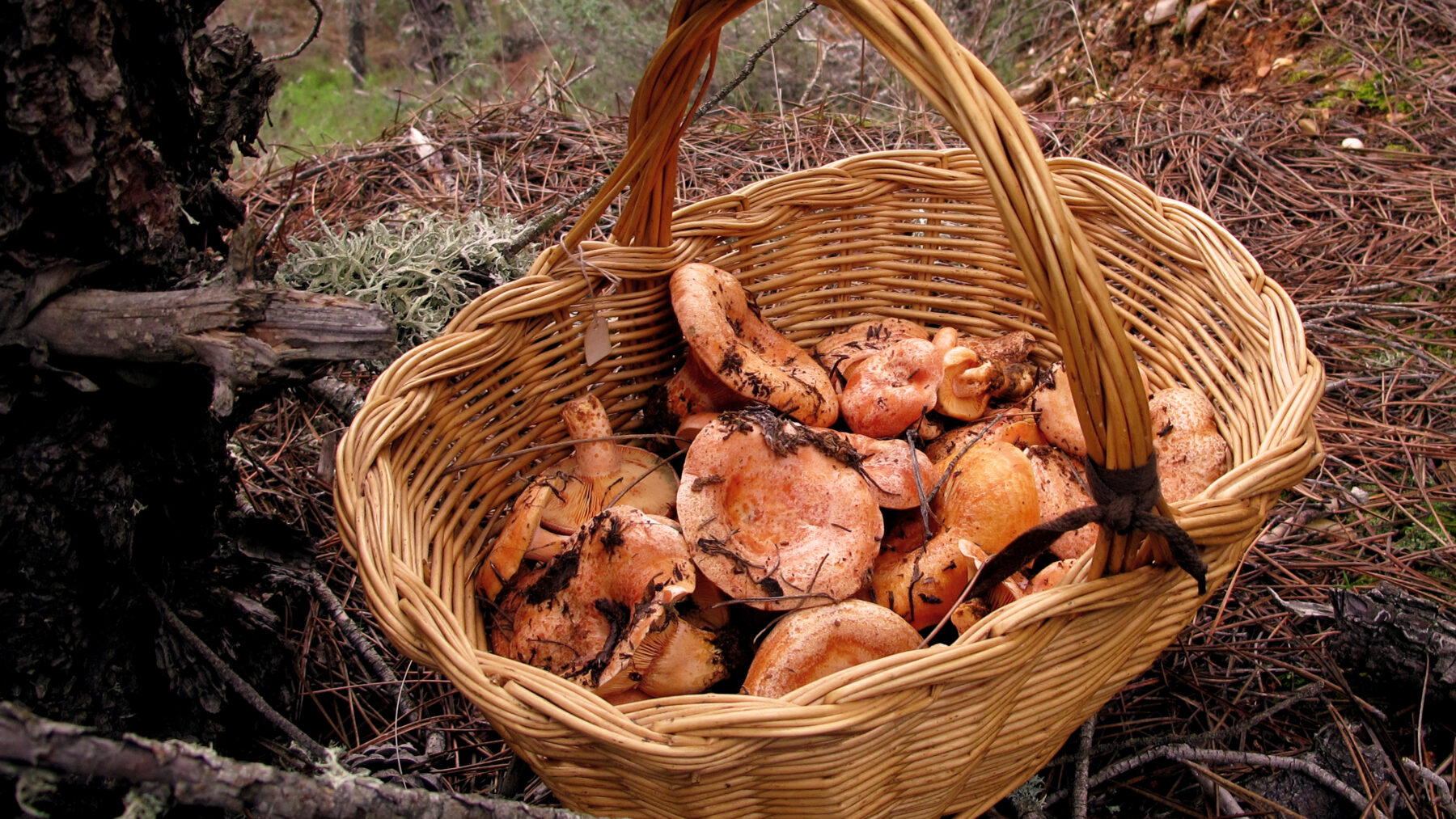
In the Sierra de los Filabres, in Almería, the basket of saffron milk cap mushrooms could end up on the Civil Guard’s scale this autumn. The Command has strengthened controls at the height of the season, and officers weigh what each forager carries to verify that it does not exceed five kilos, the maximum per person per day, because going over or breaking any of the harvesting conditions can end in an administrative file and the mushrooms being confiscated.
According to the note the Command released on Sunday, November 15, the controls involve the Nature Protection Service (Seprona) and Public Security, which work in “permanent communication” with municipal police and with the Junta de Andalucía’s Environmental Agents. At each stop they check what time the mushrooms are being gathered, which route into the mountains was used, where the car is located, with what tool the mushrooms were dug up, as well as the weight of the basket.
That five-kilogram limit is not set by the Civil Guard, but by the autumn resolution that the Territorial Delegation of Environment in Almería issues in the BOJA. The latest one we could read, signed in September 2024 (available at this link), allows picking without permission in the Junta’s public forests a “small quantity of mushrooms, those gathered for personal consumption that do not exceed five kilograms of weight per person and per day,” a formula that Almería repeats almost word-for-word year after year.
Rakes, flashlights and bags: what is prohibited when picking mushrooms in Almería
Even if you do not reach the 5 kilos, the resolution imposes other conditions, and breaking even one of them constitutes an offense:
- No you may use rakes, weeders, hoes, or other tools that disturb the ground’s leaf litter.
- Immature mushrooms must not be picked, and non-edible ones, those you do not know, or those past their prime must stay in the forest.
- Collecting at night is not allowed, nor with a flashlight or any other artificial light.
- You must use airy baskets or other containers that allow air and spores to fall, not closed bags.
- Hiking off-trail, disturbing wildlife, and leaving waste are prohibited.
The text explains the reason for the first prohibition: these tools disturb the soil “causing damage to the mycelium of the fungi, which can prevent the appearance of new specimens in the future” (the mycelium is the network of filaments beneath the soil from which the mushrooms sprout). Regarding those that are not collected, it recalls that “all of them perform an ecological function.”
Free foraging without a permit is allowed in the Junta’s public woods, unless there is an express notice or it coincides with a hunt. In municipal forests, municipal rules apply; on private estates you need the owner’s permission, and in mountains with an authorized mushroom reserve their own regulation governs.
How much it costs to break the mushroom limit
The resolution warns that “breach of this condition will constitute an administrative infringement that will lead to the opening of the corresponding sanctioning file and the confiscation of the harvested mushrooms,” but it does not set a specific fine, and the Guardia Civil note does not provide monetary amounts.
The figure of 600 euros that has been echoed in recent days aligns with Andalusia’s Law 8/2003 on Flora and Wildlife, whose minor offenses range from 60.10 to 601.01 euros (Article 82). Since March, however, Andalusia has a new Forest Law, Law 3/2026, which repealed the 1992 forestry law and sets fines for minor offenses from 100 to 1,000 euros and for major offenses from 1,001 to 100,000 (Article 137), so the amount depends on how each case is classified.
Four days after the control announcement, the Civil Guard issued another notice, this time aimed at the forager’s own safety, recommending against using mobile apps as the sole method to identify a mushroom without expert supervision, according to Infobae. Anyone who observes abusive foraging can report it, even anonymously, at 062, on the Civil Guard’s website, or via the Alertcops app.
